


Most successful businesses don't stand still.
Over time, they hire more people, invest in equipment, adopt new technology, move into larger premises and take on bigger clients. Growth doesn't usually happen overnight - it happens through hundreds of decisions made over months and years.
Individually, those decisions make perfect business sense.
Together, they change the way a business operates.
One of the biggest challenges for successful businesses is that growth is gradual.
By the time a business owner stops to look back, the business often looks very different from the one they started.
Over nearly 30 years, we've seen this happen time and time again across businesses throughout Texas.
The businesses most likely to develop gaps in their protection aren't usually those going through rapid change. They're often well-established businesses that have grown steadily over time.
Not because anyone made a mistake.
Simply because the business they operate today is very different from the business they insured several years ago.
That's where risk management becomes important.
Good risk management isn't about eliminating risk or avoiding growth. Every successful business takes calculated risks. It's about understanding how your business has evolved, recognising the new risks that come with that growth and making informed decisions to protect what you've built.
Insurance is an important part of that process, but it's only one piece of a broader risk management strategy.
Growth Changes More Than Revenue
Revenue is one measure of growth.
From a risk management perspective, it's rarely the most important one.
Imagine two Texas businesses, each generating around $5 million in annual revenue.
One operates from a single location with a small team, a handful of vehicles and mostly local clients.
The other employs thirty people, works across multiple job sites, relies on cloud-based systems, owns specialised equipment and regularly signs contracts with larger commercial organisations.
On paper, those businesses may appear similar.
Operationally, they're very different.
As businesses mature, they naturally become more complex. They rely on more people, more technology, more equipment, more suppliers and more contractual relationships. Each of those changes influences the way risk should be managed.
That's why effective risk management isn't just about reviewing insurance policies. It's about understanding how your business has changed and making sure the protection around it continues to reflect the business you operate today.
The next few examples explore three ways established businesses commonly evolve - and why those changes can have a greater impact on risk than revenue alone.
When Bigger Clients Bring Bigger Expectations
Growth creates opportunities.
It also changes expectations.
One Texas contractor had spent months securing one of the biggest commercial contracts the business had ever won. The project was ready to begin, the team was scheduled and the equipment was in place.
Then the client requested several documents before work could start.
They wanted a Certificate of Insurance (COI) showing higher liability limits, Additional Insured status and Primary and Non-Contributory wording.
None of those requests meant the contractor's existing insurance was inadequate.
They reflected the fact that the business had reached a new stage of growth.
Larger organisations often have more sophisticated risk management processes than smaller businesses. Their contracts are designed to protect their own interests, and insurance requirements are often part of that process.
We've seen similar situations across many industries.
A manufacturer wins a contract with a national retailer.
An engineering firm begins working with a municipality.
A technology company secures its first enterprise client.
As businesses grow, the organisations they work with often expect more detailed contractual protections than they did a few years earlier.
Understanding those requirements before signing a contract can prevent delays, avoid last-minute surprises and help projects start on schedule.
Good risk management isn't just about responding when a client asks for something.
It's about anticipating those requirements as your business continues to grow.
Technology Changes Risk - Even When Your Business Doesn't
An engineering consultancy had been operating successfully for several years.
On the surface, very little had changed.
They were still providing the same core services, working with many of the same types of clients and employing a similar number of people.
But the way the business operated had changed significantly.
Paper files had been replaced with cloud-based document storage.
Projects were managed through online collaboration platforms.
Customer information was stored digitally.
Invoices and payments were processed electronically.
Employees could access business systems from the office, from home or while visiting clients.
None of those changes happened overnight. They were introduced gradually as the business became more efficient.
What began as an insurance review quickly became a broader conversation about risk management.
The business wasn't facing the same risks it had five or six years earlier, even though the services it provided were largely unchanged.
One of the recommendations was to introduce cyber liability insurance.
Not because cyber insurance had become fashionable.
Because the business had become increasingly dependent on technology to operate successfully.
It's an important distinction.
The risk hadn't changed because of the industry they worked in.
It had changed because of the way the business itself had evolved.
One of the biggest challenges with business risk is that operational changes often happen so gradually they're easy to overlook.
The technology that makes a business more efficient today may also introduce risks that simply didn't exist when the company first opened its doors.
The Hidden Cost of Replacing Your Business Today
When business owners think about protecting their assets, it's natural to focus on what those assets are worth.
A more important question is whether the business could recover if they were suddenly lost.
One manufacturing company had spent nearly a decade steadily investing in its operation.
Additional machinery.
Warehouse improvements.
New delivery vehicles.
Production equipment.
Expanded inventory.
None of those investments dramatically changed the business on their own.
Together, they transformed what it would take to get the company operating again after a major loss.
The conversation wasn't really about the value of individual assets.
It was about business continuity.
How long would it take to replace specialist machinery?
Could suppliers deliver new equipment quickly?
Would key customers stay if production stopped for several months?
Would the business have enough financial resilience to continue paying employees while operations recovered?
These aren't questions most business owners ask every day.
They're questions that become increasingly important as a business grows and becomes more dependent on its people, equipment and operations.
Effective risk management isn't just about protecting what your business owns.
It's about understanding what your business would need to recover, rebuild and continue serving its customers if the unexpected happened.
Could Your Business Recover?
One manufacturing business had spent nearly ten years steadily investing in its operation.
They added a second production line, upgraded machinery, expanded their warehouse and gradually increased the amount of stock they held. Every investment had a clear purpose: improving efficiency, increasing capacity and supporting growth.
None of those decisions dramatically changed the business on their own.
Together, they transformed what it would take to recover from a major loss.
When we spoke with the business, the conversation quickly moved beyond the value of buildings and equipment.
How long would it take to replace specialist machinery?
Could suppliers deliver replacement equipment quickly?
Would key customers wait if production stopped for several months?
Could the business continue paying employees while operations recovered?
Those questions are at the heart of business continuity.
For many established businesses, the greatest financial impact of a major loss isn't simply replacing physical assets. It's the interruption to the business itself.
Customers still need to be served.
Employees still expect to be paid.
Bills continue to arrive.
Projects still have deadlines.
Effective risk management looks beyond what a business owns. It considers what the business would need to recover, continue operating and protect the relationships that have taken years to build.
The stronger a business becomes, the more important that conversation often becomes.
Five Questions to Ask Before Your Next Insurance Renewal
Renewal is often the only time many businesses think about their insurance.
Rather than simply renewing last year's policy, it's worth taking a step back and asking whether your business has changed since your last review.
Here are five questions to consider.
1. Has the way we operate changed?
New technology, different processes, additional locations or changes in the way your team works can all influence your overall risk profile.
2. Are we working with different types of clients?
Larger organisations and commercial contracts often introduce new contractual requirements, insurance expectations and operational responsibilities.
3. Could our business recover if a major loss happened tomorrow?
Think beyond the value of your buildings or equipment. Consider downtime, customer commitments, supply chains, employees and the time it would take to get back to normal.
4. Have we made significant investments over the past few years?
New vehicles, machinery, equipment, technology and premises all contribute to the overall value and complexity of your business. Individually, they may seem like routine investments. Collectively, they can significantly change what it would take to rebuild your operation.
5. When was the last time we reviewed our business from a risk management perspective?
A renewal shouldn't simply be about replacing one policy with another. It's an opportunity to make sure your risk management strategy still reflects the business you've become.
You may answer these questions and decide that nothing needs to change.
In many cases, that's the best outcome.
The value isn't in changing your insurance every year. It's in making informed decisions based on the business you operate today, rather than the one you insured several years ago.
Final Thoughts
Successful businesses don't stand still.
As they grow, they hire people, invest in equipment, adopt new technology and take on new opportunities. Those changes are a sign of progress, but they also change the way a business should think about risk.
Good risk management isn't about buying more insurance.
It's about making sure the protection around your business continues to reflect the business you've worked hard to build.
Sometimes that means making changes.
Sometimes it means confirming that everything is already in good shape.
Either way, taking the time to review your business through a risk management lens helps ensure your decisions are based on the business you operate today - not the one you were running several years ago.
For nearly 30 years, Thumann Insurance Agency has helped Texas businesses understand how their risks evolve as they grow. We take the time to understand how your business operates today, identify areas where your risk may have changed and help ensure your risk management strategy continues to support your business as it moves forward.
Whether you've expanded your operations, taken on larger contracts, invested in new technology or simply want the reassurance that your current protection still reflects your business, our team is always happy to help.
If you'd like to schedule a Business Risk Review or simply have a conversation about your business, we'd be pleased to hear from you.
Last Updated: July 7, 2026
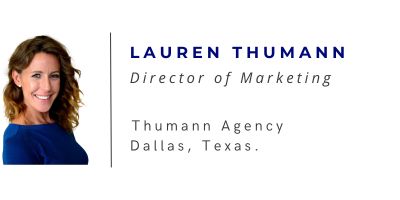
Author: Lauren Thumann Director of Marketing.
This post is for informational purposes only. For questions specific to your policy or situation, please contact the Thumann Agency directly. For regulatory questions, contact TDI at www.tdi.texas.gov.