Restaurant Liability Insurance, Dallas TX
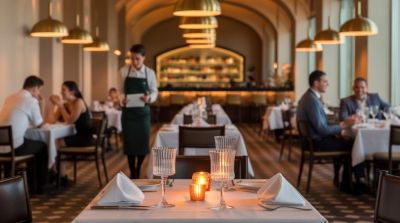
General Liability Coverage for Dallas Restaurants, Bars, and Food Service Operations
A customer slips on a wet floor near your Deep Ellum bar entrance and breaks their wrist. A guest at your Uptown restaurant claims a food allergy reaction from a dish you served. A server carrying hot food collides with a customer in your dining room and causes a burn injury. Each scenario generates a third-party liability claim that can cost your restaurant tens of thousands of dollars in medical bills, legal fees, and settlement before the matter is resolved.
Thumann Agency has been insuring Dallas restaurants and food service businesses since 1996. As an independent broker with access to 80+ top-rated carriers, we build restaurant liability programs that cover the specific exposures of your operation: the slip-and-fall risk inherent in high-traffic dining rooms, the dram shop liability exposure that comes with serving alcohol, and the product liability claims that follow any business that prepares and serves food to the public.
Get a Free Restaurant Liability Insurance Quote
Why Dallas Restaurant Owners Choose Thumann Agency
-
80+ Carrier Options so your restaurant GL gets priced across carriers that specialize in food service risk, not a single rate
-
Same-Day COI Delivery for Dallas commercial landlords, shopping center management companies, and event permit requirements
-
Coverage Built Around Your Concept full-service, fast casual, bar, food truck, ghost kitchen, and catering all covered with programs matched to your operation
-
Dallas Food Service Specialists, Since 1996 who understand TABC dram shop exposure, Dallas landlord lease requirements, and the specific risks of your neighborhood
-
Annual Coverage Reviews Included so your limits keep pace as your revenue, seating capacity, and alcohol percentage grow
Why Dallas Restaurant Owners Trust Us
Thumann Agency has earned 118 client reviews with a 4.7/5 star rating. We hold active BBB Accreditation in Dallas, TX, a Trusted Choice membership, and a 2024 Expertise.com designation as a Top Dallas Insurance Agency. Our clients include restaurant operators, bar owners, caterers, and food truck businesses across Dallas and DFW who chose us for coverage expertise and stayed because of the service.
“The professional staff has provided nothing but confidence... a long-lasting partnership.” - Betty Maultsby, Larkspur Landscape Design, LLC
“Excellent and fast service. Worlds better than previous companies I have used.” - Colin Hatzmann, Bullymake
“The agents at Thumann always give me peace of mind and help me make the right choices for my coverage needs.” - Alyssia Trimble
“I've been with the agency over 5 years and I've never had a bad experience. My phone calls are always returned in a timely manner.” - Johnerta T., Dallas, TX
What Does Restaurant General Liability Insurance Cover?
General liability insurance is the foundational protection for every restaurant, bar, and food service operation. It covers third-party claims: injury or damage that your restaurant causes to guests, visitors, or other parties who are not your employees. It does not cover injuries to your own staff (that requires workers compensation) or damage to your own property and equipment (that requires commercial property coverage).
For Dallas restaurants, the core GL policy covers four primary exposure categories:
Premises Liability and Slip-and-Fall
Restaurants are among the highest-slip-and-fall-risk environments in any commercial setting. Wet floors near the kitchen pass, spilled drinks in the bar area, uneven flooring at an entrance, loose steps on a patio, and slippery surfaces in restrooms all create premises liability exposure that produces claims regularly in Dallas dining operations across every concept and price point.
When a customer is injured on your premises, your GL policy covers their medical expenses and your legal defense costs if they file a lawsuit. In Texas, even claims that are ultimately found to be without merit require you to hire an attorney and respond. Your GL policy pays those defense costs whether you are at fault or not. For a busy Dallas restaurant serving hundreds of covers per week, this protection is fundamental.
Food and Product Liability
Every time your kitchen sends a plate to the table, you have food liability exposure. A customer who claims a foodborne illness, an allergic reaction from undisclosed ingredients, or an injury from a foreign object in their food has a product liability claim against your restaurant. Product liability is included within your standard commercial general liability policy, not a separate product you must purchase.
Dallas restaurants with higher food liability exposure include those serving raw or minimally processed proteins, those with complex allergen exposure from multi-ingredient preparations, and any concept where the food itself is a central part of the brand promise that a customer may claim was not met safely.
Operations Liability
GL covers property damage caused by your restaurant's operations to third-party property. A server accidentally drops a tray and damages a customer's laptop bag. A kitchen fire produces smoke damage to an adjacent business. Your delivery driver damages a customer's fence while dropping off a catering order. These operational property damage incidents fall under your GL policy up to your per-occurrence limit.
Personal and Advertising Injury
GL policies include personal and advertising injury coverage for claims including libel, slander, copyright infringement in marketing materials, and false advertising. For Dallas restaurants that maintain an active social media presence and competitive advertising footprint, this coverage applies when a claim arises from your promotional content or public statements.
Liquor Liability Insurance and Texas Dram Shop Law: What Every Dallas Restaurant Must Know
Standard general liability policies explicitly exclude alcohol-related claims. If your restaurant serves alcohol, that exclusion is one of the most financially dangerous gaps in your coverage program, because Texas dram shop law creates direct civil liability for establishments that serve alcohol to visibly intoxicated persons who then cause harm to others.
Texas Dram Shop Liability Explained
Under the Texas Alcoholic Beverage Code, an alcohol-serving establishment can be held civilly liable when it serves alcohol to a visibly intoxicated person who then causes injury or death to a third party. A customer who drinks at your Deep Ellum bar and then causes a fatal accident has created a dram shop claim against your establishment. A guest who becomes intoxicated at your private dining event and injures someone on the premises can similarly generate a claim. Alcohol liability insurance is the specific coverage that protects against these dram shop claims. It must be purchased as a separate policy or endorsement because standard GL explicitly excludes it.
The financial exposure from a dram shop lawsuit in Texas is not limited by the coverage on your standard GL policy. A single serious dram shop incident can produce damages in the hundreds of thousands of dollars or more. Dallas restaurants and bars that serve alcohol without liquor liability coverage are personally exposed to the full financial weight of any dram shop claim filed against them.
TABC Safe Harbor Provisions
Texas dram shop law provides a limited safe harbor to establishments that can demonstrate three specific conditions: the employee who served the alcohol was TABC-certified at the time of service, the employer required its employees to complete TABC training, and the employer did not directly encourage the violation. This safe harbor does not eliminate all liability, but it provides a meaningful legal defense in dram shop litigation.
Maintaining TABC-certified service staff and documenting your training program are both important components of a defensible restaurant operation in Dallas. They do not eliminate the need for liquor liability coverage, but they create a legal defense that a restaurant without certification cannot assert.
Assault and Battery Exclusion: What Dallas Bars and Late-Night Restaurants Must Address
Standard general liability policies typically exclude assault and battery incidents. For Dallas restaurants with late-night service, bar-focused concepts, or high-volume weekend operations in entertainment districts like Deep Ellum, Lower Greenville, and Uptown, this exclusion creates a significant coverage gap.
An altercation between guests on your premises, a situation where a staff member uses physical force to remove a disruptive customer, or a claim that your restaurant failed to maintain adequate security during an incident that resulted in physical harm can generate a lawsuit that your standard GL policy will not cover.
Assault and battery coverage is available as an endorsement or through specialty carriers that specifically cover hospitality operations. For any Dallas restaurant with a bar component, late-night hours, or a concept that attracts high-energy crowds, we evaluate assault and battery coverage as a standard part of the program rather than an afterthought.
What Restaurant General Liability Insurance Does NOT Cover
Knowing your GL exclusions prevents the most common and most expensive coverage surprises for Dallas restaurant operators.
-
Alcohol-related incidents. Explicitly excluded from standard GL. Liquor liability coverage is required separately if you serve alcohol.
-
Employee injuries. Covered by workers compensation, not GL. GL covers customer and third-party injuries. Any restaurant with employees needs a separate workers comp policy.
-
Your own property and equipment. GL covers damage you cause to others' property. Your kitchen equipment, furniture, fixtures, and inventory require commercial property coverage.
-
Business income losses. If a fire or covered event forces you to close temporarily, GL does not replace lost revenue. Business income coverage addresses this separately.
-
Assault and battery. Explicitly excluded from most standard GL policies. A separate endorsement is required.
-
Food spoilage and refrigeration failure. If your walk-in fails overnight and your food inventory is destroyed, GL does not cover that loss. Equipment breakdown and food spoilage coverage are separate.
-
Cyber incidents. If your point-of-sale system is breached and customer payment data is compromised, your GL policy does not cover the resulting notification costs, regulatory fines, or third-party claims. Cyber liability coverage addresses this for restaurants handling payment card data.
Every exclusion in your GL policy is a potential gap that a separate coverage line addresses. We review these with you during the quoting process so you understand exactly where your GL ends and where your program needs additional structure.
Workers Compensation for Dallas Restaurant Employees
Restaurant work is physically demanding. Kitchen staff work around open flames, sharp blades, hot surfaces, and heavy equipment. Service staff navigate crowded dining rooms where slip-and-fall injuries are a consistent occupational risk. Texas allows employers to opt out of workers compensation coverage, but for restaurants with employees, opting out removes your common-law defenses in an employee injury lawsuit.
If a court finds you at fault for an employee injury and you have no workers comp, you pay the full financial exposure personally. Most Dallas commercial landlords and many shopping center lease agreements also require proof of workers comp as a standard lease condition.
Dallas Restaurant Neighborhoods: How Location Shapes Your Liability Exposure
-
Deep Ellum. Late-night entertainment district with high weekend volume. The combination of alcohol service, late hours, and large crowd concentrations creates elevated dram shop, assault and battery, and premises liability exposure compared to daytime or suburban dining settings. Assault and battery coverage is particularly relevant here.
-
Uptown Dallas and West Village. High-density residential and nightlife area with significant bar and restaurant concentration. Pedestrian-heavy sidewalks and outdoor patios create premises liability exposure for outdoor seating. Commercial landlord GL requirements in Uptown typically specify $1 million per occurrence minimum.
-
Lower Greenville and Henderson Avenue. Active dining and bar corridor with a mix of neighborhood restaurants and late-night concepts. Similar dram shop and assault and battery considerations to Deep Ellum, with a somewhat different demographic profile.
-
Design District and Harwood International. High-end dining and hospitality in a commercial development environment. Landlord certificate requirements are typically more specific and minimum limits are higher. Same-day COI issuance matters for lease compliance.
-
Knox Henderson and M Streets. Neighborhood dining corridor with a mix of casual and upscale concepts. Outdoor patio exposure is common across this corridor. Premises liability for outdoor seating areas requires specific attention in the policy structure.
-
Frisco, Plano, and Allen dining corridors. Suburban commercial dining with higher family customer volume. Slip-and-fall and food allergy claims are the primary GL exposure in suburban DFW restaurant settings. Commercial lease requirements in suburban DFW shopping centers are comparable to urban settings.
Restaurant GL Insurance by Concept Type in Dallas
The specific liability exposure profile of your restaurant depends significantly on your concept type and service model. Here is how GL applies across the Dallas restaurant market:
-
Full-service restaurants. High customer interaction, alcohol service common, kitchen fire exposure, and slip-and-fall in service pathways all contribute to a moderately elevated GL profile compared to lower-contact businesses. Most full-service Dallas restaurants need $1 million per occurrence and $2 million aggregate as a baseline.
-
Bars and cocktail lounges. Highest GL and liquor liability exposure category. Alcohol percentage of revenue, late-night hours, and entertainment environment all elevate the risk profile. Standard GL alone is never adequate for a bar concept. Liquor liability and assault and battery coverage are both required.
-
Fast casual and quick service. Lower alcohol exposure, higher customer throughput, and counter-service format reduce some GL risks compared to full-service settings. Food liability exposure from high-volume production remains. Counter and drive-through configurations require premises liability review.
-
Cafes and coffee shops. Hot beverage liability (burns from spills and service), moderate slip-and-fall exposure from high-turnover seating, and typically no alcohol service create a defined GL profile. A Business Owners Policy is often the most cost-effective structure for smaller Dallas cafe concepts.
-
Food trucks. Mobile food operations carry GL exposure at every operating location. Off-premises coverage and event-specific additional insured requirements are standard needs for Dallas food trucks operating at markets, events, and private engagements. Coverage must extend to all operating locations, not just a home base.
-
Ghost kitchens and delivery-only operations. Reduced premises liability from the absence of dine-in guests. Primary exposure is product liability from the food itself and operations liability during delivery handoffs. Third-party delivery platform liability questions are complex and require specific review of how your platform agreement interacts with your GL policy.
-
Catering and event operations. Off-premises GL coverage is essential for caterers. Work performed at client venues, private residences, and event spaces requires coverage that extends beyond your own premises. Liquor liability for catered events with alcohol service is a specific and frequently overlooked exposure for Dallas catering operations.
What Dallas Restaurant Landlords Require on Your Certificate of Insurance
Every commercial restaurant lease in Dallas includes insurance requirements. Before you take occupancy, the landlord's management company requires a Certificate of Insurance confirming your coverage is active, your limits meet the lease minimums, and in most cases listing the landlord and management company as additional insured.
Standard Dallas commercial restaurant lease insurance requirements typically include a minimum of $1 million per occurrence and $2 million aggregate for general liability. High-end dining destinations in the Design District, Harwood International, or institutional retail centers may specify higher limits or additional coverage types. TABC-licensed concepts frequently require confirmation that liquor liability is included and listed on the certificate.
Our team issues certificates of insurance the same day once coverage is confirmed. We handle certificate holder wording, additional insured endorsement language, and any specific format your landlord's management company requires. In a Dallas restaurant leasing market where timing is often critical, same-day COI delivery is a practical competitive advantage.
How Much Does Restaurant Liability Insurance Cost in Dallas?
Restaurant GL premium varies based on your concept type, annual revenue, seating capacity, alcohol percentage, claims history, and the coverage limits you carry. As an independent broker shopping 80+ carriers, we produce competitive pricing by making carriers compete for your program.
Here is a cost breakdown by restaurant type for the Dallas market:
-
Small cafes and coffee shops (no alcohol, under $500K revenue). GL premiums typically range from $600 to $1,400 per year. A Business Owners Policy bundling GL and property typically runs $1,500 to $3,000 per year for a small Dallas cafe concept.
-
Fast casual and quick service restaurants. GL premiums typically range from $800 to $2,000 per year depending on revenue and customer volume. Higher-volume fast casual operations with drive-through components pay toward the upper end.
-
Full-service restaurants (with alcohol). GL premiums typically range from $1,000 to $3,000 per year. A complete program including GL, liquor liability, workers comp for kitchen and service staff, and property coverage typically runs $4,000 to $10,000 per year for a mid-sized Dallas full-service concept.
-
Bars, cocktail lounges, and nightclubs. GL alone runs $1,500 to $4,000 per year. Liquor liability is a significant additional cost in this category and is priced based on alcohol revenue volume. A full bar program including GL, liquor liability, assault and battery, and workers comp can range from $6,000 to $20,000 or more annually depending on concept and volume.
-
Food trucks and mobile operations. GL for a Dallas food truck typically runs $900 to $2,000 per year. Event-specific COI requirements and off-premises coverage endorsements may add to the base premium.
The most effective way to control restaurant insurance cost in Dallas is to work with an independent broker who shops the market across carriers that specialize in food service risk. A carrier that specializes in restaurant GL prices it more accurately than a general commercial carrier who applies a higher risk surcharge to any food service account. We make the right carriers compete for your program.
Request Your Free Restaurant Liability Insurance Quote
Frequently Asked Questions About Restaurant Liability Insurance in Dallas
Does my general liability policy cover alcohol-related incidents at my restaurant?
No. Standard general liability policies explicitly exclude alcohol-related claims under a liquor liability exclusion. If your restaurant serves alcohol and a guest is harmed as a result of your service, whether on your premises or after leaving, your GL policy will not respond. Texas dram shop law, established under the Texas Alcoholic Beverage Code, holds establishments civilly liable for serving visibly intoxicated persons who then cause harm. Liquor liability insurance is the specific coverage that addresses this exposure and must be purchased separately. The Texas Alcoholic Beverage Commission regulates alcohol service in Texas and administers TABC certification, which is a component of the safe harbor provision in Texas dram shop law. Every Dallas restaurant that holds a TABC permit should carry liquor liability insurance.
How much general liability insurance does a Dallas restaurant need?
Most Dallas commercial restaurant leases require a minimum of $1 million per occurrence and $2 million aggregate. Institutional landlords and high-end dining destinations often require higher limits. If your restaurant serves alcohol or operates late-night, your liquor liability limits should be evaluated alongside your GL limits as part of your total liability program.
Is workers compensation required for Dallas restaurant employees?
Texas does not mandate workers compensation for private employers, but for restaurants with kitchen and service employees, opting out removes your common-law defenses in an employee injury lawsuit. Most commercial restaurant leases in Dallas also require proof of workers comp as a standard lease condition. For any Dallas restaurant with employees, carrying workers comp is the standard recommendation regardless of the state requirement.
Does GL insurance cover food trucks operating at events and markets?
It depends on how your policy is structured. A standard GL policy covers claims at your named insured location. For food trucks that operate at multiple locations, markets, and events, coverage must extend to all operating locations. Event-specific additional insured requirements from market operators and event organizers also need to be addressed. We confirm that your food truck GL policy covers all your operating locations and can handle the certificate and additional insured requirements of your event bookings.
What is the assault and battery exclusion and does my restaurant need separate coverage?
Most standard GL policies exclude claims arising from assault and battery incidents. For Dallas restaurants with bar operations, late-night service, or entertainment district locations, this exclusion leaves a significant gap because a physical altercation on your premises is a real exposure that your GL policy will not cover without a specific endorsement. Assault and battery coverage is available as an endorsement to your GL policy or through specialty carriers, and we evaluate it as a standard part of the program for any concept with bar operations or late-night hours.
Get Restaurant Liability Insurance Built for Your Dallas Concept
Whether you run a full-service restaurant in Uptown, a cocktail bar in Deep Ellum, a food truck working Dallas markets, a catering operation serving DFW events, or a fast casual concept in Frisco, your liability program needs to be structured around your actual operation, not a generic restaurant template.
Since 1996, Thumann Agency has been the broker Dallas food service operators call when they need GL coverage that actually fits their concept, liquor liability placed correctly, and certificates issued the same day their landlord asks for them.
Request Your Free Restaurant Liability Insurance Quote | Call Us at (972) 991-9100
Last Updated: June 01, 2026
Author: Steve Thumann, Licensed Texas Insurance Broker.
Sources: Texas Department of Insurance, National Association of Insurance Commissioners
Disclaimer: This page is for educational purposes only. Coverage details vary by provider. Contact us for a personalized quote.