Retail Store Liability Insurance, Dallas TX
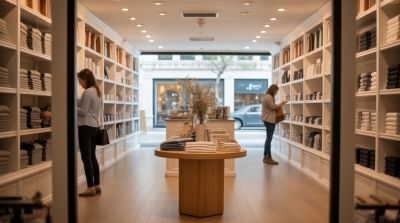
General Liability and Business Insurance for Dallas Retail Stores and Boutiques
A customer slips on a wet floor near your entrance on a rainy afternoon and fractures their wrist. A product you sell injures a buyer who files a claim against your store.
A shoplifter damages your display case during a theft attempt. A pipe bursts overnight and ruins $20,000 in inventory before you open in the morning.
Thumann Agency has been protecting Dallas retail businesses since 1996. As an independent broker with access to 80+ top-rated carriers, we build retail insurance programs that cover the liability, property, and operational risks that come with running a storefront in the Dallas market, from specialty boutiques in Bishop Arts to established shops in NorthPark to high-traffic retailers along Knox-Henderson.
Get a Free Retail Store Insurance Quote
Why Dallas Retailers Choose Thumann Agency
-
80+ Carrier Options so your retail business gets priced across top-rated carriers, not a single company's rate
-
Same-Day COI Delivery for landlords, lease renewals, vendor agreements, and franchise requirements
-
Coverage Built Around Your Store GL, property, inventory, product liability, and BOP reviewed as one coordinated program
-
Dallas Retail Market Specialists, Since 1996 who understand DFW lease requirements, seasonal inventory risk, and what your landlord needs on the certificate
-
Annual Coverage Reviews Included so your limits reflect peak inventory values and grow as your store expands
Why Dallas Business Owners Trust Us
Thumann Agency has earned 118 client reviews with a 4.7/5 star rating. We hold active BBB Accreditation in Dallas, TX, a Trusted Choice membership, and a 2024 Expertise.com designation as a Top Dallas Insurance Agency. Our clients include retailers, shop owners, and small business operators across Dallas and DFW who came to us for the right coverage and stayed because we deliver certificates without delay and answer the phone when they call.
“The professional staff has provided nothing but confidence... a long-lasting partnership.” - Betty Maultsby, Larkspur Landscape Design, LLC
“The agents at Thumann always give me peace of mind and help me make the right choices for my coverage needs. They don't try to sell me anything I won't benefit from.” - Alyssia Trimble
“I've been with the agency over 5 years and I've never had a bad experience. My phone calls are always returned in a timely manner.” - Johnerta T., Dallas, TX
“Excellent and fast service. Worlds better than previous companies I have used.” - Colin Hatzmann, Bullymake
What Is Retail Store Insurance?
Retail store insurance is not a single policy. It is a combination of commercial coverages designed around the specific risks of operating a storefront, whether that is a specialty boutique in Uptown Dallas, a neighborhood convenience store in Oak Cliff, a gift shop in the Bishop Arts District, or a high-volume retailer in a North Dallas shopping center.
Every retail business that opens its doors to the public faces liability exposure from customer injuries and property damage. Every retailer with physical inventory faces property loss exposure from fire, theft, vandalism, and weather. Every Dallas retailer with a lease has a landlord who requires proof of insurance before the business occupies the space.
The right retail insurance program addresses all of these exposures as a coordinated program, not as disconnected standalone policies purchased from different sources. We review your specific operation, your lease requirements, your inventory value, and your staff size before recommending a program.
What Types of Dallas Retail Businesses Need Store Insurance?
Any Dallas business that sells goods directly to consumers from a physical location or online should carry retail business insurance. This includes:
-
Clothing and apparel boutiques and fashion retailers
-
Specialty food stores, delis, and gourmet shops
-
Gift shops, home goods stores, and decor retailers
-
Jewelry stores and luxury goods retailers
-
Electronics and technology retail stores
-
Hardware, home improvement, and building supply stores
-
Pet stores and pet supply retailers
-
Florists and garden centers
-
Bookstores and hobby shops
-
Convenience stores and neighborhood markets
-
Grocery stores and specialty food markets
-
Liquor stores and wine shops
-
Toy stores and children's product retailers
-
Sporting goods, outdoor, and fitness equipment stores
-
Coffee shops and cafes with retail merchandise components
-
Pop-up shops, vendor booth operators, and market sellers
-
E-commerce businesses with warehouse or fulfillment space
The specific combination of coverages your store needs depends on whether you own or lease your space, how much inventory you carry, whether you have employees, and the specific nature of the products you sell. A jewelry store has a very different liability and property profile than a clothing boutique, even if both operate in the same Dallas shopping center.
What Does Retail Store Insurance Cover?
General Liability Insurance
General liability is the foundation of every retail store's insurance program. It covers bodily injury and property damage claims that third parties make against your business: a customer who slips on your floor, a guest injured by a falling display, or an incident where your employee damages a customer's property.
If you're unsure exactly what General Liability Insurance covers, read our guide: 7 Things General Liability Insurance Covers (And 5 Things It Doesn't).
In the Dallas retail market, most commercial lease agreements require tenants to carry a minimum general liability limit before occupying the space. A $1 million per occurrence limit is the typical baseline. Retail businesses in higher-traffic locations, shopping centers, or venues where lease requirements specify higher minimums may need $2 million per occurrence. We confirm your lease requirement before quoting so your policy satisfies your landlord from day one.
Slip-and-Fall Liability: The Most Common Retail Claim in Texas
Slip-and-fall incidents are the single most common source of general liability claims for Dallas retail businesses. A wet floor near an entrance during a rainy day, a loose floor mat at a checkout counter, a tripping hazard near a display fixture, or a spill in a store aisle are all situations that occur in retail environments every day.
Texas uses a comparative fault system for slip-and-fall liability. If a customer is found partially at fault for their own injury, their recovery is reduced proportionally. However, the open-and-obvious doctrine, which can reduce retailer liability when a hazard is plainly visible, is not an absolute defense in Texas. A retailer can still be found liable for failing to remedy a hazardous condition that a customer encountered even if it was visible. General liability insurance covers your defense costs and any settlement or judgment regardless of how the fault determination ultimately resolves.
Product Liability for Retail Stores
If your store sells products manufactured by third parties, you can still be named in a product liability lawsuit when one of those products injures a customer. The manufacturer carries the primary liability, but as the seller, your business is part of the distribution chain and can be brought into a products liability claim.
Your general liability policy includes products and completed operations coverage that extends to product liability claims arising from merchandise you sell. For Dallas retailers who sell consumables, children's products, electronics, tools, or any product with an inherent use-related risk, confirming that your GL policy adequately covers product liability is a specific step we take at quoting.
Commercial Property Insurance
Your store's physical assets represent a significant investment. Commercial property insurance covers the building if you own it, your tenant improvements and leasehold improvements if you lease, your fixtures and display equipment, and your inventory. Fire, theft, vandalism, burst pipes, and storm damage are the most common property loss events for Dallas retail businesses.
One of the most common retail property coverage mistakes is insuring inventory at an average value rather than at peak inventory levels. A clothing retailer who doubles their stock in October and November for the holiday season is significantly underinsured if their policy limit reflects their off-season inventory value. We discuss seasonal inventory fluctuations and structure your property limits to reflect your highest-exposure period.
Business Income Coverage
If a covered event such as a fire, burst pipe, or significant storm forces your store to close temporarily, business income coverage replaces the revenue you lose during the closure period. It also covers ongoing fixed expenses like rent and utilities during the time you cannot operate. For Dallas retailers in locations with high daily foot traffic, even a short closure can produce substantial revenue loss. Business income coverage is one of the most valuable and most frequently underestimated components of a retail insurance program.
Glass Breakage Coverage
Storefront glass is a significant property exposure for Dallas retailers. A vehicle impact, attempted break-in, vandalism, or severe weather event can shatter a storefront window or glass door, producing both a repair cost and a period of vulnerability while the glass is replaced. Glass breakage coverage pays for the repair or replacement of plate glass windows and doors. For retailers with large display windows, specialty glass, or glass in high-traffic areas, this coverage prevents a single incident from becoming a four-figure out-of-pocket expense.
Workers Compensation Insurance
If your retail store has employees, Texas allows you to opt out of workers compensation coverage. For retailers, this is a financially dangerous decision. Retail work involves physical labor: lifting and moving stock, operating on ladders for merchandise placement, working in stockrooms with heavy inventory, and long hours on hard floors that produce repetitive stress injuries. Employee injuries are not hypothetical.
If an employee is injured at your store and you are a workers compensation non-subscriber in Texas, you lose your common-law defenses in an injury lawsuit and bear the full financial exposure. Most commercial retail landlords in Dallas also require proof of workers compensation as a lease condition for tenants with employees.
Liquor Liability for Retail Stores
If your retail store sells alcohol, including liquor stores, wine shops, specialty grocery stores with a wine section, and convenience stores with beer and wine, Texas dram shop law creates civil liability when alcohol sold to a visibly intoxicated person causes injury or death to a third party.
Standard general liability policies exclude liquor liability. Retailers who sell alcohol need a separate liquor liability endorsement or standalone policy. This is one of the most commonly overlooked coverage gaps for Dallas retail businesses that sell packaged alcohol. The TABC permit your business holds does not provide insurance protection. Liquor liability insurance is what actually covers you if a dram shop claim is filed.
Commercial Auto Insurance for Retail Deliveries
If your retail business makes deliveries, uses a van for supply runs, or has any employee driving for business purposes, personal auto insurance does not cover those trips. Any business use of a vehicle requires a commercial auto policy. This applies to owned delivery vehicles and to situations where employees use their personal vehicles for store-related errands. A driver making a delivery for your store who is in an accident and files under their personal policy will likely have the claim denied because of the business use exclusion.
Business Owners Policy vs. Standalone General Liability: Which Is Right for Your Dallas Store?
Most Dallas retail businesses are best served by a Business Owners Policy (BOP) rather than standalone general liability coverage. Here is the difference and how to decide which fits your situation.
A standalone general liability policy covers only third-party bodily injury and property damage claims against your business. It does not cover damage to your own property, your inventory, or lost revenue when your store cannot operate.
A Business Owners Policy bundles general liability and commercial property coverage into a single policy designed specifically for small to mid-size businesses. For most Dallas retail stores, a BOP provides both the GL coverage your lease requires and the property coverage your inventory and fixtures need, at a combined cost that is typically lower than purchasing each separately. Business income coverage is frequently included or available as an add-on within the BOP structure.
A standalone GL policy makes more sense for retailers who carry minimal inventory and occupy leased spaces where the landlord's property coverage handles the building but the tenant needs only liability protection for their lease compliance. For most physical retail operations with meaningful inventory, a BOP is the right structure.
We evaluate your specific situation and present both options with an honest cost comparison so you make the decision that fits your store's actual risk profile and budget.
Retail Insurance in the Dallas Market: What Store Owners Need to Know
Lease Insurance Requirements
Almost every commercial retail lease in Dallas requires the tenant to carry minimum general liability insurance before occupying the space. Standard lease insurance requirements typically include $1 million per occurrence and $2 million aggregate general liability, with the landlord or property management company listed as an additional insured on the policy. Many retail leases also require commercial property coverage for tenant improvements and business personal property.
Failing to carry the required coverage is a lease violation that can result in notice of default from your landlord. We review your lease's insurance requirements before quoting and confirm every element of compliance, including additional insured endorsement language and certificate holder wording, before your policy goes into effect.
Dallas Retail Neighborhoods and Their Risk Profiles
Where your store is located in Dallas shapes your liability profile in ways that affect both your coverage needs and your premium. High-traffic entertainment districts like Deep Ellum and Uptown produce more customer interactions per hour than suburban shopping centers, increasing slip-and-fall frequency. Dense retail corridors like Knox-Henderson and Lower Greenville attract pedestrian traffic that creates liability exposure outside your store as well as inside. Large shopping centers at NorthPark, Galleria Dallas, and LBJ Freeway corridors have their own landlord insurance requirements and risk management standards that affect what your policy needs to include.
We know these neighborhoods and the specific insurance requirements that come with operating in them. That local knowledge shapes how we structure every retail policy we write.
Theft and Employee Dishonesty
General liability insurance does not cover theft losses. Shoplifting, burglary, and employee theft are property crime exposures that require separate coverage. Commercial property insurance typically covers theft of inventory and business personal property by third parties. Employee dishonesty coverage, available as part of a commercial crime policy or as an endorsement, covers financial losses caused by dishonest acts of your own employees.
For Dallas retailers, particularly those in higher-traffic locations or those who handle significant cash, understanding the distinction between what your property policy covers and what requires a crime endorsement prevents the most common theft-related coverage surprises.
How Much Does Retail Store Insurance Cost in Dallas?
The GSC data shows thousands of monthly searches for 'retail business insurance cost' and 'retail store insurance cost' across the Dallas market. This is what retail business owners are actually looking for. Here is a direct and honest answer.
The primary factors that drive your retail insurance premium in the Dallas market include:
-
Type of merchandise sold. Products with higher inherent risk, such as firearms, alcohol, children's products, and high-value items like jewelry and electronics, carry higher base rates than lower-risk merchandise categories.
-
Annual revenue. General liability premiums for retailers are typically rated on annual gross revenue. Higher revenue indicates more customer transactions and higher claim frequency potential.
-
Square footage and foot traffic. Larger retail spaces with higher customer volume carry more slip-and-fall exposure. High-traffic locations in Dallas entertainment districts typically carry higher GL rates than low-traffic suburban specialty stores.
-
Inventory value. Property coverage premiums scale with the value of the inventory and business personal property you need to insure. Seasonal inventory peaks should be reflected in your coverage limits.
-
Number of employees. Workers compensation premiums are calculated from payroll. Larger retail staffs produce higher workers comp premiums.
-
Location and building characteristics. Properties in areas with higher crime rates, older buildings, or locations subject to specific weather exposure may carry higher property premiums. Dallas retail locations near flood zones carry specific flood risk exposure not covered by standard property insurance.
-
Claims history. A clean loss history is one of the most effective tools for keeping retail insurance premiums competitive at renewal.
For a small Dallas boutique or specialty shop, a BOP combining GL and property coverage typically starts at a level that most retail owners find manageable relative to their operating costs. The far larger risk for most Dallas retailers is carrying inadequate limits or the wrong coverage structure and absorbing an out-of-pocket loss that a properly structured policy would have covered.
Request Your Free Retail Store Insurance Quote
Frequently Asked Questions About Retail Store Insurance in Dallas
Is business insurance required by law for retail stores in Texas?
Texas does not have a single blanket law requiring retail businesses to carry general liability insurance. However, commercial lease agreements in Dallas make it a practical requirement for any retailer with a physical storefront, since landlords require proof of coverage as a lease condition before occupancy. Retailers with employees are also subject to workers compensation considerations. The Texas Department of Insurance provides regulatory guidance on business insurance requirements in Texas. For any Dallas retailer with a commercial lease or with employees, the practical answer is that operating without coverage is not a viable option.
What does a landlord require on my insurance certificate?
Most Dallas commercial landlords require proof of at least $1 million per occurrence and $2 million aggregate in general liability coverage, with the property owner or management company listed as an additional insured on the policy. Many also require commercial property coverage for tenant improvements. We review your specific lease language before quoting and prepare the certificate with the exact wording your landlord's insurance department requires.
Does general liability cover shoplifting and theft from my store?
No. General liability covers claims brought against you by third parties for bodily injury and property damage. It does not cover your own inventory or property losses. Theft of merchandise is covered under your commercial property policy, subject to the terms and limits of that policy. Employee theft requires a separate commercial crime policy or dishonesty endorsement. Understanding this distinction is essential to knowing which policy to look to when a theft occurs.
What is a BOP and is it better than standalone GL for my store?
A Business Owners Policy bundles general liability and commercial property coverage into a single policy designed for small to mid-size businesses, typically at a lower combined cost than purchasing each separately. For most Dallas retail stores with physical inventory and a lease, a BOP provides better overall protection than standalone GL alone, which covers only liability claims and leaves your inventory and property unprotected. We evaluate both options for your specific situation and present a direct comparison.
Does my retail store insurance cover online sales?
It depends on the policy and the nature of your e-commerce activity. Standard retail GL policies cover your business operations as described in the policy, which may or may not extend to online sales, shipping liability, and customer data exposure from your e-commerce platform. Retailers with significant online revenue or who store customer payment data through their website should specifically confirm that their GL and property coverage extends to online operations and evaluate whether a cyber liability endorsement is needed for data breach exposure.
Get Retail Store Insurance Built for Your Dallas Business
Whether you run a specialty boutique in Bishop Arts, a high-traffic shop in Knox-Henderson, a growing retail brand in a North Dallas shopping center, or an e-commerce operation with warehouse space in the DFW area, the right insurance program starts with coverage that actually fits how your business operates.
Since 1996, Thumann Agency has been protecting Dallas retail businesses. We build programs around your actual operation, your lease requirements, your inventory value, and your staff, and we issue certificates the same day your landlord or vendor needs them.
Request Your Free Retail Store Insurance Quote | Call Us at (972) 991-9100
Last Updated: Sept 05, 2026
Author: Steve Thumann, Licensed Texas Insurance Broker.
Sources: Texas Department of Insurance, National Association of Insurance Commissioners
Disclaimer: This page is for educational purposes only. Coverage details vary by provider. Contact us for a personalized quote.