Welder Insurance, Dallas TX
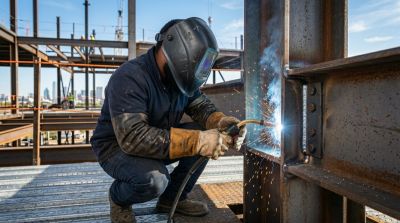
General Liability and Business Insurance for Dallas Welding Contractors and Fabricators
Sparks from your grinder ignite a client's wood-framed staging material at a North Dallas commercial job site. A structural weld on a mezzanine you fabricated develops a crack eighteen months after installation. Your welding rig trailer is broken into overnight and $14,000 in rods, tools, and equipment is stolen. A general contractor on a DFW multifamily project asks for your certificate of insurance by 8 a.m. to authorize your mobilization.
Thumann Agency has been insuring Dallas tradespeople and contractors since 1996. As an independent broker with access to 80+ top-rated carriers, we build welder insurance programs that account for the specific risks of the trade: fire and heat exposure during work, completed operations liability on structural and load-bearing welds, the tools and equipment that make your business function, and the COI that gets you onto the job site.
Get a Free Welder Insurance Quote
Why Dallas Welding Contractors Choose Thumann Agency
-
80+ Carrier Options including carriers that actually write welding risk, not generic trade rates applied to a high-hazard classification
-
Same-Day COI Delivery for GCs, industrial clients, project owners, and TDLR-related compliance requirements
-
Coverage Matched to Your Work Type structural, ornamental, mobile field welding, fabrication shop, and pipeline programs reviewed separately because each prices differently
-
Dallas Trade Market Specialists, Since 1996 who understand DFW structural steel demand, the ornamental iron market in North Dallas luxury residential, and what commercial clients put in their subcontract agreements
-
Annual Coverage Reviews Included so your limits and classification keep pace as your revenue, crew, and project scope grow
Why Dallas Tradespeople Trust Us
Thumann Agency has earned 118 client reviews with a 4.7/5 star rating. We hold active BBB Accreditation in Dallas, TX, a Trusted Choice membership, and a 2024 Expertise.com designation as a Top Dallas Insurance Agency. Our clients include trade contractors, specialty subs, and construction businesses across Dallas and DFW who chose us for expertise and stayed because coverage questions get answered directly and certificates are delivered the same day.
“The professional staff has provided nothing but confidence... a long-lasting partnership.” - Betty Maultsby, Larkspur Landscape Design, LLC
“She put together my portfolio in about a week and a half, patiently answered my questions and gave thoughtful guidance. I foresee a long relationship.” - Eric Clendenin, NTX Building Products
“There is a spirit of excellence that seems to run through the company at all levels.” - Cliff Prescott, Fattowels Inc.
“I've been with the agency over 5 years and I've never had a bad experience. My phone calls are always returned in a timely manner.” - Johnerta T., Dallas, TX
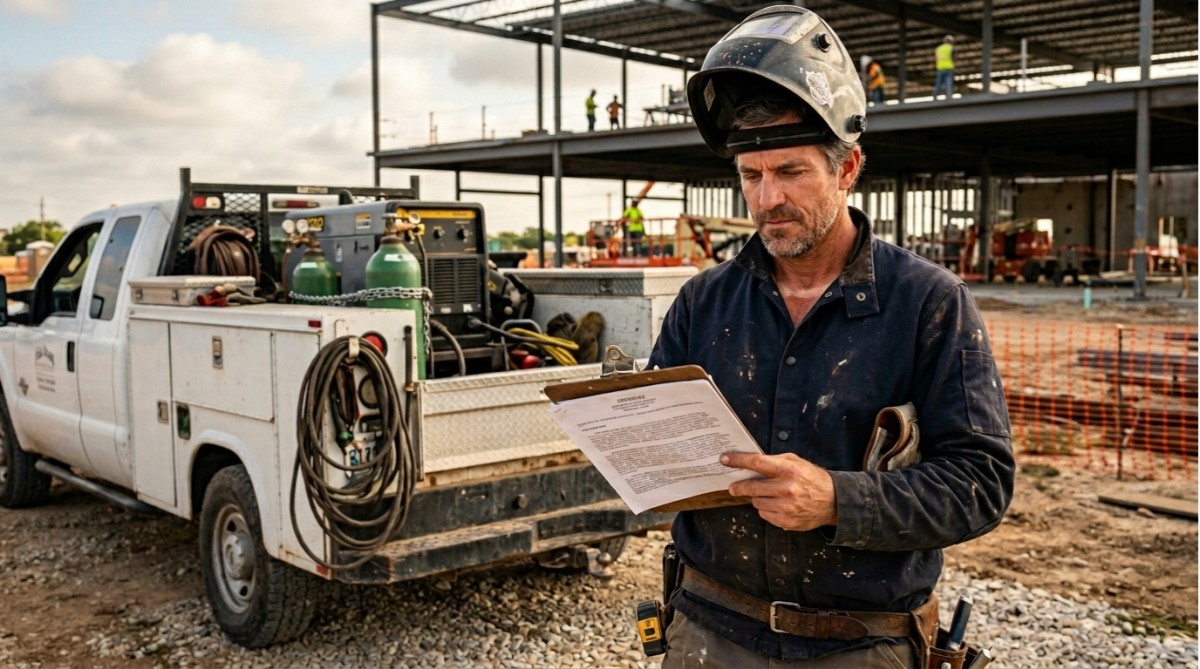
Why Welding Is a High-Hazard Insurance Classification
Welding is not treated like general carpentry or painting by insurance underwriters. It occupies one of the higher-hazard classifications in the construction and trade market for specific reasons, and understanding those reasons helps you find coverage that actually fits the work rather than a generic contractor policy that may exclude your primary exposures.
The hazards that shape how welders are underwritten include:
-
Open flame and arc heat. Every welding process produces extreme heat, UV light, and in most cases an open arc or flame. On a job site with combustible materials nearby, wood framing, insulation, tarps, staging materials, the risk of fire damage to adjacent property is real and is the most frequent liability claim category for welding contractors.
-
Sparks and spatter. Grinding and cutting operations produce sparks that travel significant distances. On commercial job sites with multiple trades working simultaneously, sparks from a welder's grinder can ignite materials far from the welder's immediate work area.
-
Compressed and flammable gases. Oxy-acetylene and shielding gas cylinders represent a significant safety hazard when mishandled, damaged, or improperly stored. Property damage from cylinder-related incidents falls under your GL policy but may be subject to specific carrier conditions.
-
Fumes and atmospheric contamination. Welding produces metal fumes that in some policy forms are classified as pollutants and excluded from standard GL coverage. This is a coverage gap that catches many welders by surprise because it is not explained clearly at the time a policy is written.
-
Structural and load-bearing work. Welders who perform structural connections, load-bearing fabrications, or weld-in-place installations carry completed operations exposure that extends for years after a job is complete. A weld failure on a structural application is a high-severity claim.
What a Complete Welder Insurance Program Covers
General Liability Insurance with Completed Operations
GL is the foundation of every welding contractor's program. It covers third-party bodily injury and property damage claims arising from your work. A client or bystander injured at your job site, property damaged by sparks or heat, a client's facility damaged by welding fumes or fire: these are GL claims.
Completed operations coverage extends your GL to claims that arise after the job is finished. This is particularly important for structural welders, fabricators, and anyone whose work becomes part of a load-bearing or permanent installation. A weld failure discovered a year after a commercial mezzanine is occupied is a completed operations claim. We confirm completed operations is included and correctly sized on every welder GL policy we place.
Welding Equipment and Tools Coverage
Welding equipment represents a significant capital investment. A MIG or TIG welding machine, plasma cutter, grinder, welding helmets and PPE, rod ovens, leads and cables, and specialty fixtures can represent $10,000 to $40,000 or more in a professional welding operation. Standard commercial property insurance does not cover tools and equipment taken off-site to a job location.
An inland marine policy or tools and equipment floater extends coverage to your gear wherever it is: in your truck, at a job site, staged at a client's facility, or in transit. For mobile welders, this is the coverage that protects the primary physical assets of the business from theft, vandalism, and accidental damage across every location you work.
Welding Rig and Mobile Equipment Coverage
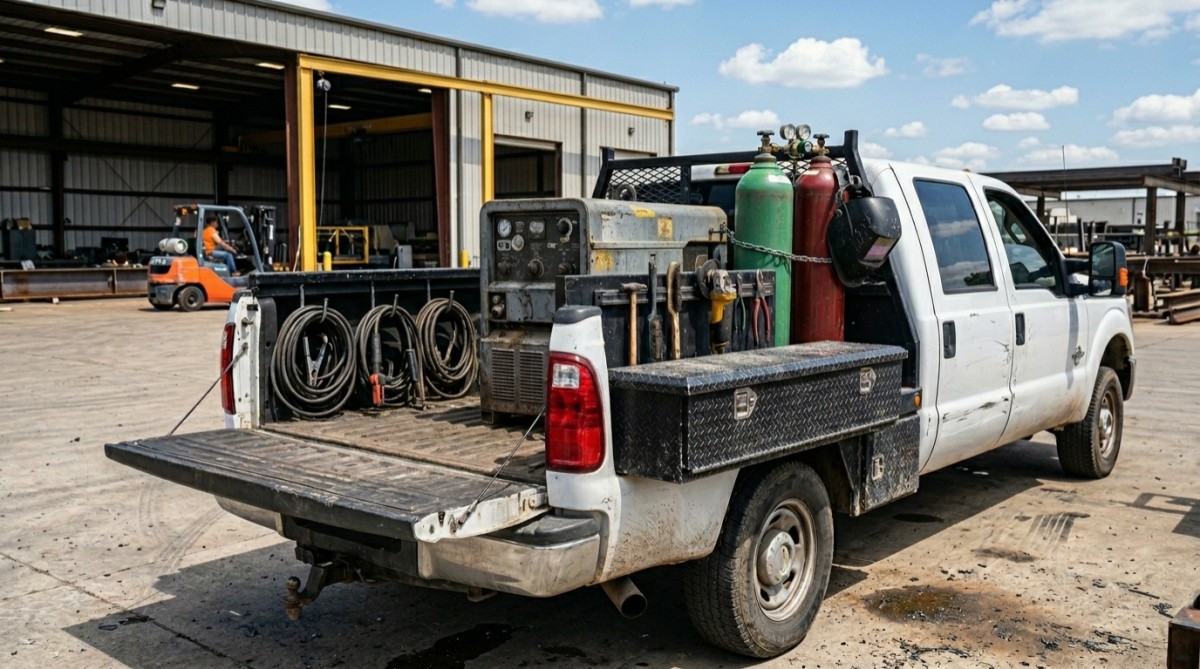
Many Dallas mobile welders operate a dedicated welding rig, a service truck outfitted with a welder/generator unit, gas cylinders, leads, tools, and consumables. This rig is both a commercial vehicle and a piece of specialized equipment. The vehicle itself needs commercial auto coverage. The welder/generator unit mounted in the bed may need to be specifically scheduled on your policy to be fully covered, as it is not always automatically included under either the vehicle policy or a standard tools floater.
We review your rig configuration and confirm that the welder/generator unit, the mounted equipment, and any trailers are correctly scheduled and valued across your commercial auto and tools program.
Commercial Auto Insurance
Your truck, van, trailer, or dedicated welding rig is a business vehicle. Personal auto policies exclude business use, and the exclusion is particularly consequential for a welder whose vehicle is also a mobile workspace. Commercial auto insurance covers your welding truck for accidents, liability, and vehicle damage during business use. For welders who pull trailers with welding equipment and gas cylinders, the trailer must be specifically scheduled on the policy to be covered.
Workers Compensation Insurance
Welding is one of the highest-injury-rate trades in construction and manufacturing. Burns from arc flash, heat, and spatter, eye injuries from UV exposure, respiratory issues from fume inhalation, cuts from metal handling, and musculoskeletal injuries from the physical demands of the work all occur regularly in welding operations. Workers compensation insurance covers your employees' medical costs, lost wages, and rehabilitation when they are injured on the job. Texas allows private employers to opt out, but for welding operations with employees, opting out removes your common-law defenses in an employee injury lawsuit and leaves you personally exposed to the full financial weight of a serious burn or injury claim.
Commercial Umbrella
For Dallas welding contractors working on larger commercial projects, GC subcontracts frequently require $5 million or more in total aggregate liability. A commercial umbrella provides additional limits above your primary GL and commercial auto policies at a cost that is typically more efficient than increasing primary policy limits to reach the required aggregate. For structural and industrial welding work in the DFW market, an umbrella is often the difference between qualifying for a commercial subcontract and being excluded.
Hot Work Exclusions: The Coverage Gap Every Dallas Welder Must Understand
Standard commercial general liability policies may include what is called a hot work exclusion or a limitation on coverage for fire damage arising from welding, cutting, brazing, or torch operations. This exclusion, when present, means that if a fire starts as a direct result of your welding or cutting operations and damages adjacent property, your GL policy may not respond.
Not every GL policy includes a hot work exclusion, and the scope of those that do varies by carrier and policy form. Some policies exclude fire damage caused by welding entirely. Others limit coverage to specific conditions such as whether a fire watch was maintained. Others impose a sublimit on fire damage claims separate from the main per-occurrence limit.
This is one of the most important reasons to work with an independent broker who understands welding-specific underwriting rather than purchasing a generic contractor policy online. A policy written for a handyman or a general maintenance contractor may have hot work exclusions that make it functionally useless for a welder. We specifically confirm how your carrier handles fire-from-welding claims before placing your policy.
The Dallas Welding Market: Why Location-Specific Coverage Matters
Dallas is not a generic construction market. The specific welding demand in the DFW Metroplex shapes both the work available and the insurance requirements attached to it.
-
Commercial construction boom. The DFW Metroplex consistently ranks among the top metro areas nationally for commercial real estate development. Steel-frame commercial buildings, mixed-use towers, and industrial facilities across North Dallas, Uptown, the Design District, and the suburban growth corridors from Frisco to Allen generate sustained demand for structural and miscellaneous metals welding. Commercial GCs on these projects impose professional certificate requirements that generic welder policies do not satisfy.
-
Industrial corridor and warehouse market. The I-20, I-30, and I-35 industrial corridors around Dallas produce consistent demand for maintenance welding, equipment repair, and industrial fabrication. Industrial clients in this sector often require higher liability limits and specific additional insured language that differs from residential or light commercial work.
-
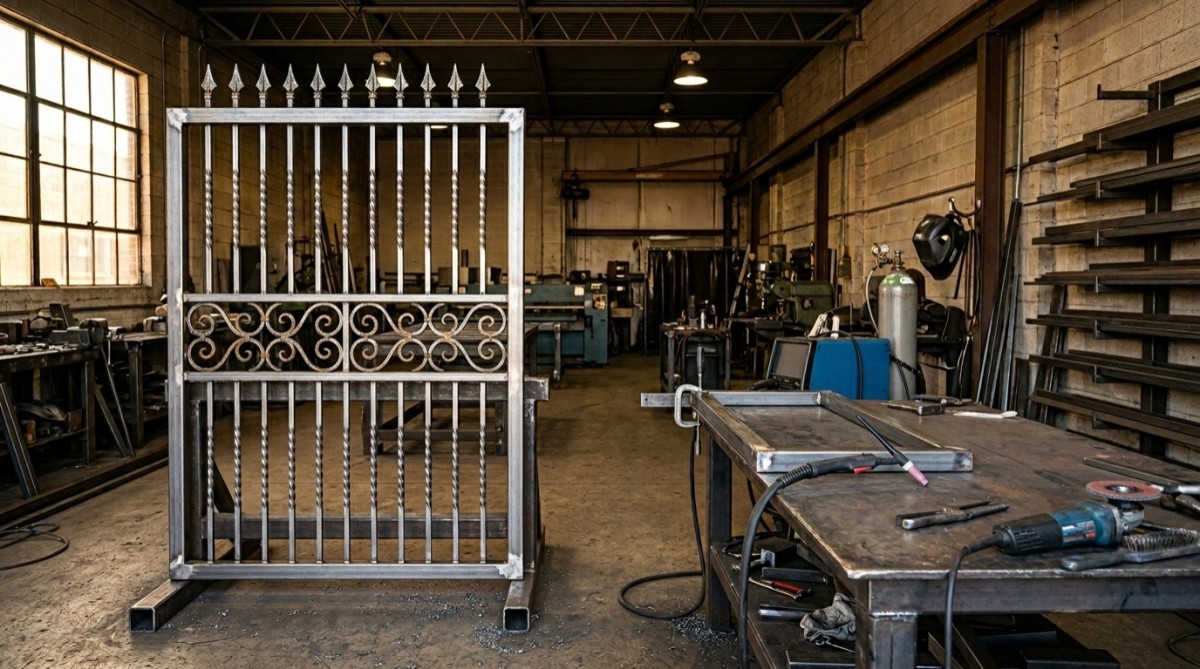
Luxury residential custom metalwork. The concentration of high-value residential development in North Dallas, Highland Park, University Park, Westlake, and Southlake drives a premium ornamental iron and custom metalwork market. A custom iron driveway gate for a $4 million home carries property value exposure that must be reflected in your completed operations limits.
-
Oil and gas sector connections. While the Permian Basin is several hours from Dallas, many Texas welders who work DFW projects also take pipeline, refinery, and oilfield welding work when it is available. Pipeline and pressure welding is rated as a separate classification and priced differently from structural or ornamental work. If your scope includes this work, it must be disclosed at quoting to ensure coverage applies.
Texas Welding Licensing and What It Means for Insurance
Texas does not require a statewide license to perform general welding work. A welder operating as an independent contractor or business owner in Dallas can legally weld without a state-issued license in most commercial and residential contexts.
What matters in the Dallas commercial construction market is certification, not licensing. AWS (American Welding Society) certifications, such as Certified Welder (CW) and Certified Welding Inspector (CWI) designations, are frequently specified in commercial project contracts, structural steel subcontracts, and industrial welding agreements. These certifications demonstrate that a welder has been tested to a documented standard and can produce welds within specified parameters. GCs on structural steel projects in DFW commonly require AWS certifications from their welding subs.
For insurance purposes, your certifications and documented training can influence both carrier eligibility and in some cases premium. Carriers that specialize in welding risk view certification as evidence of professional competency that reduces the likelihood of a defective weld claim. We identify these carriers within our 80+ carrier network and confirm your certifications are factored into the submission.
How Much Does Welder Insurance Cost in Texas?
Welding contractor insurance premiums vary more than most trades because the range of work types, from ornamental iron fabrication to structural steel erection to pipeline welding, carries dramatically different risk profiles and base rates. As an independent broker shopping 80+ carriers including those that specifically write welding risk, we find the right carrier for your specific work type rather than applying a generic contractor rate.
Key cost factors for Dallas welding contractors:
-
Work type classification. Ornamental iron and light fabrication carry lower GL base rates than structural steel erection. Mobile field welding in industrial settings carries higher rates than shop-based fabrication. Pipeline and pressure welding is rated separately and significantly higher. Getting your classification right is the most important underwriting step.
-
Shop vs. field work split. If you split your work between a fixed fabrication shop and field installation or repair work, carriers want to know the revenue breakdown. Field work in occupied buildings or commercial facilities carries higher on-site exposure than shop fabrication.
-
Annual revenue. GL premiums for welding contractors are typically calculated as a rate per $1,000 of revenue. Revenue volume directly determines your base premium before other factors are applied.
-
Completed operations limits. How completed operations is structured and what aggregate limit applies affects premium. Structural welders and fabricators whose work becomes a permanent part of a structure need adequate completed operations limits.
-
Workers comp payroll and trade class. Welding workers comp is rated on payroll by class code. Structural welding and pipeline welding carry higher class code rates than shop fabrication or light maintenance welding.
-
Claims history. A clean loss history is the most effective cost management tool. Prior GL claims, particularly fire damage or structural defect claims, affect both rate and carrier eligibility.
Dallas welding contractors who also take on broader construction or fabrication scopes can review the complete contractors insurance program which covers the full range of construction and trade coverages for Dallas contractors operating at any scale alongside their welding operations.
Request Your Free Welder Insurance Quote
Frequently Asked Questions About Welder Insurance in Dallas
Does my general liability policy cover fire caused by welding sparks?
It depends on your policy form. Standard GL policies may include a hot work exclusion or fire-related sublimit that limits or eliminates coverage for fire damage caused directly by welding, cutting, brazing, or torch operations. Before purchasing any GL policy as a welder, you need to confirm specifically how your carrier handles fire-from-welding claims. We confirm this before placing your policy, not after a claim reveals the gap.
Does Texas require workers compensation for welding employees?
Texas allows private employers to opt out of workers compensation, but for welding operations with employees, opting out is one of the highest-risk decisions you can make. Welding has among the highest injury rates of any trade, and a serious burn or eye injury claim without workers comp coverage exposes you personally to full medical costs, lost wages, and any resulting lawsuit. Many commercial GCs in Dallas also require proof of workers comp from every sub who brings employees to their job sites. The Texas Department of Insurance provides guidance on workers comp options for Texas employers, including coverage from private carriers, certified self-insurance, and the state's assigned risk pool.
What is a hot work permit and does my insurance require one?
A hot work permit is a written authorization issued by a facility manager or safety officer before any welding, cutting, brazing, or open-flame work is performed in a facility. It documents the work location, confirms the area has been cleared of combustibles, identifies a designated fire watch, and specifies the post-job inspection period. Commercial job sites, industrial facilities, and many commercial buildings in Dallas require hot work permits before any welding work begins. Some GL carriers require that your work comply with industry hot work standards, and failure to follow a required permit process can affect coverage on a resulting fire damage claim. We clarify carrier expectations on hot work compliance when placing your policy.
Is my welding rig or generator unit covered under my commercial auto policy?
The vehicle itself is covered under your commercial auto policy. The welding machine, generator unit, or specialized equipment mounted in the truck bed may or may not be automatically covered depending on how it is scheduled. Some policies treat permanently attached equipment as part of the vehicle. Others treat it as separate business property requiring its own scheduling on a tools or inland marine policy. We review your rig configuration and confirm everything is correctly scheduled so there is no gap between your commercial auto policy and your tools coverage at the time of a claim.
How quickly can I get a Certificate of Insurance?
Same day in most cases. Whether you need a COI for a GC subcontract, an industrial client's vendor approval process, a City of Dallas permit application, or a project mobilization, we issue the certificate with correct limits, additional insured language, and any specific wording required by the requesting party the same day your coverage is confirmed.
Get Welder Insurance Built for Your Dallas Operation
Whether you run a mobile welding operation serving commercial clients across DFW, a custom ornamental iron shop fabricating gates and railings for Dallas luxury residential projects, a structural steel sub working high-rise and commercial builds in Uptown and the Design District, or a repair and maintenance welder serving industrial clients in the I-20 and I-30 corridor, your insurance program needs to be structured around your actual work type, not a generic contractor template.
Since 1996, Thumann Agency has been the broker Dallas trade businesses call when they need coverage placed correctly with a carrier that actually understands their work, certificates issued the same day, and a team that can explain exactly what is and is not covered before a claim surfaces.
Request Your Free Welder Insurance Quote | Call Us at (972) 991-9100
Last Updated: June 07, 2026
Author: Steve Thumann, Licensed Texas Insurance Broker.
Sources: Texas Department of Insurance, National Association of Insurance Commissioners
Disclaimer: This page is for educational purposes only. Coverage details vary by provider. Contact us for a personalized quote.