HVAC Contractor Insurance, Dallas TX
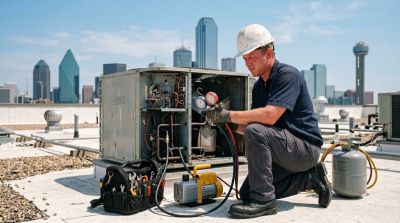
Insurance for Dallas HVAC Contractors, Technicians, and AC Service Companies
An attic unit you installed develops a condensate line blockage three weeks after the job. Water backs up, soaks through the ceiling below, and destroys $18,000 in flooring and personal property. The homeowner files a claim against your business. Without completed operations coverage, that cost is yours to carry personally.
Thumann Agency has been insuring Dallas HVAC contractors and mechanical service companies since 1996. As an independent broker with access to 80+ top-rated carriers, we build HVAC insurance programs that meet TDLR licensing requirements, satisfy your commercial clients' certificate standards, and cover the specific risks that heating, air conditioning, and refrigeration work produces in the North Texas market.
Get a Free HVAC Contractor Insurance Quote | Call Us at (972) 991-9100
Why Dallas HVAC Contractors Choose Thumann Agency
-
80+ Carrier Options so your HVAC program gets priced across carriers that specialize in mechanical contractor risk, not a single rate
-
TDLR COI Filed Same Day directly to the Texas Department of Licensing and Regulation once coverage is bound
-
Coverage Built for HVAC Work GL with completed operations, refrigerant liability, tools, commercial auto, and workers comp in one reviewed program
-
Dallas Market Specialists, Since 1996 who understand summer demand surges, DFW commercial HVAC contract standards, and TDLR Class A and Class B requirements
-
Annual Coverage Reviews Included so your limits keep pace as your crew, revenue, and commercial contract scope grow
Why Dallas HVAC Contractors Trust Us
Thumann Agency has earned 118 client reviews with a 4.7/5 star rating. We hold active BBB Accreditation in Dallas, TX, a Trusted Choice membership, and a 2024 Expertise.com designation as a Top Dallas Insurance Agency. Our clients include HVAC contractors, AC service companies, and mechanical contractors across Dallas and DFW who came to us for TDLR-compliant coverage and stayed because certificates go out the same day without chasing anyone down.
“The professional staff has provided nothing but confidence... a long-lasting partnership.” - Betty Maultsby, Larkspur Landscape Design, LLC
“She put together my portfolio in about a week and a half, patiently answered my questions and gave thoughtful guidance. I foresee a long relationship.” - Eric Clendenin, NTX Building Products
“There is a spirit of excellence that seems to run through the company at all levels.” - Cliff Prescott, Fattowels Inc.
“I've been with the agency over 5 years and I've never had a bad experience. My phone calls are always returned in a timely manner.” - Johnerta T., Dallas, TX
Why HVAC Work Requires Specialized Insurance Coverage
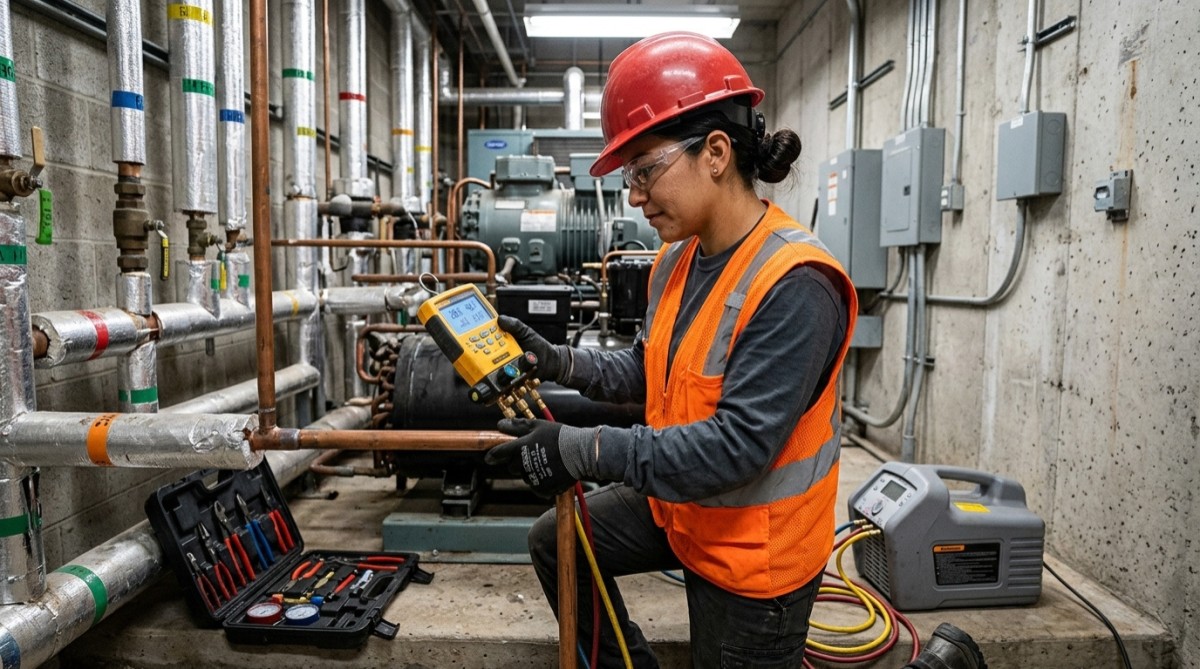
HVAC contracting involves a combination of risks that a generic small business policy is not built to handle. On any given day, your technicians work with live electrical systems, pressurized refrigerant lines, gas connections, combustion equipment, and mechanical systems installed in occupied residential and commercial spaces. The liability exposure is real, specific, and extends well beyond the day the job is complete.
A refrigerant leak from a unit you installed may not cause damage immediately. A poorly sealed duct connection may allow conditioned air to escape for months before anyone notices. A gas line connection that passes inspection may develop a slow leak weeks later. These post-completion scenarios are where HVAC contractors face their most significant and most common liability exposure, and they are precisely the situations where a generic policy fails.
In Dallas, where HVAC systems run at full capacity for five to six months of the year and summer emergency service calls come in around the clock, the frequency of jobs and the speed at which they are completed during peak demand creates additional risk. Coverage built for HVAC work accounts for all of it.
What HVAC Contractor Insurance Covers
General Liability Insurance with Completed Operations
General liability is the foundation of every HVAC contractor's insurance program, and in Texas it is legally required to hold your TDLR license. For HVAC contractors, the most critical component is completed operations coverage, which extends your GL protection to claims that arise after a job is finished and your crew has moved on to the next call.
HVAC-specific completed operations scenarios that occur regularly in the Dallas market include: a condensate line installation that backs up and floods a ceiling, a refrigerant connection that develops a slow leak and damages electronic equipment in a server room, a duct system with improper pressure balancing that causes moisture issues leading to mold, and a gas furnace connection that produces a combustion problem discovered weeks after the install.
Standard GL covers third-party bodily injury and property damage during the job. Completed operations covers the same categories after the job. Both are required for any HVAC operation that installs, services, or repairs equipment in occupied buildings. We confirm completed operations is included and adequately sized on every HVAC policy we write.
Contractors Pollution Liability
Refrigerants are regulated chemicals. R-22, R-410A, R-32, and other refrigerants used in HVAC systems are subject to EPA regulations governing handling, recovery, and disposal. A refrigerant spill, accidental release during servicing, or improper disposal that results in environmental contamination can produce cleanup costs and regulatory fines that your standard general liability policy explicitly excludes through its pollution liability exclusion.
Contractors pollution liability (CPL) fills this gap. It covers accidental spills and releases of refrigerants and other chemicals used in HVAC work, as well as the cleanup costs and third-party claims that result. For HVAC contractors who service commercial refrigeration systems, perform large refrigerant recovery operations, or work with older systems containing regulated substances, CPL is an important addition to the core program.
This coverage is part of a complete contractors insurance program that we build for HVAC operators across Dallas and DFW, coordinating each coverage so the limits align and the gaps are closed before they matter.
Tools and Equipment Coverage
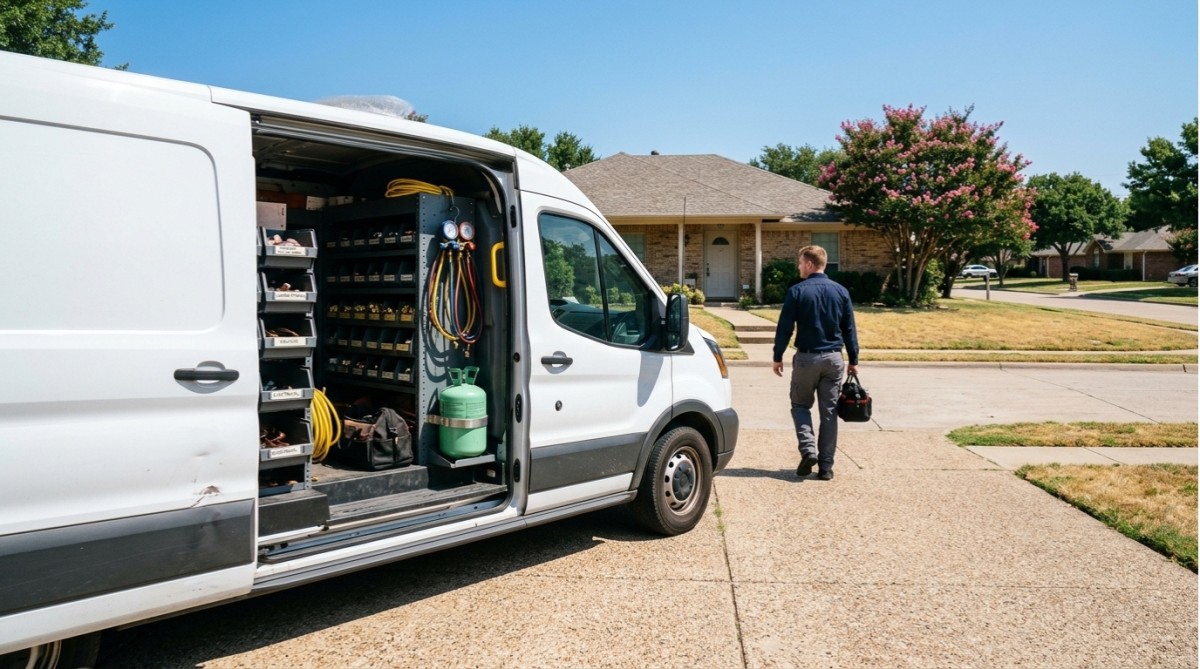
An HVAC technician's van carries diagnostic equipment, manifold gauge sets, vacuum pumps, refrigerant recovery units, pipe cutting and flaring tools, and a full range of specialty hand tools. The total value of equipment in a well-equipped service van can easily exceed $15,000 to $25,000. Standard commercial property insurance does not cover tools taken off-site to a job location.
Tools and equipment coverage, also called an inland marine policy, extends protection to your gear wherever it is: in your service van, at a job site, staged at a customer's property, or in transit between locations. It covers theft, accidental damage, and loss. For HVAC contractors who move expensive diagnostic and recovery equipment between multiple Dallas and DFW service calls daily, this coverage protects the investment your business depends on.
Installation Floater
An installation floater covers HVAC units, equipment, and materials from the moment they leave the supplier until they are permanently installed and accepted by the customer. An air handler, condenser, or commercial rooftop unit that is damaged in transit, stolen from your vehicle before installation, or destroyed by weather while staged at a commercial job site represents a significant out-of-pocket loss if you are not covered.
For HVAC contractors handling larger commercial installations or high-value residential equipment, an installation floater provides protection during the vulnerable period between purchase and completed installation that neither standard property coverage nor general liability addresses.
Workers Compensation Insurance
HVAC work consistently ranks among the highest-injury-rate trades in the construction and service industry. Technicians work on rooftops in Dallas summer heat, in crawl spaces and attics where temperatures can reach 130 degrees Fahrenheit during peak summer months, on ladders and elevated platforms, around live electrical systems, and with pressurized refrigerant lines. Back injuries from equipment handling, heat-related illness, electrical exposure, falls from height, and cuts from sheet metal are all occupational risks that occur regularly in HVAC operations.
Texas allows private employers to opt out of workers compensation coverage. For HVAC contractors, opting out is one of the most financially dangerous decisions you can make. Without workers comp, you lose your common-law defenses if an injured employee sues you, and you bear the full financial exposure of medical costs, lost wages, and any court judgment. Most commercial property managers and GCs in Dallas also require proof of workers comp before allowing HVAC subcontractors on a job.
Commercial Auto Insurance
Your service vans and work trucks are how you reach every job. Personal auto insurance policies do not cover vehicles used for business purposes. If your technician is in an accident driving to a service call in Garland or a commercial install in Frisco and you are relying on a personal policy, the insurer can deny the claim. Commercial auto insurance covers your HVAC service fleet for business-related accidents, vehicle damage, and the medical costs and liability exposure that come with operating service vehicles across the Dallas metro every day. For multi-van HVAC operations, a fleet policy covers all vehicles under one program and is typically more cost-effective than individual policies per vehicle.
Professional Liability for HVAC Contractors
Standard general liability covers physical damage and bodily injury. It does not cover claims that your professional recommendation, system design, or load calculation was incorrect and caused a client financial harm. For HVAC contractors who provide system design services, perform Manual J heat load calculations, specify equipment for new construction projects, or advise clients on system upgrades, professional liability fills this gap.
A commercial client who relies on your system specification and then faces inadequate cooling capacity after installation may claim that your design recommendation was the cause. Professional liability covers your legal defense and any resulting settlement in that scenario. As design-build delivery becomes more common in Dallas commercial construction, HVAC contractors who provide any design or specification services should evaluate professional liability as part of their program.
Equipment Breakdown Coverage
This coverage applies to your business's own equipment used in your operations, not the equipment you install for clients. If the commercial HVAC system at your shop or office fails, if your refrigerant recovery machine breaks down due to an internal mechanical failure, or if your diagnostic equipment is damaged by an electrical surge, standard commercial property insurance does not cover internal equipment failure without an external covered peril causing it.
Equipment breakdown coverage fills this gap for your business's own critical equipment. For HVAC companies with a shop, office space, or specialized equipment essential to daily operations, this coverage prevents an internal equipment failure from becoming an out-of-pocket replacement cost.
Cyber Liability Insurance
As HVAC contractors increasingly install smart thermostats, building automation systems, and connected HVAC controls in commercial properties, the exposure to data and network-related claims grows. A cyber incident affecting a building automation system you installed, a data breach involving client payment or contact information stored in your service management software, or ransomware affecting your scheduling and invoicing platform can produce costs that have no general liability or property policy addresses.
For HVAC companies using ServiceTitan, Housecall Pro, or similar field service platforms that store client data and payment information, cyber liability coverage is worth evaluating as a standard part of the program.

TDLR Insurance Requirements for Texas HVAC Contractors
The Texas Department of Licensing and Regulation (TDLR) regulates air conditioning and refrigeration contractors in Texas and mandates specific minimum insurance coverage as a condition of licensure. These requirements apply to both Class A and Class B license holders and must be maintained continuously throughout the license period, not just at initial application.
Class A licensee insurance requirements:
-
At least $300,000 per occurrence (combined property damage and bodily injury)
-
At least $600,000 aggregate for property damage and bodily injury coverage
-
At least $300,000 aggregate for products and completed operations coverage
Class B licensee insurance requirements:
-
At least $100,000 per occurrence (combined property damage and bodily injury)
-
At least $200,000 aggregate for property damage and bodily injury coverage
-
At least $100,000 aggregate for products and completed operations coverage
These minimums are set by TDLR rule. Insurance must be obtained from a carrier authorized to sell liability insurance in Texas under the Texas Insurance Code. A completed certificate of insurance must be filed directly with TDLR when applying for an initial license, when changing a business name or affiliation, and upon request by the department.
If your insurance lapses, you are in violation of your license conditions and cannot legally perform or offer to perform air conditioning and refrigeration contracting. TDLR can require proof of coverage from any licensee at any time. A licensee who has received an insurance waiver because they do not contract with the public cannot perform work under their license with the general public.
We issue certificates of insurance directly to TDLR the same day coverage is bound. If your license is coming up for renewal or you are applying for the first time, we confirm the exact wording and limit requirements before submitting your certificate so the filing is accepted without delays.
Residential vs. Commercial HVAC Work: Insurance Differences
The distinction between residential and commercial HVAC work matters for how your insurance program is structured and priced. Understanding the difference helps you confirm your policy actually covers the work you do.
-
Residential HVAC work typically involves split systems, package units, and ductwork in single-family homes, townhomes, and small apartment buildings. Liability claims are frequent but typically smaller in scale. Completed operations exposure is high because residential systems run continuously and post-install defects are discovered quickly. Property damage claims involving water from condensate lines are among the most common residential HVAC GL claims in Dallas.
-
Commercial HVAC work involves rooftop units, chillers, large ductwork systems, building automation integration, and equipment serving multi-story buildings, data centers, restaurants, and medical facilities. Claims in commercial settings tend to be significantly higher in value because a single HVAC failure can affect an entire floor of a commercial building. GL limits need to reflect the value of the assets your work could potentially affect. Commercial clients in Dallas typically require $1 million per occurrence and $2 million aggregate at minimum, with additional insured endorsements standard in most commercial contracts.
-
HVAC service and maintenance contracts introduce a different liability profile from installation work. Ongoing maintenance agreements keep you connected to a system's performance over time and can create liability exposure if a maintenance failure results in equipment damage or system failure. Some carriers rate service-focused HVAC operations differently from installation-focused operations.
We review your actual revenue split between residential, commercial, and service work when building your program to ensure your classification codes, limits, and coverage structure match what you actually do.
How Much Does HVAC Contractor Insurance Cost in Texas?
HVAC contractor insurance premiums in the Dallas market depend on your specific operation. As an independent broker shopping 80+ carriers, we produce competitive pricing by making carriers compete for your account rather than presenting a single take-it-or-leave-it rate.
The factors that most directly influence your HVAC insurance premium include:
-
License class and scope of work. Class A licensees with broader scope and higher volume typically pay more than Class B operations. Commercial HVAC work carries higher base rates than residential service.
-
Annual revenue and crew size. GL premiums are typically rated on annual revenue. Workers comp premiums are calculated from payroll. Both scale with the size of your operation.
-
Residential vs. commercial revenue split. Commercial work carries higher GL rates than residential work. Your actual revenue allocation between these two categories affects your overall GL premium.
-
Whether you include gas line work. Gas line installation and service may be rated as a separate classification or may require specific carrier approval. Not disclosing gas line work at quoting produces coverage gaps at the time of a claim.
-
Claims history. A clean loss history is your most effective tool for keeping premiums competitive at renewal. Prior GL or workers comp claims directly affect both your rate and carrier eligibility.
-
Number and type of vehicles. Commercial auto premiums scale with vehicle count, driver records, and operating radius across the DFW metro.
Request Your Free HVAC Contractor Insurance Quote
Frequently Asked Questions About HVAC Contractor Insurance in Dallas
What insurance does Texas TDLR require for HVAC contractors?
TDLR requires all licensed HVAC contractors to maintain commercial general liability insurance continuously throughout the license period. Class A licensees must carry at least $300,000 per occurrence and $600,000 aggregate for bodily injury and property damage, plus $300,000 aggregate for products and completed operations. Class B licensees must carry at least $100,000 per occurrence and $200,000 aggregate, plus $100,000 for products and completed operations. The carrier must be authorized to sell insurance in Texas. A Certificate of Insurance must be filed directly with TDLR at initial license application, when changing business name or affiliation, and on request. The Texas Department of Licensing and Regulation maintains current requirements and can request proof of coverage from any licensee at any time.
Does GL insurance cover refrigerant spills and environmental contamination?
No. Standard general liability policies exclude pollution-related claims through a pollution liability exclusion. A refrigerant spill, accidental release of a regulated substance, or improper disposal resulting in environmental contamination falls under this exclusion on a standard policy. Contractors pollution liability (CPL) is the specific coverage that addresses this exposure. HVAC contractors who work with regulated refrigerants, particularly on commercial systems with larger refrigerant charges, should evaluate CPL as part of their coverage program.
Is workers compensation required for HVAC contractors in Texas?
Texas does not mandate workers compensation for most private employers. However, HVAC work is among the highest-injury-rate trades, and opting out of workers comp removes your common-law defenses in an employee injury lawsuit. Most commercial property managers and GCs in Dallas require proof of workers comp before allowing HVAC subcontractors on a job. For any HVAC operation with employees, carrying workers comp is the standard recommendation regardless of the state requirement.
How quickly can I get a Certificate of Insurance filed with TDLR?
Same day in most cases. Once coverage is bound, we issue the certificate and can file it directly to TDLR on your behalf. If you are applying for an initial license, renewing, or changing your business name or affiliation, we prepare the certificate with the correct TDLR wording and file it the same day so your licensing process is not delayed by the insurance step.
What limits do commercial clients in Dallas require on my HVAC certificate?
Most commercial property managers, GCs, and institutional clients in Dallas require $1 million per occurrence and $2 million aggregate as a minimum GL limit on a subcontractor certificate. Many also require additional insured endorsement language, specific certificate holder wording, and proof of workers compensation and commercial auto alongside the GL. We issue all required documentation on the same certificate workflow the same day coverage is confirmed.
Get HVAC Contractor Insurance Built for Your Dallas Operation
Whether you run a one-truck residential service company in Garland, a multi-crew commercial HVAC operation serving high-rises in Uptown and the Design District, or a new construction HVAC subcontractor working DFW's growth corridor from Frisco to McKinney, Thumann Agency builds a coverage program that meets your TDLR requirements, satisfies your commercial clients, and is structured around the actual risks of HVAC work in North Texas.
Since 1996, we have been the broker Dallas trades businesses call when they need coverage that actually fits the work, certificates issued without delay, and a team that understands what TDLR expects on the paperwork.
Request Your Free HVAC Contractor Insurance Quote | Call Us at (972) 991-9100
Last Updated: May 23, 2026
Author: Steve Thumann, Licensed Texas Insurance Broker.
Sources: Texas Department of Insurance, National Association of Insurance Commissioners
Disclaimer: This page is for educational purposes only. Coverage details vary by provider. Contact us for a personalized quote.