Commercial Truck Insurance Dallas, TX
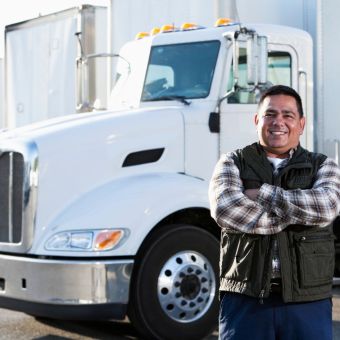
Commercial truck insurance is a group of coverages for trucks that haul freight or equipment for business. It typically includes primary liability for injuries and property damage your truck causes, physical damage for the truck itself, motor truck cargo for the load, and, for owner-operators, non-trucking liability for miles driven outside of dispatch.
The legal minimum depends on where you run and what you haul. Most for-hire interstate freight on trucks of 10,001 pounds or more needs at least $750,000 in liability, and Texas-only trucks over 26,000 pounds need at least $500,000. Freight brokers and shippers often ask for $1 million.
Thumann Agency is an independent broker in Dallas, in business for 30+ years (since 1996). We compare 80+ carriers for owner-operators, small fleets, and motor carriers, and we read the policy against your authority, your cargo, and your contracts before you sign.
-
What it covers: liability, your truck, your cargo, trailer interchange, and off-dispatch miles for owner-operators
-
Is it required? Generally, yes. Federal and Texas rules set minimum liability limits, and your insurer files proof of insurance for your authority
-
What does it cost? It varies widely by truck, cargo, radius, and driving records, so the only reliable number comes from a quote
Why Dallas Truckers Choose Thumann Agency
Load boards and broker contracts don't wait. Here's what you get with us:
-
Independent broker: we compare 80+ carriers instead of handing you one company's truck rate
-
A dedicated advisor: one person who knows your account, not a call center
-
30+ years in Dallas: Thumann Agency has placed Texas commercial coverage since 1996
-
A contract and limits review: we check your policy against what your authority, brokers, and shippers actually require
-
Same-day certificates of insurance for existing clients: for brokers, shippers, and equipment providers that ask for proof before they release a load
-
Annual renewal reviews: so your trucks, drivers, and limits keep pace as your operation grows
-
We stay with you through claims: your advisor works with the carrier on your side
-
Servicio en español: Spanish-language support is available (see our seguros de negocio page)
What Our Clients Say
Thumann Agency holds a 4.6-star rating from 140+ Google reviews. Here's what some of our commercial clients say about working with us.
"They are great. After looking a lot of places for the specific insurances we needed we finally found it with Thumann. Not only did they find the right insurance we need, they made it super easy. Whitney was a great help and I would recommend the whole team over there to anyone looking."
Cory Wolff
"Thank you Nida and Thumann agents for always making sure I got what I need for my projects! I've been with this agency for 4 years and I couldn't recommend them more! We recently needed additional coverage for a new contract and Nida went above and beyond to get us what we were needing. Thank you!!!"
Jose Medina
"Have been with The Thumann Agency for more than 14 years. A great brokerage firm to work with. Their agents have great follow through and every time I reach out to them to re-quote my policies, they always come back with strong recommendations on how to maximize my savings. I highly recommend them. They take the heavy lifting off my plate."
Douglas Laher
Google reviews | 4.6 stars, 140+ reviews | BBB A+ rating | Trusted Choice pledge
Who Needs Commercial Truck Insurance in Dallas?
A truck used to haul freight or equipment for business typically needs a commercial truck policy. A personal auto policy generally isn't written for a vehicle operated for hire. That includes:
-
Owner-operators under their own authority, who carry the full coverage burden
-
Leased owner-operators, who run under a motor carrier's authority but still have gaps between dispatches
-
Small fleets of two to ten trucks, often with mixed cargo
-
Semi trucks and 18-wheelers running interstate, where federal rules apply on top of Texas rules
-
Box trucks and straight trucks doing local and regional delivery
-
Dump trucks, including those hauling for construction crews (see our contractors auto insurance page)
-
Tow trucks, hotshot haulers, auto haulers, and refrigerated carriers
-
Fuel and oilfield haulers, who carry higher minimum limits (see our oil and gas insurance page)
-
New trucking companies setting up their first authority and insurance program
Lighter business vehicles, such as vans and pickups, may fit commercial auto insurance instead (see the FAQ below).
What Does Commercial Truck Insurance Cover?
Most trucking programs combine several coverages. Not every operation needs every line, and the terms depend on the carrier and the policy. The short version:
-
Primary liability: bodily injury and property damage your truck causes to other people, including legal defense
-
Physical damage: collision, theft, fire, vandalism, and weather damage to your tractor, truck, and trailer
-
Motor truck cargo: loss or damage to the freight you haul
-
Trailer interchange: damage to a trailer you don't own while it's in your care
-
Non-trucking liability: coverage for an owner-operator's miles outside of dispatch
-
General liability: claims that don't involve driving, such as an injury at your yard or dock
-
Workers' compensation: employee injuries, for operations with drivers or staff
Semi Truck and 18-Wheeler Insurance
Semi truck insurance, also called 18-wheeler insurance, is built around the heaviest exposure on the road. A loaded tractor-trailer can cause serious injuries and large property losses in one accident, so primary liability is the center of the policy.
-
Interstate or Texas-only: where you run decides which rules apply, and a truck that does both needs to meet both
-
Radius and cargo: longer routes and higher-value or specialized freight change how carriers price and write the policy
-
Limits above the minimum: the legal floor is often lower than what a broker or shipper asks for, and lower than what a serious accident can cost
-
Your trailer: physical damage and trailer interchange decide who pays when a trailer is damaged
Box Trucks, Dump Trucks, Tow Trucks, and Hotshot Haulers
Each type of truck carries different risks, so the policy should match the operation, not just the vehicle weight.
-
Box trucks and straight trucks: local and regional delivery, with frequent stops and heavy city driving
-
Dump trucks: construction, sand, and gravel hauling, with on-site hazards as well as road risk
-
Tow trucks: work on busy roadsides, and the vehicles they tow carry their own exposure
-
Hotshot haulers: pickups pulling gooseneck or flatbed trailers for expedited freight
-
Auto haulers: high-value vehicles on the trailer, so cargo limits matter
-
Refrigerated carriers: ask about a reefer breakdown endorsement, since spoilage from a failed refrigeration unit is typically not covered under basic cargo coverage
Tell us what you drive and haul, and we'll compare carriers that write it.
Bobtail and Non-Trucking Liability
A leased owner-operator usually runs under the motor carrier's liability policy, and that policy typically responds only while you're dispatched. Non-trucking liability, often sold as bobtail insurance, is meant for the gap: driving the truck for personal use or between loads. Whether you need it depends on your lease agreement, so read what the motor carrier's policy says before you assume you're covered. We can walk through your lease with you.
Physical Damage, Cargo, and Trailer Interchange
-
Physical damage covers your own equipment. Ask how the policy values the truck and what the deductible is
-
Motor truck cargo covers the load. The federal government doesn't require cargo insurance for general freight carriers, but the Federal Motor Carrier Safety Administration does require household goods carriers to file cargo coverage. Brokers and shippers often require cargo coverage by contract anyway
-
Trailer interchange covers damage to a trailer you pull under an interchange agreement. Check the limit and deductible against the equipment you actually pull
-
Tools, straps, and load securement gear are typically not covered under cargo or physical damage and may need separate coverage. Our commercial property insurance page covers a yard or shop you own or lease
Minimum Limits: What the Law Requires and What Brokers Ask For
-
Federal minimum for most for-hire freight: $750,000 in liability for for-hire interstate carriers hauling non-hazardous property in trucks with a gross vehicle weight rating of 10,001 pounds or more, under federal regulation 387.9
-
Oil and hazardous materials: the federal minimum rises to $1 million for oil and many hazardous materials, and to $5 million for certain hazardous substances hauled in bulk. These rules can apply to bulk hauling inside Texas as well
-
Texas-only trucks over 26,000 pounds: the Texas Department of Motor Vehicles lists a $500,000 minimum for private or for-hire carriers over 26,000 pounds, and the insurance filing has to stay active while you operate
-
What brokers and shippers ask for: many ask for $1 million or more, which is above the federal floor for most freight
These are minimums, not recommendations. Limits required by a contract may be higher, and a serious accident can cost more than any minimum.
- Who files your proof of insurance: your insurer, not you, files proof of liability coverage for your authority. The Federal Motor Carrier Safety Administration explains the federal filings. Ask us to help you confirm yours are on file and match your authority. The MCS-90 endorsement is part of proving financial responsibility for many interstate carriers, so ask your insurer exactly what it does and doesn't do for you.
Hauling Containers From a Rail Ramp
If you pull containers or chassis from a rail ramp or port, the Uniform Intermodal Interchange and Facilities Access Agreement sets its own insurance rules on top of the law. The Intermodal Association of North America publishes the rules, and they commonly include:
-
A commercial auto liability policy with a $1 million combined single limit and a special interchange endorsement
-
Commercial general liability of $1 million per occurrence
-
Trailer interchange coverage, with limits that each equipment provider sets
-
Equipment providers named as additional insureds
-
Thirty days' notice of cancellation, or ten days for non-payment
Your agent submits the certificate to the association, so tell us up front if you haul containers.
Federal figures are summarized from federal regulation 387.9 and the Federal Motor Carrier Safety Administration, Texas figures from the Texas Department of Motor Vehicles, and container rules from the Intermodal Association of North America. Rules can change, so confirm current requirements with each agency.
Dallas Trucking Risks and Local Rules
Dallas trucks run major freight corridors, including I-35E, I-20, I-30, I-45, I-635 (LBJ Freeway), and US-75. Here's what the record shows:
-
Crashes in Dallas County: the Texas Department of Transportation recorded 3,857 crashes involving commercial motor vehicles in Dallas County in 2024, including 27 fatal crashes that killed 29 people, according to the Texas Department of Transportation's county tables
-
Truck lane rules: on sections of I-20 in Dallas County and I-45 in Dallas and Ellis counties, trucks with three or more axles can't use the inside left lane except to pass, according to the North Central Texas Council of Governments' truck lane rules. Expansion to other corridors has been proposed, so check current signs and maps before you route a truck
-
What it means for your policy: crashes, violations, and inspection history are part of your driving and safety record, and many carriers review that record when they price a truck. Keeping drivers off restricted lanes and out of avoidable incidents helps you at renewal
-
Weather and theft: North Texas hailstorms, high winds, and cargo theft can all affect a truck parked overnight, so ask where the policy covers a truck parked at a yard or a truck stop
The crash figures are read from the Texas Department of Transportation county table for 2024, and the lane rules come from the North Central Texas Council of Governments. Both can change, so check the agencies for current data.
What Decides How Much a Truck Claim Pays
You can check these terms in your policy today, long before a loss:
-
Limits: the most the policy will pay for liability, cargo, and trailer interchange
-
Deductibles: what you pay first on physical damage, cargo, and trailer claims
-
How the truck is valued: some policies pay the truck's actual cash value, and others pay an agreed value, so check which one yours uses
-
Exclusions and conditions: such as unattended-truck rules for cargo, or the drivers and radius your quote assumed
-
Who the policy covers: a leased owner-operator's claim can depend on whether the truck was dispatched at the time, which is why the lease and non-trucking coverage matter
We stay with our clients through claims, and your advisor can explain how your own policy is likely to respond before you ever need it.
How Much Does Commercial Truck Insurance Cost in Dallas?
We don't print a single price for semi truck insurance or 18-wheeler insurance. The range is too wide, and a number on a web page would mislead more truckers than it helps. For lighter commercial vehicles, Thumann Agency's general starting range is around $150 to $400+ per vehicle, per month. Tractors, box trucks, dump trucks, and other heavy units are priced individually.
This is Thumann Agency's general starting range for commercial auto policies on lighter vehicles, the same one we list across our site. It isn't a truck quote or a guarantee, and it doesn't come from third-party comparison sites.
What Moves a Truck Premium
-
Your driving record and your drivers' driving records
-
Years in business and experience, with new authorities often priced differently
-
Cargo type, especially hazardous or high-value loads
-
Radius of operation and where the truck is garaged
-
The age and value of the truck and trailer
-
Limits and deductibles
-
Claims history and prior loss runs
-
Safety and inspection history
Down Payments and Payment Plans
The deposit and payment options depend on the carrier and your profile. Ask for them in writing on every quote, along with what the quote assumes about your drivers and radius.
Ways to Keep Truck Insurance Costs Manageable
-
Compare carriers instead of renewing on autopilot
-
Hire drivers with clean, verifiable driving records
-
Keep claims and violations off your record where you can
-
Choose a deductible your cash flow can handle, not just the lowest premium
-
Review limits and your radius every year as your routes change
The lowest premium isn't always the lowest cost after a claim. Compare cargo limits, trailer interchange, and physical damage valuation, not just the price.
How to Choose a Commercial Truck Insurance Company or Broker
Not every carrier writes every truck, and the cheapest quote can hide the narrowest policy. Before you sign, ask:
1. Does this carrier write my kind of truck, cargo, and radius?
2. What does the quote assume about my drivers, and what happens if that changes?
3. How is physical damage valued, and what is the deductible?
4. What are the cargo limits, and what is excluded, such as unattended trucks or reefer breakdown?
5. What are the trailer interchange limit and deductible?
6. What deposit and payment plan does this quote require?
7. How fast can I get a certificate when a broker or shipper asks?
As an independent broker, we ask these across 80+ carriers and put the answers side by side.
How to Get Commercial Truck Insurance in Dallas
1. Tell us about your operation. Share your trucks, cargo, radius, and any broker or shipper requirements.
2. We compare carriers. We shop your operation across 80+ carriers instead of quoting one company.
3. You review the options with your advisor. We walk through limits, deductibles, and exclusions before you decide.
4. We bind your policy and issue your certificate. Existing clients get same-day certificates of insurance in most cases.
Have these ready to speed things up:
-
Your U.S. Department of Transportation number, and your motor carrier or Texas Department of Motor Vehicles number if you have one
-
A list of trucks and trailers with vehicle identification numbers and values
-
A list of drivers with license numbers and driving records
-
Prior loss runs, if you've had a policy before
-
Cargo types, typical routes, and radius
-
Any broker, shipper, or equipment provider insurance requirements
Already a client? You can request a certificate of insurance online.
Commercial Truck Insurance Across Dallas and Texas
Our office is at 12770 Coit Road, Suite 110, Dallas, TX 75251. We serve truckers across Dallas and the Dallas-Fort Worth area, including Fort Worth, Plano, Frisco, Arlington, McKinney, Irving, Garland, Richardson, and Grand Prairie. We also serve truckers in Houston, Austin, San Antonio, Corpus Christi, and Galveston.
Trucking is one part of a complete program. See our Texas business insurance and business insurance pages for the full picture.
Frequently Asked Questions
Is commercial truck insurance the same as commercial auto insurance?
They overlap. Commercial truck insurance is built for trucking businesses and adds coverages such as motor truck cargo and trailer interchange. Commercial auto insurance fits general business vehicles such as vans, pickups, and service trucks. If you haul freight for hire, the truck policy is usually the better fit. Tell us what you haul and we'll point you to the right one.
Do I need workers' compensation for my drivers?
Texas lets most private employers choose whether to carry workers' compensation insurance. Employers that opt out must notify their employees and the state, according to state guidance, and opting out has legal consequences. Some brokers and shippers still ask for proof of coverage, so talk to an attorney about the legal side and to us about options.
Do I need general liability on top of my truck policy?
Often, yes. A truck policy responds to claims tied to driving. General liability insurance can respond to other claims, such as someone injured at your yard or dock, or damage during loading and unloading. Which one responds depends on how the claim happens and how your policies are written, so we review both together.
Can a brand-new trucking company get insured?
Yes, though carriers may ask about your driving and trucking experience, and some will decline a brand-new authority. Carriers that do write new ventures price them on what you can document, such as driver experience and clean driving records. Tell us when your authority starts, what you'll haul, and who will drive, and we'll compare your options.
What happens to my policy when I add a truck or trailer?
Your policy needs to be updated so the new unit is covered and your premium reflects it. Don't assume a new truck or trailer is covered automatically. You can send us the details through our add vehicle form, and we'll confirm what changes before the unit goes on the road.
Can I get coverage for a truck I'm still financing?
Yes. Lenders typically require physical damage coverage and list themselves as the loss payee, which means they're named on claims for the truck. Tell us about the loan and we'll make sure the policy shows the lender correctly. Keep the lender's insurance requirements handy, since they may set deductible and coverage minimums of their own.
Ready to Compare Commercial Truck Insurance Options?
Whether you're renewing, comparing carriers, or insuring your first truck, we'll walk through your options without jargon. Get a Quote, Call (972) 991-9100, or Talk to Us and we'll take it from there.
Last Reviewed: October 2026
Author: Steve Thumann, Licensed Texas Insurance Broker
Sources: Texas Department of Transportation, North Central Texas Council of Governments, Electronic Code of Federal Regulations, Federal Motor Carrier Safety Administration, Texas Department of Motor Vehicles, Intermodal Association of North America, Texas Department of Insurance
Disclaimer: This information is for general educational purposes only and is not legal, tax, or insurance advice or a full description of any policy. Coverage terms, limits, and exclusions vary by carrier and by state, including Texas. Federal and Texas minimum liability limits are set by regulators and can change, and limits required by a broker, shipper, or contract may be higher. Prices shown are general starting ranges, not a guaranteed quote. Texas workers' compensation rules are set by the Texas Department of Insurance, Division of Workers' Compensation, and can change. Reviews reflect customers' own experiences. Contact Thumann Agency for details about your needs. Thumann Agency is licensed under Texas Department of Insurance regulations.