Contractors Insurance Dallas, TX

Coverage Built Around Your Trade, Projects, and Contract Requirements
Whether you're managing multiple crews across North Texas or running a one-person operation, your insurance should reflect the work you actually do. The coverage needs of a roofing contractor can be very different from those of a plumber, electrician, remodeler, or general contractor.
Thumann Agency has been insuring Dallas contractors and tradespeople since 1996. As an independent broker with access to 80+ top-rated carriers, we build coverage programs around your trade, your projects, and your certificate requirements.
We issue COIs the same day. We work for you, not the insurance companies.
Start Your Contractors Insurance Quote | Call (972) 991-9100
Why Dallas Contractors Choose Thumann Agency
✓ Coverage Built Around Your Trade
A roofing contractor, electrician, plumber, and general contractor all face different risks. We take the time to understand your work, your projects, and your contract requirements before recommending coverage.
✓ Dallas Contractor Risk Specialists
We understand the insurance requirements, certificate requests, project risks, and contract language Dallas contractors deal with every day.
✓ Same-Day COIs
Need a certificate for a new job, permit, lease, or general contractor requirement? We move quickly so you can keep projects moving.
✓ We Advocate for You
We work directly with insurance companies on your behalf, helping you secure coverage that aligns with your business, your contracts, and your long-term goals.
✓ Access to 80+ Carriers
As an independent agency, we can compare options from multiple insurance companies instead of being limited to a single carrier.
✓ Annual Coverage Reviews Included so your limits keep pace as your crew, revenue, and project scope grow
Why Dallas Contractors Trust Us
Thumann Agency has earned 125 client reviews with a 4.7/5 star rating. We hold active BBB Accreditation in Dallas, TX, a Trusted Choice membership, and a 2024 Expertise.com designation as a Top Dallas Insurance Agency. Our clients include general contractors, subcontractors, specialty tradespeople, and construction companies across DFW who chose us for expertise and stayed because of the speed and service.
“The professional staff has provided nothing but confidence... a long-lasting partnership.” - Betty Maultsby, Larkspur Landscape Design, LLC
“She put together my portfolio in about a week and a half, patiently answered my questions and gave thoughtful guidance. I foresee a long relationship.” - Eric Clendenin, NTX Building Products
“There is a spirit of excellence that seems to run through the company at all levels.” - Cliff Prescott, Fattowels Inc.
“I've been with the agency over 5 years and I've never had a bad experience. My phone calls are always returned in a timely manner.” - Johnerta T., Dallas, TX
What Is Contractors Insurance?
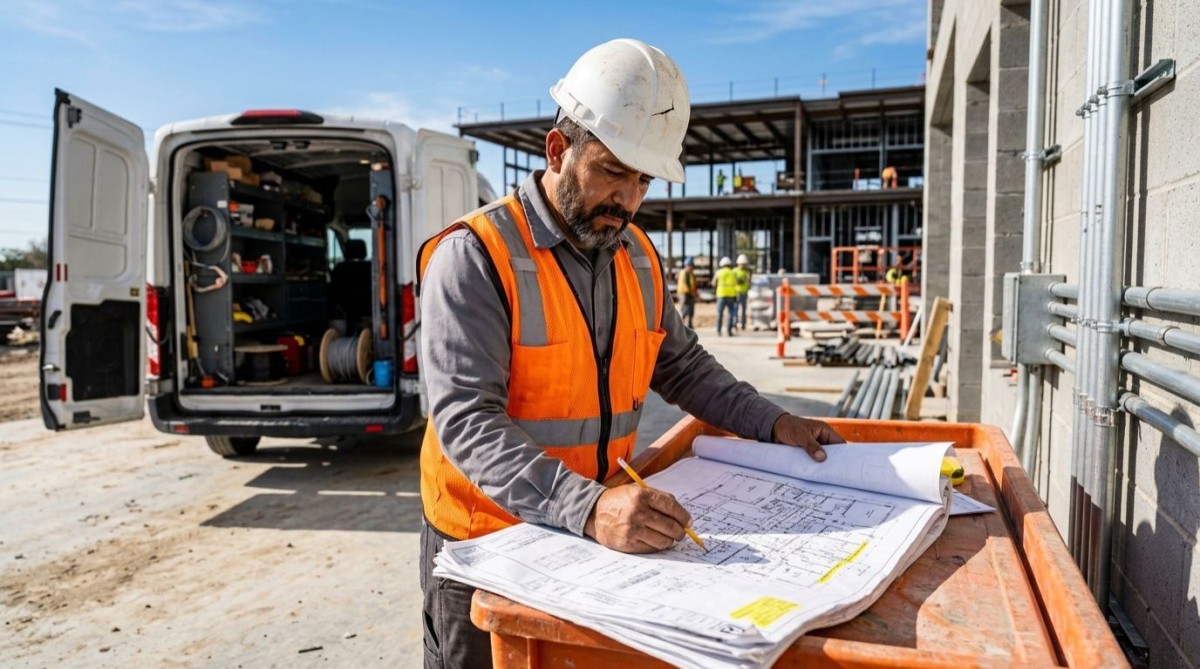
Contractors insurance helps protect your business from the risks that come with performing work for customers, managing job sites, using vehicles and equipment, and meeting contract requirements.
Whether you're a general contractor, electrician, plumber, roofer, HVAC contractor, landscaper, or remodeler, the right insurance program is built around the type of work you perform and the projects you take on.
Most Dallas contractors carry a combination of:
-
General Liability Insurance
-
Commercial Auto Insurance
-
Workers' Compensation
-
Tools & Equipment Coverage
-
Builders Risk Insurance
-
Commercial Umbrella Insurance
-
Contractor Bonds
The coverages you need depend on your trade, crew size, contract requirements, project types, and whether you're working as a general contractor or subcontractor. Our team takes the time to understand how your business operates before recommending coverage.
Start Your Contractors Insurance Quote
Contractor Trades We Insure Across Dallas and DFW
Every contractor faces different risks. A roofer working several stories above the ground has very different insurance needs than a plumber, electrician, or remodeling contractor. That's why we take the time to understand how your business operates before recommending coverage.
General Contractors
General contractors often need a combination of general liability, commercial auto, workers' compensation, builders risk, and umbrella insurance. Many project owners also require certificates of insurance, additional insured endorsements, and waiver of subrogation wording before work can begin.
Roofing Contractors
Roofing contractors face some of the highest liability exposures in the construction industry. Coverage can help protect against property damage claims, job site accidents, equipment losses, and risks associated with working at height.
Electrical Contractors
Electricians regularly work around energized systems, commercial projects, and occupied buildings. Insurance can help protect against bodily injury claims, property damage, completed operations claims, and business vehicle exposures.
Plumbing Contractors
Plumbers can face costly claims involving water damage, property damage, equipment losses, and vehicle accidents. Proper coverage helps protect both residential and commercial plumbing operations.
HVAC Contractors
HVAC contractors often require protection for installation work, service calls, company vehicles, tools, equipment, and liability claims that may arise after work has been completed.
Remodeling Contractors
Whether you specialize in kitchens, bathrooms, additions, or full home renovations, remodeling projects often involve subcontractors, occupied homes, and valuable customer property that require careful insurance planning.
Concrete & Excavation Contractors
Excavation and concrete contractors face unique risks involving heavy equipment, underground utilities, property damage, and job site injuries. Coverage should be tailored to the type of projects being performed.
Landscapers & Irrigation Contractors
Landscaping businesses often need protection for liability claims, commercial vehicles, trailers, mowers, tools, and equipment used throughout the workday.
Painters, Flooring Installers & Carpenters
Even smaller specialty contractors can face expensive claims involving accidental property damage, customer injuries, stolen tools, or vehicle accidents while traveling between job sites.
Handymen & Specialty Trades
From small repair work to ongoing maintenance services, handyman businesses benefit from insurance designed to protect against liability claims, property damage allegations, and unexpected accidents.
Whether you're a one-person operation or managing multiple crews across North Texas, our team takes the time to understand your business and help you build a contractor insurance program that fits the way you work.
Insurance Requirements Dallas Contractors Commonly See
If you're bidding work for a general contractor, commercial property owner, municipality, or project manager, you'll often be asked to meet specific insurance requirements before work can begin.
Common requirements include:
-
Additional Insured endorsements
-
Primary & Non-Contributory wording
-
Waiver of Subrogation
-
Completed Operations coverage
-
General Liability limits of $1M/$2M or higher
-
Commercial Auto coverage
-
Workers' Compensation
-
Commercial Umbrella Insurance
-
Certificates of Insurance (COIs)
We review these requirements every day and can help you understand exactly what your contract is asking for before you sign it.
What Does Contractors Insurance Cover?
General Liability Insurance
General liability is the foundation of every contractor's coverage program. It protects you when your work causes bodily injury or property damage to a third party during the course of a job. A customer trips over your equipment staging at a residential job site. A crew member accidentally breaks a client's window. Your work dislodges a water line and floods the unit below. General liability covers the resulting medical costs, property repair costs, and legal defense fees.
Most general contractors in Dallas require proof of general liability before awarding subcontracts. Commercial property managers require it before you can begin work on their buildings. City of Dallas permits for many project types require it. The standard GL limit structure for Dallas contractors is $1 million per occurrence and $2 million aggregate, though many commercial clients and large GCs require higher limits.
Completed Operations Coverage
Completed operations extends your general liability to cover claims that arise after a job is finished and you have left the site. In contracting, damage from your work is often not discovered immediately. A poorly sealed roof connection leaks for three months before the homeowner notices. A plumbing connection fails behind a wall. A structural repair issue surfaces six months after project completion.
Without completed operations coverage, those delayed claims fall outside your standard GL policy. Completed operations is not an optional add-on for Dallas contractors. It is a required component of any properly structured general liability program, and one that many off-the-shelf online policies either exclude or quietly cap at inadequate limits.
Tools and Equipment Coverage
A commercial electrician's van carries $30,000 in specialized test equipment, cable, conduit tools, and hand tools. A painter's setup includes spray rigs, lifts, and scaffolding. A plumber's truck carries drain cameras, sewer machines, and pipe threading equipment worth tens of thousands of dollars. None of that is covered by standard commercial property insurance when it leaves your shop.
Tools and equipment coverage extends protection to your gear wherever it is: in your vehicle, at a job site, stored at your shop, or in a trailer. It covers theft, vandalism, and accidental damage. It is one of the most actively used coverages in a Dallas contractor's program.
Inland Marine and Equipment Floater
For contractors with higher-value specialized equipment that moves between locations, an inland marine policy or equipment floater provides broader protection than a standard tools policy. This covers equipment in transit, equipment staged at a client's property before installation, and large items like compressors, generators, and specialty machinery that a tools policy may not fully address.
The distinction between a tools policy and an inland marine floater matters when you have a loss. We confirm which structure is appropriate for your specific equipment inventory during the quoting process.
Workers Compensation Insurance
Texas allows private employers to opt out of workers compensation. For contractors, opting out is one of the most financially consequential decisions you can make. Plumbing, electrical, roofing, and general construction work all involve real physical hazards: falls from height, electrical exposure, trench collapse, and equipment injuries occur regularly on Dallas job sites. If an employee is injured and you do not carry workers compensation coverage, you lose your common-law defenses in an employee injury lawsuit. If a court finds you at fault, you bear the full financial exposure with no coverage in place. Most GCs in Dallas also require proof of workers comp before awarding subcontracts.
Commercial Auto Insurance
Your service trucks, vans, and work vehicles are not covered by personal auto insurance when used for business purposes. Any vehicle used to haul tools, transport employees to job sites, make material runs, or complete any business-related driving needs a commercial auto policy. For contractors running multiple vehicles, a fleet commercial auto policy covers all vehicles under one program and is typically more cost-effective than individual policies per vehicle.
Builders Risk Insurance
Builders risk insurance covers a construction project while it is under active construction. It protects the structure, materials on-site, and materials in transit from fire, storm damage, vandalism, and theft during the build period. Builders risk is typically required by project owners and lenders as a condition of any construction contract above a certain value.
For Dallas general contractors and construction companies managing projects from ground-up builds to major commercial renovations, builders risk is a standard part of every project's insurance program. Coverage ends when the project reaches substantial completion and is turned over to the owner.
Contractor Professional Liability
Standard general liability covers physical damage and bodily injury. It does not cover financial harm a client suffers because your professional advice, design recommendation, or project specification was wrong. For remodeling contractors who provide design input, design-build contractors managing both design and construction, and specialty contractors who advise clients on technical solutions, professional liability fills this gap.
This coverage is increasingly requested in Dallas commercial construction contracts as design-build delivery methods become more common across the DFW market.
Contractor Bonds
Many Dallas contractors need both insurance and surety bonds to operate legally and win work. Bid bonds are required when submitting proposals on public works and many commercial projects. Performance bonds guarantee project completion to the owner. Payment bonds protect subcontractors and material suppliers from non-payment. License bonds are required by state agencies and municipalities as a condition of operating. Your insurance and your bond program are separate products with different purposes. We arrange both.
Commercial Umbrella Insurance
A commercial umbrella policy provides additional liability limits above the underlying coverage on your general liability, commercial auto, and workers compensation policies. When a single major job site injury or property damage event produces a claim that exceeds your primary policy limits, the umbrella steps in. For Dallas contractors working on larger commercial projects where contract minimums require $5 million or $10 million in aggregate liability coverage, an umbrella is the most cost-effective way to reach those limits.
Start Your Contractors Insurance Quote

Additional Insured Endorsements and Certificates of Insurance: What Dallas Contractors Need to Know
Two of the most common contractor insurance questions in the Dallas market have nothing to do with coverage selection. They are about certificates and additional insureds, and getting them wrong costs contractors jobs.
What Is an Additional Insured Endorsement?
An additional insured endorsement adds another party to your general liability policy, typically the general contractor or property owner who hired you. When you are listed as an additional insured on someone else's policy, or when you add someone to yours, it means the insurer will defend and cover that party for claims arising out of your work.
GCs in Dallas almost universally require subcontractors to add them as additional insured before starting work. Commercial property owners require it when hiring contractors for tenant improvement or maintenance work. Adding an additional insured to your policy is a routine endorsement that should take minutes, not days. We issue additional insured endorsements the same day, included in the certificate workflow when required.
There are two types of additional insured coverage used in the Dallas market. A blanket additional insured endorsement automatically covers any party that your written contract requires you to add, without needing to name them individually each time. A scheduled additional insured requires naming each party specifically. Blanket coverage is typically preferred because it handles new contract relationships automatically and reduces administrative friction.
What Is a Certificate of Insurance (COI) and How Does It Work?
A Certificate of Insurance is a document summarizing your active coverage, policy numbers, limits, effective dates, and the insurance carriers providing your coverage. It is not a policy. It does not grant coverage to the certificate holder. It is proof that your coverage exists at the moment it is issued.
GCs, commercial property managers, municipalities, and project owners in Dallas request COIs before allowing contractors on a job site, awarding a contract, or issuing a permit. The certificate must show the correct limits, the correct coverage types, and in most cases must list the requesting party as a certificate holder and additional insured.
In the Dallas construction market, where project timelines and contract start dates move fast, COI turnaround time is a competitive differentiator. If your current broker takes days to issue a certificate, you are losing jobs to contractors whose broker can deliver in hours. Our team issues COIs the same day in most cases, with any specific wording, certificate holder language, or additional insured requirements handled in the same request.
Texas Contractor Licensing and Insurance Requirements
Texas licensing requirements for contractors vary by trade and by the agency that oversees that trade. Insurance is a required component of the licensing process for several of the most common contractor types in the Dallas market.
-
Electricians. Electrical contractors in Texas are licensed and regulated by the Texas Department of Licensing and Regulation (TDLR). Master electricians and electrical contractors holding a Master Electrical Contractor license must carry general liability insurance as a condition of licensure. Minimum coverage requirements are set by TDLR rule and must be confirmed and filed as part of the licensing application and annual renewal.
-
HVAC contractors. HVAC contractors are also licensed by TDLR. Texas requires HVAC contractors holding an Installer or Contractor license to carry general liability insurance with minimum limits established by TDLR. A Certificate of Insurance must be submitted and kept current with TDLR.
-
Plumbers. Plumbing contractors operating under a Responsible Master Plumber designation must carry a minimum of $300,000 in commercial general liability insurance and keep a valid COI on file with the Texas State Board of Plumbing Examiners (TSBPE). License revocation for lapsed insurance is enforced.
-
General contractors and remodelers. Texas does not require a statewide general contractor license, but individual municipalities including the City of Dallas, Plano, Frisco, and other DFW cities have their own contractor registration and bonding requirements. Many commercial project contracts impose their own minimum coverage requirements above any municipal floor.
-
City of Dallas contractor registration. The City of Dallas requires registration and in many cases bonding for contractors working on city infrastructure, ROW projects, and certain categories of building permits. Bond and insurance requirements are set at the permit level and vary by work type.
Why Dallas Is a Different Construction Risk Environment
The DFW construction market presents specific risk conditions that shape how contractor insurance programs should be structured.
-
Uninterrupted growth and subcontractor chains. With residential and commercial development running continuously across North Dallas, Frisco, McKinney, Allen, and the urban core, subcontractor chains are long and certificate requirements have become increasingly demanding. General contractors on larger projects regularly require $2 million, $5 million, or higher aggregate limits from their subcontractors, and blanket additional insured endorsements are now a standard contract requirement rather than an exception.
-
North Texas hail and severe weather exposure. Dallas contractors face a persistent hail and windstorm risk profile that creates both property and liability exposures. Roofing, siding, and exterior contractors are directly in the path of weather-driven work surges where unlicensed and under-insured operators flood the market after major events. Having proper insurance and current certificates distinguishes legitimate contractors in this environment.
-
High-value residential market. Neighborhoods like Preston Hollow, Turtle Creek, Highland Park, and University Park feature homes valued well above the median. A damaged kitchen in a $4 million Preston Hollow remodel is not a standard residential GL claim. Contractors working in these markets need adequate limits and, critically, completed operations coverage that stays in force after project completion.
-
Commercial development density. High-density commercial construction in Uptown Dallas, Deep Ellum, and the Design District means contractors are frequently working in occupied buildings or adjacent to active businesses. Third-party property damage exposure and business interruption liability are elevated compared to suburban or greenfield work.
-
Vehicle exposure on Dallas roads. Service vehicles running multiple daily calls between job sites on I-35E, I-635, the Dallas North Tollway, and the President George Bush Turnpike face substantial commercial auto exposure. Dallas traffic volume and the frequency of multi-site contractor operations make commercial auto one of the most frequently triggered coverages in a Dallas contractor program.
How Much Does Contractors Insurance Cost in Dallas?
Contractor insurance premiums vary based on your trade, your crew size, your annual revenue, the types of projects you take on, and your loss history. As an independent broker shopping 80+ carriers, we make carriers compete for your account rather than presenting a single quote.
The primary factors that drive your contractor insurance premium in the Dallas market include:
-
Trade type and risk classification. Roofing, demolition, and structural work carry higher GL rates than interior finishing or landscaping. Your specific trade determines the base rate before any other factors apply.
-
Annual revenue or payroll. GL premiums for contractors are typically calculated based on annual revenue or payroll depending on the policy form. Workers comp premiums are calculated directly from payroll by job class code.
-
Crew size and number of employees. Larger crews increase workers comp exposure and GL payroll base. Subcontractor costs are also factored into many GL policy structures.
-
Number and type of vehicles. Commercial auto premiums scale with vehicle count, vehicle type, driver records, and operating radius.
-
Project size and scope. Contractors taking on larger commercial projects or working as GCs with subcontractor management responsibility carry higher exposure than solo tradespeople on residential service work.
-
Claims history. A clean loss history is one of the most effective tools for keeping premiums competitive at renewal. Prior claims, particularly GL claims involving property damage or bodily injury, directly affect your rate.
-
Certificate and additional insured requirements. Carriers that handle frequent COI issuance and blanket additional insured requests efficiently are worth paying a modest premium difference to access. A carrier that takes five days to issue a COI costs you jobs.
Request Your Free Contractors Insurance Quote
Frequently Asked Questions About Contractors Insurance in Dallas
What licensing and insurance requirements does TDLR impose on Dallas contractors?
The Texas Department of Licensing and Regulation (TDLR) oversees licensing for electricians, HVAC contractors, elevator companies, and other regulated trades operating in Texas. Each license type has specific insurance requirements including minimum GL limits, required coverage types, and COI filing obligations. Requirements are set by TDLR rule and are subject to change at each renewal cycle. We confirm the current TDLR insurance requirement for your specific license type and ensure your coverage meets it before we submit your certificate.
What is the difference between tools coverage and inland marine insurance?
A tools and equipment policy covers your tools and portable equipment against theft and accidental damage, typically up to a per-item and aggregate limit. Inland marine coverage is broader and is designed for equipment that moves between locations regularly. It covers higher-value specialized equipment, equipment in transit, and items staged at client properties before installation. For most Dallas tradespeople, a tools policy is sufficient. For contractors with high-value equipment or equipment that travels between multiple active job sites, an inland marine floater provides better protection.
How quickly can I get a Certificate of Insurance?
Same day in most cases. Whether you need a COI for a GC contract requirement, a City of Dallas permit application, a commercial property manager, or a TDLR or TSBPE licensing submission, our team issues it once your coverage is confirmed. We handle additional insured endorsements, blanket additional insured language, and any specific certificate holder wording required by the requesting party in the same request without delay.
Do I need builders risk insurance on every project?
Not necessarily on every project, but on any project where you are managing the construction of a new structure or a major renovation, builders risk is typically required by the project owner and often by the construction lender. For general contractors in Dallas managing projects above a certain contract value, builders risk is a standard bidding requirement. For subcontractors, the GC typically secures builders risk at the project level, though this should be confirmed in writing for each project before mobilizing.
Can I get contractors insurance if I have prior claims?
Yes. As an independent broker accessing 80+ carriers, we find coverage for contractors with prior claims. Carriers respond differently to different claim types. A single property damage claim affects your rate differently than a pattern of claims or a large bodily injury loss. We present your loss history accurately and find the carrier most suited to your specific situation. Prior claims require more planning but do not prevent you from getting coverage.
Get Contractors Insurance Built for Your Dallas Trade Business
Your tools, your crew, your vehicles, and your reputation are worth protecting with coverage that actually fits the work you do. Whether you are a general contractor managing commercial builds across the DFW Metroplex, a licensed electrician running service calls in Plano and Frisco, a roofer responding to storm work across North Dallas, or a remodeling contractor working high-value homes in Highland Park, Thumann Agency builds a program that fits your operation and delivers certificates when you need them.
Since 1996, we have been the broker Dallas contractors call when they need someone who knows the construction market, shops it across 80+ carriers, and issues COIs the same day. That is not a marketing claim. It is what we do.
Request Your Free Contractors Insurance Quote | Call Us at (972) 991-9100
Last Updated: Sept 05, 2026
Author: Steve Thumann, Licensed Texas Insurance Broker.
Sources: Texas Department of Insurance, National Association of Insurance Commissioners
Disclaimer: This page is for educational purposes only. Coverage details vary by provider. Contact us for a personalized quote.