


Running a business in Dallas means managing real, specific risks: severe hail and wind, high customer traffic, workplace injuries, and increasingly, cyberattacks. Business insurance is how you transfer those risks from your balance sheet to an insurance carrier, so a lawsuit, a storm, or an employee injury doesn't threaten everything you've built.
This guide walks through the coverage types most Dallas businesses use, what Texas law actually requires (and what it doesn't), typical costs, and how to choose and maintain the right policies. It's written to give you a clear, accurate picture, not a sales pitch, so you can have an informed conversation with an agent when you're ready.
Business Insurance, Defined
Business insurance is a set of policies that protect a company from financial losses tied to lawsuits, property damage, employee injuries, and other commercial risks. Unlike personal insurance, which covers your own home or car, business insurance responds to claims connected to your operations: a customer injury, a professional mistake, a data breach, a fire at your warehouse.
Coverage isn't one-size-fits-all. A Dallas retailer worries most about customer injuries and hailstorms. A professional services firm worries about errors and omissions, while a logistics company worries about its vehicle fleet.
The right combination depends on your industry, size, assets, and how your business actually operates day to day.
Types of Business Insurance
General Liability Insurance
General liability insurance covers third-party claims for bodily injury, property damage, and personal or advertising injury (things like libel or slander connected to your marketing). If a customer slips in your store and sues, or if your work damages a client's property, this is usually the policy that responds. Most commercial leases and client contracts require it.
General liability is broad but not unlimited. It excludes employee injuries and professional errors, which is why most businesses pair it with other coverage.
Professional Liability Insurance (Errors and Omissions)
Professional liability insurance, or E&O, protects service-based businesses (consultants, accountants, designers, and other advisors) against claims that their advice or work caused a client financial harm. A failed marketing campaign, a missed deadline with real financial consequences, or a documented error in professional advice are the kinds of claims this policy is built for.
Commercial Property Insurance
Commercial property insurance covers your building, equipment, and inventory against risks like fire, theft, and vandalism, whether you own or lease your space. Given Dallas's hail and wind exposure (more on that below), this coverage matters more here than in many other markets. Note that standard property policies typically exclude flood damage, which requires separate flood coverage.
Commercial Auto Insurance
Commercial auto insurance covers vehicles used for business purposes: delivery vans, service trucks, sales fleet cars. Personal auto policies generally exclude business use, so a vehicle used for work needs commercial coverage. Texas requires a minimum of $30,000 bodily injury liability per person, $60,000 per accident, and $25,000 in property damage liability for vehicles on Texas roads.
Workers' Compensation Insurance
Workers' compensation insurance covers medical expenses and a portion of lost wages when an employee is hurt on the job. Texas is the only state in the country that allows most private employers to opt out of workers' comp entirely, an option often called being a "non-subscriber." (The full picture on this, and why most Dallas businesses carry it anyway, is covered in the Texas regulations section below.)
Cyber Liability Insurance
Cyber liability insurance covers costs tied to data breaches and cyberattacks: legal fees, customer notification, credit monitoring, and related expenses. The financial stakes here are significant. According to IBM's 2025 Cost of a Data Breach Report, the average cost of a data breach in the United States reached $10.22 million, the highest of any country in the study and a new record. Any Dallas business that stores customer payment data, health records, or other sensitive information should evaluate this coverage.
Employment Practices Liability Insurance (EPLI)
EPLI protects against employee lawsuits alleging wrongful termination, discrimination, or harassment. It's relevant to any business with employees, regardless of size or industry, since these claims can arise even with careful HR practices.
Directors and Officers (D&O) Insurance
D&O insurance protects a company's leadership from personal liability tied to management decisions, useful for businesses with a board, outside investors, or governance obligations. It's frequently required by investors before they'll fund a company.
Commercial Umbrella Insurance
Umbrella insurance adds extra liability protection above the limits of your underlying policies (general liability, auto, employer's liability). If a claim exceeds your primary policy's limit, umbrella coverage extends further protection, which matters for businesses with meaningful liability exposure or client contracts requiring high limits.
Business Owner's Policy (BOP)
A BOP bundles general liability and commercial property into a single, typically more cost-effective package. It's a practical starting point for many small and mid-size Dallas businesses, since bundling these two coverages together commonly costs less than buying them separately.
Business Interruption Insurance
Business interruption coverage replaces lost income and helps cover fixed costs like rent when a covered event, such as a fire or storm, forces you to temporarily close. It's often added to a property policy or BOP rather than sold as a fully standalone product.
Product Liability Insurance
Product liability covers businesses that manufacture, distribute, or sell physical products against claims that a defective product caused injury or damage. This matters for any Dallas retailer, manufacturer, or distributor, since a single defective product can generate a costly claim.
Inland Marine Insurance
Inland marine covers business property while it's in transit or stored off-site: contractor equipment, tools, or goods being moved between locations. This is especially relevant for construction, logistics, and any business that regularly moves valuable equipment.
Key Person Insurance
Key person insurance provides a payout if a critical employee, often a founder or top performer, dies or becomes disabled, helping the business cover the cost of finding and onboarding a replacement. It's most relevant for smaller companies heavily dependent on one or two individuals.
Reasons Businesses Need Insurance
- Financial protection against the unexpected. Lawsuits, property damage, and theft can drain a business's cash reserves quickly. Insurance absorbs a meaningful share of that cost so a single bad event doesn't threaten the business's survival. Which risks matter most depends heavily on your industry: retailers face customer-injury claims, manufacturers face equipment and product risk, and every business with employees faces workplace-injury exposure.
- Meeting legal and contractual obligations. Texas requires most employers to pay unemployment tax through the Texas Workforce Commission, and commercial vehicles must carry the state's minimum auto liability coverage. Beyond state requirements, most commercial leases, client contracts, and lender agreements have their own insurance requirements you'll need to satisfy before you can sign.
- Operating with confidence. Knowing you're protected against major risks frees up mental and financial bandwidth to focus on running and growing the business, rather than worrying about what a single lawsuit or storm could do to your finances.
Related reading: Why Business Insurance Is a Must for Your Local Business
Selecting the Right Business Insurance
- Evaluate your specific business. Start by identifying the risks tied to your industry, size, location, and how customers or clients interact with your business. A restaurant's risk profile looks very different from a consulting firm's.
- Analyze your risk exposure. Consider what a serious claim, in each category relevant to your business, would actually cost you. Weather is a genuine consideration in North Texas, given the region's hail and wind exposure detailed below.
- Review coverage limits and deductibles. Make sure your policy limits realistically match what a significant claim could cost, not just what's cheapest today. Higher deductibles lower your premium but increase what you pay out of pocket if a claim occurs; the right balance depends on your cash flow.
- Understand policy exclusions. Every policy excludes certain events (intentional acts, and commonly flood damage, among others). Knowing what's excluded before a loss occurs, rather than after, is how you avoid a coverage gap when you need it most.
- Get multiple quotes. Coverage and pricing vary meaningfully between carriers for the same business profile. Comparing quotes with equivalent coverage types, limits, and deductibles is the only way to make a fair comparison.
- Check insurer financial strength. Ratings from agencies like AM Best or Standard & Poor's give you a sense of an insurer's ability to pay claims, which matters for long-term reliability.
- Work with a local, independent agent. An independent Dallas agent who understands Texas-specific risks and regulations, and who shops multiple carriers on your behalf, can save real time and help you avoid coverage gaps that a single-carrier quote wouldn't catch.
Business Insurance Cost Ranges
Business insurance costs depend on your coverage types, industry, location, size, and claims history, so there's no single number that applies to every business. A few sourced reference points:
- General liability: Texas businesses pay an average of $122 per month ($1,462 per year) for a standard $1 million per occurrence / $2 million aggregate policy, with typical costs ranging from about $28 to $350 per month depending on industry and risk profile, according to MoneyGeek's 2026 Texas cost analysis.
- Workers' compensation: Premiums are calculated per $100 of payroll and vary by industry classification, so there's no single Texas average that applies broadly. Texas ranks among the lower-cost states nationally for workers' comp, according to a biennial ranking study by Oregon's Department of Consumer and Business Services, though your specific cost depends on your payroll, job classifications, and claims history.
- Business owner's policy (BOP): Bundling general liability and commercial property into a BOP commonly saves roughly 10 to 15 percent compared to buying the two policies separately, based on industry cost data from Insureon and Insurance.com.
- Professional liability: Small businesses pay a national median of roughly $50 to $69 per month, according to 2025 data from Progressive Commercial, though pricing varies significantly by profession and risk.
- Cyber liability: Small business premiums commonly range from a few hundred to several thousand dollars annually, with actual cost driven heavily by how much sensitive data your business handles and what security controls you have in place.
These figures are market averages, not quotes. For a full, coverage-by-coverage cost breakdown for Dallas businesses, see How Much Does Business Insurance Cost in Texas.
A note on market timing. After several years of rising commercial insurance rates, the market softened meaningfully in late 2025 and early 2026: overall commercial premiums grew only about 0.2 percent in the fourth quarter of 2025, the softest reading since 2017, according to industry data reported by Insurance Journal. That said, general liability and commercial auto rates have continued rising due to broader litigation trends, so the picture varies by coverage type. This is a reasonable time to have your policies reviewed and re-shopped.
Business Insurance for Small Businesses
Small businesses face the same categories of risk as larger companies but usually with tighter budgets, which makes coverage selection matter even more. Essential starting coverage for most small Dallas businesses is general liability and commercial property, often combined in a BOP.
If you run a home-based business, be aware that a standard homeowners policy typically excludes business equipment and liability, so separate business coverage, or a rider added to your homeowners policy, is usually necessary.
A meaningful share of small businesses nationally carry less coverage than their actual risk profile calls for. A 2025 Hiscox survey of small business owners found that 77 percent were underinsured in at least one area, and that a similar share misunderstood exactly what their general liability policy covers, according to reporting from Insurance Business America. A periodic coverage review with your agent, rather than a one-time purchase, is the best way to avoid that gap.
Related reading: Startup Insurance Coverages
Business Insurance by Industry
- Construction: Workers' compensation and inland marine (for tools and equipment) are especially important given the physical risks and mobile equipment involved in construction work. See our Contractors Insurance page for a full program breakdown by trade.
- Retail: General liability for customer injuries, combined with commercial property for inventory and fixtures, is the typical starting point. Our retail store liability insurance page covers the specific lease and slip-and-fall exposures Dallas retailers face.
- Healthcare: Professional liability and cyber liability are both critical, given the sensitivity of patient data and the regulatory requirements around it. Healthcare providers should also review medical professional liability coverage specifically.
- Technology: Cyber liability and professional liability (often bundled as tech E&O) are the priority coverages, given the data-handling and service-delivery risks common to tech businesses.
- Hospitality and restaurants: General liability and commercial property are foundational, with liquor liability an additional consideration for any business serving alcohol. See our restaurant insurance page, and for a closer look at what these policies typically cost, restaurant insurance costs in Texas.
- Manufacturing: Product liability and commercial property, including equipment breakdown coverage, address the two largest exposures most manufacturers face. Our manufacturer insurance page covers this in more depth.
- Oil and gas: General liability and specialized environmental coverage address the industry's higher-stakes liability and pollution exposures. See our oil and gas insurance page for Texas-specific detail.
- Real estate: Commercial property and general liability protect against building damage and tenant or visitor injury claims.
Business Insurance Regulations in Texas
Workers' compensation is optional, not mandatory, for most Texas employers. This is one of the most commonly misunderstood facts about doing business in Texas. Unlike every other state, Texas allows most private employers to choose whether to carry workers' comp. Businesses that opt out are called "non-subscribers."
According to the Texas Department of Insurance's 2024 Biennial Report, 24 percent of Texas private employers were non-subscribers in 2024, the lowest share since 2016, while workers' comp rates have dropped 81 percent since 2003. Most Dallas businesses do carry workers' comp despite the legal option not to, because opting out means losing key legal defenses: a non-subscriber can be sued directly by an injured employee, without the protections a standard workers' comp claim would provide. Non-subscribers must also file annual notice with the state, and failing to do so can carry penalties of up to $25,000 per day per occurrence.
Government entities and many general contractors require workers' comp regardless of the state's opt-out provision, so businesses that contract with the public sector or work as subcontractors should confirm what's actually required before assuming the opt-out applies to them.
- Other Texas requirements. Commercial vehicles must carry Texas's minimum auto liability coverage. Most employers are required to pay unemployment tax through the Texas Workforce Commission. Beyond these, most other coverage decisions in Texas are driven by contracts, leases, and lender requirements rather than state mandates, which is exactly why reviewing your specific obligations with an agent matters more than assuming a one-size-fits-all requirement applies.
- Market trend to know. Texas workers' comp rates have continued falling: the Texas Department of Insurance approved an average 11.5 percent loss-cost decrease effective July 2025, with a further decrease approved for July 2026, based on filings from the National Council on Compensation Insurance. That's a meaningful shift from the rate increases many Texas businesses saw across other coverage lines in recent years.
Business Insurance in Dallas: Local Risk Factors
Weather is the defining property risk in North Texas. Texas led the nation with 878 hail events in 2024, and insured losses across the state exceeded $47.2 billion that year, according to the Insurance Council of Texas, as reported by Insurance Journal.
In 2025, more than 235,000 Texas homes experienced damaging hail, more than any other state, according to Cotality. The "Texas Triangle," which includes Dallas-Fort Worth, concentrates more than $2.2 trillion in exposed property value. Historic DFW storms illustrate the scale: the March 2016 hailstorms drove statewide losses above $5 billion with more than 500,000 claims filed, and the 1995 Mayfest storm remains one of the costliest hailstorms in U.S. history. This history is the practical reason commercial property coverage, with adequate wind and hail protection, matters as much as it does for Dallas businesses.
Commercial vehicle activity carries real exposure. In 2024, Dallas County recorded 3,857 crashes involving commercial motor vehicles, including 27 fatal crashes, according to the Texas Department of Transportation. Any Dallas business operating delivery vehicles, service trucks, or a sales fleet should treat commercial auto coverage as a serious priority, not an afterthought.
Cyber exposure is a growing consideration. The U.S. cyber insurance market grew to $7.5 billion in written premiums in 2025, according to AM Best, reflecting rising demand as more businesses recognize their data-breach exposure. Dallas's growing technology and healthcare sectors, both of which handle sensitive data, are a meaningful part of that trend locally.
Getting Business Insurance in Dallas
- Find a local, licensed agent. An independent Dallas agent understands Texas-specific risks and regulations and can shop multiple carriers on your behalf. You can verify any agent's license through the Texas Department of Insurance.
- Use online tools as a starting point, not a final answer. Online comparison platforms are useful for initial research, but they often lack the local, Texas-specific insight that comes from working with an agent who understands North Texas risks and requirements.
- Compare quotes carefully. Make sure the coverage types, limits, and deductibles line up across every quote you're comparing so you're evaluating equivalent policies, not just the lowest number on the page.
- Consider working with a Dallas-based insurer or broker. Local expertise often means faster claims handling and service that reflects an actual understanding of North Texas risk, rather than a generic national template.
Working with Your Agent When a Loss Occurs
If your business experiences a covered loss, having a broker who advocates on your behalf, coordinating with adjusters, helping interpret policy language, and following through until the claim is resolved, makes a meaningful difference in how smoothly that process goes. This is one of the most valuable, and most overlooked, functions an independent agent provides after your policy is already in place. If you experience a loss, contact your agent promptly so they can walk you through the specific next steps for your policy and carrier.
Renewing and Updating Business Insurance
- Review your policy annually, and again any time your business changes meaningfully: new locations, new services, growth in headcount, or new equipment. Coverage that fit your business two years ago may no longer match your actual risk today.
- Work with your agent to adjust coverage as your business evolves, updating limits or adding policies to reflect your current operations rather than the business you had when you first purchased coverage.
- Regular updates prevent both underinsurance and overinsurance. A policy review is also the right time to confirm you're not paying for coverage you no longer need, or missing coverage for a risk, like cyber liability, that didn't exist when you first bought your policy.
Risk Management: Reducing Your Insurance Needs
- Put safety measures in place. Fire alarms, sprinkler systems, and basic workplace safety protocols reduce both the likelihood of a claim and, over time, your premiums.
- Train your employees. Cybersecurity awareness training and service-quality training both reduce the kinds of everyday errors that lead to claims.
- Conduct periodic risk assessments. As your business adds equipment, services, or locations, your risk profile changes with it. Reassessing regularly, rather than only at renewal, helps you catch gaps early.
Business Insurance Myths and Facts
Myth: Workers' comp is legally required for every Texas business with employees.
Fact: Texas is the only state that allows most private employers to opt out. Roughly a quarter of Texas employers currently do, according to the Texas Department of Insurance, though most Dallas businesses still choose to carry it because of the legal protections it provides.
Myth: Small businesses don't really need business insurance.
Fact: Small businesses face the same categories of risk as larger companies, often with less financial cushion to absorb an uninsured loss. Research from Hiscox found a majority of small businesses are underinsured in at least one area, not because they don't need coverage, but because they've underestimated their exposure.
Myth: Business insurance is unaffordable for a small operation.
Fact: Foundational coverage like general liability, or a bundled BOP, is often more accessible than business owners expect, and the cost of going without it is typically far higher than the cost of the policy itself.
Frequently Asked Questions
How does business insurance affect my taxes?
In most cases, business insurance premiums qualify as a deductible business expense, which can lower your overall taxable income, when the policy is directly tied to running your business. Tax treatment varies based on your business structure and specific circumstances, so confirm your specific deductions with a qualified tax professional.
Can I change my business insurance provider?
Yes. You can switch providers whenever you find better coverage, pricing, or service. Compare quotes carefully to confirm the new policy matches or improves on your current protection, and time the switch so your new coverage is active before your old policy ends, to avoid any gap.
What happens if I don't have business insurance?
Without coverage, you're personally responsible for lawsuits, property damage, or employee injury costs out of pocket, which can drain your finances quickly. In Texas, choosing to go without workers' comp (as a non-subscriber) means giving up legal protections that would otherwise apply if an employee is injured and sues. Being uninsured can also put you in breach of lease agreements or client contracts that require proof of coverage.
How do I know if my coverage is adequate?
Adequate coverage means your policy limits realistically reflect your business's actual exposure: your assets, revenue, and industry-specific risks. Reviewing your coverage against any recent growth or changes, and working with an experienced agent who can assess gaps against your real risk profile, is the most reliable way to confirm you're properly covered.
Does business insurance cover natural disasters?
It depends on the specific policy and peril. Commercial property insurance typically covers fire and wind damage, but flood and earthquake are usually excluded and require separate coverage. Given Dallas's hail and wind exposure, business owners here should review their property policy's exclusions closely and consider whether flood coverage makes sense for their location.
Conclusion
Business stability depends on having the right insurance in place before you need it. From general liability to cyber coverage, the right combination of policies protects your business against the risks most likely to affect it. Texas gives businesses real flexibility, particularly around workers' comp, but that flexibility comes with tradeoffs worth understanding clearly rather than assuming either way.
Assess your risks, compare quotes from multiple carriers, and review your coverage at least once a year. For tailored guidance specific to your Dallas business, contact Thumann Insurance Agency at (972) 991-9100 or visit thumanninsuranceagency.com.
Last Updated: 30 Sept, 2026
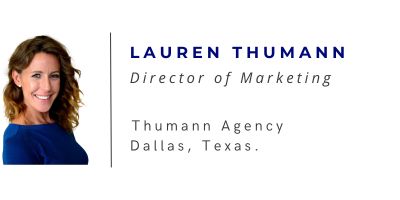
Author: Lauren Thumann Director of Marketing.
Disclaimer: This page is for educational purposes only. Coverage details vary by provider. Contact us for a personalized quote.