

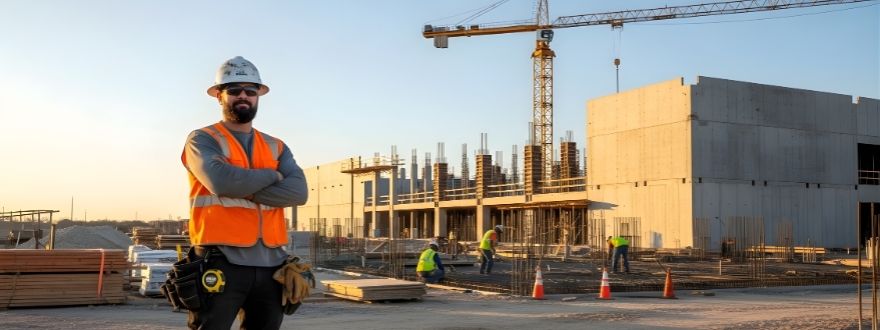
A plumber in Garland wins his first commercial subcontract - a new office building in Addison with a six-month timeline. It is the largest job he has landed in three years of working for himself. The general contractor sends over the insurance requirements before the contract is signed: $1 million in general liability with completed operations coverage, a certificate of workers' compensation, and commercial auto coverage on all company vehicles.
His current GL policy is a bare-minimum residential plumbing policy he bought online two years ago for $420 per year. It does not include completed operations coverage, its limits are $300,000 per occurrence, and it will not satisfy the GC's requirements. A compliant program - proper GL limits, workers' comp on his two employees, and commercial auto on his service vans - comes back at $7,200 per year. He had budgeted $500 for insurance when he started his business.
This is one of the most common conversations that happen when a Texas contractor tries to move from residential to commercial work. The insurance you buy to technically have something is often not the insurance you need to actually work. This guide covers what Texas contractors realistically pay in 2026 for a program that actually gets them on job sites - by trade, by program size, and by the specific Texas factors that affect your premium. For quotes across 80+ carriers, Thumann Agency has been placing Texas contractor insurance since 1996. Call (972) 991-9100.

What Does Contractor Insurance Cost in Texas in 2026?
Most Texas contractors need more than one policy - and the total program cost is what actually determines whether you can bid commercial work, pull permits, and meet client certificate requirements. Here are 2026 cost ranges for the four core contractor insurance policies in Texas, based on data from Insureon, MoneyGeek, and industry carrier rate filings.
-
General liability insurance: $85 to $375 per month ($1,000 to $4,500 per year) depending on your trade. GL is the foundation of every contractor's program - it is required for most commercial contracts, by most GCs before they hire a sub, and by Dallas and DFW municipalities before they issue building permits. Texas general contractors pay an average of $152 per month ($1,824 per year) for GL according to 2026 Insureon data. High-hazard trades like roofing pay significantly more. Low-risk trades like interior painting pay less. The standard commercial requirement is $1 million per occurrence / $2 million aggregate - and completed operations coverage must be specifically confirmed in the policy for work where the liability risk persists after the job finishes. For a detailed GL breakdown by trade, see our general liability insurance cost guide.
-
Workers' compensation insurance: $2 to $14 per $100 of payroll depending on trade classification. A Texas plumbing company with $200,000 in annual payroll and a classification rate of $4 per $100 pays $8,000 per year in workers' comp. A roofing company with the same payroll at $10 per $100 pays $20,000 per year. Workers' comp for contractors is calculated using Texas Department of Insurance class codes that assign a base rate to each trade - roofing, electrical, plumbing, HVAC, and general construction each carry different rates reflecting their respective injury frequencies. Texas does not require workers' comp for most private employers, but most commercial GCs will not hire a sub without a current workers' comp certificate. See our workers' compensation page for Texas non-subscriber rules.
-
Commercial auto insurance: $150 to $300 per month per vehicle ($1,800 to $3,600 per year per vehicle). The Texas average for a contractor work truck runs approximately $218 per month. Texas law requires commercial auto coverage on all business-owned vehicles - personal auto policies explicitly exclude business-use claims. A contractor whose employee causes an accident while driving to a job site is only covered if that vehicle has a commercial policy. A three-vehicle contractor fleet typically costs $4,500 to $9,000 per year in commercial auto premiums. See our commercial auto insurance page for contractor fleet options.
-
Inland marine insurance (tools and equipment): $75 to $200 per month ($900 to $2,400 per year) for most Texas contractors. Inland marine - also called tools and equipment or contractor's equipment coverage - protects your tools, machinery, and specialized equipment against theft, loss, or damage wherever they travel: on the job site, in your truck, or in storage. A general liability policy does not cover your tools. Job site theft in the Dallas metro is a persistent problem, particularly in the active construction corridors along US-380 in Collin County and along the Dallas North Tollway in North Dallas. Coverage follows your equipment wherever it goes.
Want to see what a compliant contractor program costs for your specific trade? Call (972) 991-9100 - same-day quotes across 80+ carriers.

How Much Does Contractor Insurance Cost by Trade in Texas?
The single most important pricing variable for contractor insurance is not your location or your revenue - it is your trade. Insurers assign class codes to every type of contracting work, and those codes reflect the statistical frequency and severity of claims in that trade. A roofer and a residential painter both hold contractor's licenses. Their insurance programs differ by a factor of three or more. Here are realistic 2026 full program cost ranges for seven Texas contractor trades.
-
General contractors (residential and light commercial): $8,000 to $18,000 per year for a full program. A small Dallas GC with five employees and two vehicles typically pays: GL $2,000 to $3,800 per year, workers comp $5,000 to $10,000 per year on construction-classification payroll, commercial auto $3,500 to $6,000 for two vehicles, and inland marine $1,200 to $2,000 for equipment. Total program for a $500,000 revenue GC: $11,700 to $21,800 per year. Commercial GCs working on public projects must add workers' comp regardless of whether they carry it for private work. See our contractors insurance service page for full coverage details.
-
Electricians (TDLR-licensed): $5,000 to $14,000 per year for a full program. GL for electricians runs $1,000 to $2,500 per year - fire and electrocution hazard elevates the premium above a general handyman classification. Workers' comp for electrical work runs $3 to $6 per $100 of payroll. A small Dallas electrical contractor with three employees and $180,000 in payroll pays $5,400 to $10,800 in workers' comp alone. Commercial auto on a two-vehicle fleet adds $3,600 to $7,200 per year. TDLR requires proof of $300,000 per occurrence in GL as a condition of maintaining an electrical contractor license.
-
Plumbers (TDLR-licensed): $5,000 to $12,000 per year for a full program. GL for plumbing trades runs $900 to $2,200 per year - water damage from faulty installations is the most frequent GL claim in the plumbing trade. Workers' comp rates run $3 to $5 per $100 of payroll for plumbing classifications. TDLR requires proof of $300,000 in GL coverage to maintain a plumbing license in Texas. A small Frisco plumbing company with two employees and one service van pays approximately $5,500 to $9,500 per year for a compliant full program.
-
HVAC contractors (TDLR-licensed): $5,500 to $16,000 per year for a full program. Complete HVAC contractor coverage in Texas averages $3,500 to $8,500 per year according to 2026 industry data - and adding commercial auto on a multi-vehicle fleet pushes the total higher. GL for HVAC runs $1,000 to $2,400 per year. Refrigerant handling and rooftop access work affect the premium. Workers' comp for HVAC classification runs $3 to $6 per $100 of payroll. TDLR requires proof of GL coverage to maintain an HVAC contractor license in Texas.
-
Painters and surface finishing contractors: $3,500 to $9,000 per year for a full program. Painting is one of the lower-risk contractor trades - the absence of plumbing risk, electrical risk, and rooftop fall exposure keeps GL and workers' comp costs below most other trades. GL for painters runs $900 to $2,400 per year. Workers' comp rates for painting classifications run $2 to $4 per $100 of payroll - among the lowest in construction. A small painting contractor with two employees and one vehicle typically pays $3,500 to $7,000 per year for a complete program.
-
Roofers: $8,000 to $25,000+ per year for a full program. Roofing carries the highest class rates of any construction trade in Texas. GL alone runs $1,500 to $4,500 per year for a small operation. Workers' comp for roofing classifications runs $8 to $14 per $100 of payroll - a $300,000 annual payroll roofing company pays $24,000 to $42,000 in workers' comp alone. A small Dallas roofing company with five employees and two trucks pays a total program cost of $14,000 to $28,000 per year for complete coverage. See our roofer insurance Dallas TX page for roofing-specific coverage and GL exclusions.
-
Landscapers and exterior service contractors: $2,500 to $7,000 per year for a full program. Landscaping and exterior maintenance carry the lowest trade risk profile in the contractor category. GL runs $900 to $2,400 per year. Workers' comp rates for landscaping classifications run $2 to $4 per $100 of payroll. A small Irving landscaping company with two employees and one truck typically pays $2,800 to $6,000 per year for a full program including GL, workers' comp, and commercial auto. No TDLR licensing requirement means no state-mandated insurance minimum, but most commercial clients still require $1 million in GL before issuing a service contract.

What Texas Regulations Affect Your Contractor Insurance Cost?
TDLR licensing requirements create mandatory insurance minimums for three of the most common contractor trades in Texas. The Texas Department of Licensing and Regulation requires licensed electricians to carry a minimum of $300,000 per occurrence in general liability coverage. Licensed plumbers must carry $300,000 per occurrence in GL. Licensed HVAC contractors also face GL minimums tied to their license class.
These TDLR minimums are lower than what most commercial GCs actually require - the practical commercial market standard is $1 million per occurrence - but they represent the regulatory floor that licensed tradespeople in these three categories must maintain to keep their license active.
Texas workers' compensation is not required for most private contractor employers - but that freedom disappears the moment you work on a public or government project. Workers' compensation is mandatory for any contractor working on public school construction, municipal infrastructure, state-funded projects, and most federally contracted work regardless of how many employees you have.
A Dallas-area electrical contractor who works on both private residential and public school projects must carry workers' comp to remain eligible for the public project work, even if they could legally opt out for the private side of their business.
Texas has no statewide general contractor license - a fact that surprises contractors from other states. You can legally operate as a general contractor in Texas without a license from the state. However, Dallas, Fort Worth, Plano, and most DFW municipalities require local contractor registration and proof of GL coverage before they will issue building permits.
Operating without a current GL certificate in these municipalities means no permits, and no permits means no legal work. The registration and insurance requirements vary by city and by project type, so Dallas-area contractors working across multiple municipalities need to confirm requirements for each jurisdiction.
DFW-area contractor insurance premiums run approximately 10 to 15 percent above the Texas state average for most trades, driven by higher commercial real estate values in construction zones along the Tollway corridor and in the rapidly developing Frisco-McKinney-Prosper growth area, elevated liability claim frequency in dense urban project environments, and Dallas County litigation trends that push average settlements above the Texas mean.
Questions about TDLR requirements or Dallas city permit insurance minimums? Call (972) 991-9100 - we know what each DFW municipality requires.
What Coverage Does a Texas Contractor Actually Need to Work Commercially?
The minimum coverage to technically be insured is not the same as the coverage you need to bid commercial work, qualify for subcontracts, and pull permits across the DFW market. Most Texas contractors working above the residential handyman level need five types of coverage in a properly structured program.
-
General liability with completed operations. GL covers third-party bodily injury and property damage during your work. Completed operations coverage - a specific endorsement that must be confirmed in your policy - extends that coverage to claims arising after the job finishes. An electrician who installs a breaker panel that arcs and causes a fire two months later faces a completed operations claim, not an on-site claim. Without this endorsement, you are not covered for the event most likely to generate a significant liability claim in most trades.
-
Workers' compensation - even where it is not required. Texas contractor companies operating without workers' comp lose all common-law defenses against employee injury lawsuits. A roofer or electrician who is injured on a job site can sue a non-subscriber employer directly - with no cap on damages and no assumption of risk defense available. The premium savings from opting out are real. The exposure from a single serious injury claim typically exceeds those savings many times over.
-
Commercial auto with hired and non-owned coverage. If employees use their personal vehicles for work purposes - picking up materials, driving between job sites, making client visits - those vehicles need hired and non-owned auto coverage to protect your business from liability. Personal auto policies deny coverage for business-use claims. This is one of the most common uncovered exposures in small Texas contractor programs.
-
Inland marine for tools and equipment. Job site theft, vehicle break-ins, and equipment damage at storage facilities are not covered by GL. An inland marine policy follows your tools wherever they go and is particularly important for DFW-area contractors working in active construction zones where equipment theft is frequent. See our builders risk insurance page for project-specific equipment and materials coverage during active construction.
-
Commercial umbrella for higher-limit contracts. Many commercial GCs and institutional clients in Dallas require $2 million or more in liability coverage before they will hire a subcontractor. A commercial umbrella policy extends your limits above your underlying GL and auto policies at a fraction of the cost of buying higher primary limits. Most Texas contractors working on commercial projects above $500,000 in contract value should carry a commercial umbrella.
Why Does Contractor Insurance Cost More When You First Start Out in Texas?
New Texas contracting businesses consistently pay 20 to 40 percent more for identical coverage than established contractors with three or more years of operating history. That premium exists because insurers have no loss experience to evaluate for a new operation - they cannot look at a three-year claims record and determine whether your company operates safely or recklessly. In the absence of history, they price you at a higher rate to compensate for uncertainty.
The new-business surcharge affects every line of your program. GL for a new HVAC contractor in Dallas pays more than an identical operation with five clean years on record. Workers' comp for a new roofing company pays the standard trade rate without the experience modification credit that an established operator earns after years of claim-free payroll.
The experience modification factor - known as the e-mod - is how workers' comp pricing rewards safe operators over time. A 0.80 e-mod on a $15,000 workers' comp premium saves $3,000 per year. New businesses start at 1.0 by definition.
Two practices help new Texas contractors manage the cost during their first two years. First, choosing coverage limits precisely sized to what your actual contracts require - not maximum limits across the board - avoids paying for capacity you do not need yet. Second, maintaining meticulous safety documentation - toolbox talks, incident logs, equipment inspection records - builds the paper trail that underwriters look for when deciding whether to offer renewal discounts. The premium trajectory for a new contractor who operates safely is consistently downward over the first three years.

How Can Texas Contractors Lower Their Insurance Costs in 2026?
Have your class code reviewed by a broker before renewal.
Insurers assign industry classification codes to every contracting business, and those codes drive your base GL and workers' comp rates. Online quoting tools frequently misclassify contractors based on self-reported descriptions - a plumbing company that also does drain cleaning can end up in a higher-hazard class code than its actual work profile warrants.
An independent broker who reviews your actual scope of work against the available classification options can identify whether you are paying for a class code that does not accurately describe your operation. This is one of the highest-leverage cost reviews available for established Texas contractors.
Compare quotes from multiple carriers, including specialty markets.
Carriers that specialize in Texas contractor risk price the same business differently than general commercial insurers. The spread between the best and worst GL quote for an identical Texas plumbing company can run $500 to $1,500 per year. Workers' comp variation is even wider.
An independent broker submits your business profile to multiple specialty and standard markets simultaneously, producing competing quotes rather than asking you to run the process yourself with each carrier.
Verify your subcontractors' insurance before they work.
Uninsured subcontractors working under your project can create contingent liability that lands on your GL policy when a claim occurs. Carriers assess this exposure and charge accordingly when they discover it at audit. Requiring certificates of insurance from every sub before they start work - and storing those certificates in a trackable system - demonstrates risk management discipline that underwrites your renewal rate.
Use a pay-as-you-go workers' comp program.
Texas workers' comp premiums are subject to audit at year-end - if your actual payroll was higher than estimated, you owe additional premium. Pay-as-you-go programs calculate your premium against real payroll reported each pay period, eliminating the end-of-year audit surprise. For seasonal contractors in the Dallas area whose crews expand significantly during spring and fall construction peak seasons, pay-as-you-go provides premium accuracy that flat-estimated programs cannot match.
Maintain documented safety programs actively.
Carriers offer meaningful underwriting credits for contractors with documented safety programs - written safety policies, regular toolbox talks, equipment inspection logs, and OSHA compliance records. A 10 percent workers' comp discount on a $12,000 annual premium is $1,200 per year. A 5 percent GL discount on an $1,800 annual premium is $90. The absolute dollar savings scale with program size, but the discipline of documentation applies regardless of whether you are a three-person crew or a twenty-person operation.
FAQs About Contractor Insurance Costs in Texas
How much does contractor insurance cost per month in Texas?
Monthly cost ranges by trade for a standard program in Texas: landscapers and painters $200 to $580 per month, plumbers and HVAC contractors $400 to $1,000 per month, electricians $400 to $1,150 per month, general contractors $650 to $1,500 per month, roofers $650 to $2,000+ per month. These totals reflect GL, workers' comp on a small crew, and commercial auto on one to two vehicles. Solo operators with no employees pay significantly less - GL alone for a solo Texas handyman or landscaper runs $85 to $175 per month.
Is contractor insurance required by law in Texas?
Texas law does not require general liability insurance for most private contractors - but practical requirements make it effectively mandatory. Dallas and most DFW municipalities require proof of GL before issuing building permits. TDLR requires GL coverage to maintain an electrical, plumbing, or HVAC contractor license. Workers' compensation is mandatory for all contractors on public and government projects regardless of employee count. Most commercial GCs will not issue a subcontract without a current certificate of insurance. The Texas Department of Insurance oversees contractor insurance regulation and provides guidance on coverage obligations for Texas businesses.
What is the cheapest contractor insurance in Texas?
The lowest-cost compliant contractor insurance in Texas for a solo operator with no employees typically runs $900 to $1,500 per year for general liability alone. Adding a commercial auto policy for one vehicle adds $1,800 to $3,600 per year. Inland marine for tools adds $900 to $1,500 per year. A truly minimal program - GL plus commercial auto, no workers' comp because there are no employees - runs $2,700 to $5,100 per year for most low to mid-risk trades. 'Cheap' coverage that meets the technical definition of having a policy but does not include completed operations coverage or adequate limits will often fail to satisfy GC or municipal requirements when tested.
Does a Texas contractor need workers' compensation insurance?
Workers' compensation is not required by Texas state law for most private contractor employers - but there are two important exceptions. Any contractor working on a public or government project in Texas must carry workers' compensation for all employees, regardless of company size. Additionally, TDLR-licensed tradespeople whose license category specifies it must carry workers' comp as a license condition. Most commercial GCs also require it contractually from every subcontractor before they will issue a certificate of work authorization, making the practical requirement nearly universal for commercial-market contractors.
What does TDLR require for contractor insurance in Texas?
The Texas Department of Licensing and Regulation requires specific insurance minimums for licensed electrical contractors ($300,000 per occurrence in GL), licensed plumbers ($300,000 per occurrence in GL), and licensed HVAC contractors (GL minimums tied to license class). These TDLR minimums are lower than what most commercial clients actually require - the market standard for commercial subcontracting is $1 million per occurrence - but failing to maintain the TDLR minimum can result in license suspension or revocation. See the Texas Department of Licensing and Regulation website for current insurance requirements by license category.
How much does general liability insurance cost for a Texas contractor?
GL costs for Texas contractors by trade: landscapers and painters $900 to $2,400 per year ($75 to $200 per month), plumbers $900 to $2,200 per year, HVAC and electricians $1,000 to $2,500 per year, general contractors $1,800 to $3,800 per year (Texas Insureon average $152 per month), roofers $1,500 to $4,500 per year. All figures reflect a standard $1 million per occurrence / $2 million aggregate policy for a small 1-to-5 person Texas operation. Dallas-area contractors pay approximately 10 to 15 percent above the Texas state average.
Getting the Right Contractor Insurance Program for Your Texas Trade
The gap between the insurance that technically allows you to say you are covered and the insurance that actually gets you onto commercial job sites, satisfies GC requirements, and responds when a real claim happens is significant - and it is measured in both coverage terms and dollars. The estimates in this guide give you a realistic framework for understanding where your trade lands in the Texas contractor insurance market.
The most reliable path to accurate pricing is comparing real quotes from multiple carriers who understand Texas contractor risk. Thumann Agency has been placing contractor insurance for Dallas and Texas trades since 1996 and works with 80+ carriers to find competitive programs for every trade type. Get quotes at contractor insurance in Dallas, TX or call (972) 991-9100.
Last Updated: 20 April, 2026
Author: Lauren Thumann Director of Marketing.

This post is for informational purposes only. For questions specific to your policy or situation, please contact the Thumann Agency directly. For regulatory questions, contact TDI at www.tdi.texas.gov.