

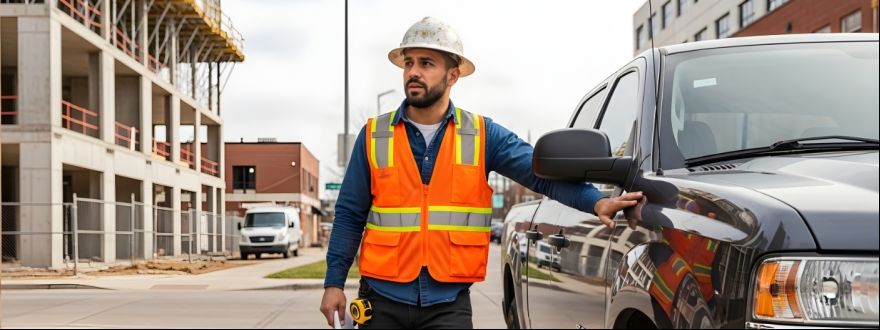
If your employees ever use their own vehicles for work - or if your operation ever rents a van, borrows a truck, or uses any vehicle your business doesn't own - your current insurance program probably has a gap you don't know about. Hired and non-owned auto insurance (HNOA) typically costs $200–$600 per year as an endorsement to your existing policy. The lawsuit it covers can run into the hundreds of thousands.
That gap is the problem. Here's how it happens.
Your commercial auto policy covers vehicles your business owns and has listed on the policy. Your general liability policy covers third-party injuries and property damage - but it explicitly excludes auto incidents. Your employee's personal auto policy covers their commute and personal driving, but most personal policies exclude or severely limit coverage for accidents that happen during business use. So the moment your HVAC tech drives his own truck to a job site, your roofer's employee picks up shingles in her personal car, or you rent a cargo van to haul equipment to a project in Frisco - all three of those policies can fail you simultaneously. No commercial auto coverage because you don't own the vehicle. No GL coverage because it's an auto incident. No personal auto coverage because it was a business errand.
That's the exact gap hired and non-owned auto insurance is designed to fill. It's one of the most overlooked coverages in Dallas's contractor and trade business community, and one of the most consequential to skip.
Thumann Insurance Agency has placed commercial auto and contractor coverage in Dallas since 1996. This guide explains what HNOA is, why it matters specifically for Dallas contractors and small businesses, what it covers and what it doesn't, and how to add it to your existing program.
The Three-Gap Problem Every Dallas Contractor Needs to Understand
Most small business owners assume they're covered because they have a commercial auto policy. Most sole operators assume their personal auto policy is "good enough." Both assumptions are wrong in the same way.
-
Commercial auto insurance for Dallas businesses is built around vehicles your company owns and lists on the policy. The coverage follows the vehicle. If a vehicle isn't on your commercial auto schedule - because it's your employee's personal truck, a rental, or a borrowed trailer - your commercial auto policy doesn't respond when something goes wrong with it.
-
General liability insurance is the other policy most contractors and small businesses carry. It covers a wide range of third-party injury and property damage claims - but the standard general liability policy form contains a specific auto exclusion. The moment an accident involves a vehicle, GL steps aside.
-
Personal auto policies have their own carveout: most explicitly exclude accidents that occur while the insured is using the vehicle for business purposes. A personal policy is designed for personal use - commuting, running personal errands, weekend driving. The moment an employee is on the clock and driving to a job site, making a supply run, or picking up materials, the business use exclusion can trigger a denial.
Three policies. Three gaps. All three failing at the same moment. HNOA closes all of them.
What Hired and Non-Owned Auto Insurance Actually Covers
The name breaks down exactly the way it sounds. There are two components, and understanding the distinction matters for making sure your policy includes both.
-
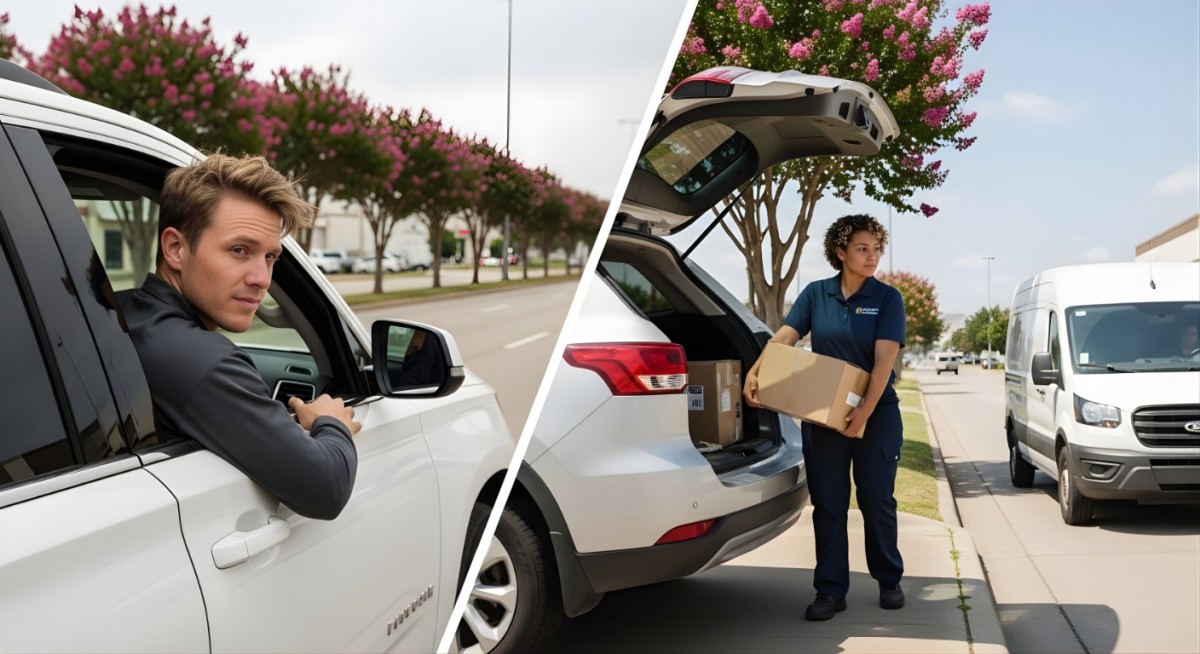
Hired auto coverage applies to vehicles your business rents, leases, or borrows for work purposes - a cargo van rented to haul equipment to a project in McKinney, a trailer borrowed for a roofing job, a car rented for a business trip to meet with a general contractor in Fort Worth. If any of those vehicles are involved in an accident while being used for your business, hired auto coverage responds.
-
Non-owned auto coverage applies to personal vehicles owned by employees, subcontractors, or the business owner that are used for business purposes - driving to a job site, picking up materials, meeting a client, running a work errand. If the employee is driving their own vehicle on company business and causes an accident, non-owned auto coverage protects your business from the resulting liability.
Together, these two components create a liability layer that follows your business, not any specific vehicle. That distinction matters: your commercial auto policy follows the vehicles on your schedule. HNOA follows the operation itself - wherever your people drive on company time, whatever vehicle they're in.
What HNOA specifically covers is third-party liability: the injured party's medical bills, repairs to the other person's vehicle or property, your legal defense costs, and any court-ordered settlement or judgment. If an employee causes an accident while on a work errand and injures another driver, your HNOA policy is what pays for the other driver's ER visit, the lawsuit, and the settlement - up to your policy limits.
What HNOA Does Not Cover - and Why That Matters
HNOA is liability coverage, full stop. Understanding what it doesn't cover is as important as understanding what it does, particularly for contractors whose trucks and tools represent significant asset value.
It does not cover physical damage to the vehicle involved in the accident. If your employee's personal truck is totaled while they're making a supply run, HNOA doesn't pay to fix or replace their truck. That falls to their personal auto policy - if it's in force and if the coverage applies. For rented vehicles, the rental agreement's physical damage coverage handles the vehicle itself; your HNOA covers the liability exposure to third parties.
It does not cover injuries to the employee who was driving. Workers' compensation handles that. If your employee is injured in the accident - whether in their own vehicle or a rented one - workers' compensation is the policy that covers their medical treatment, rehabilitation, and lost wages. HNOA is only for what your business owes third parties.
It does not cover cargo, tools, or equipment inside the vehicle. If your electrician's personal truck is in an accident and $8,000 worth of tools are destroyed, that's a commercial property or inland marine coverage question, not HNOA. The policy covers liability to other people - not property that belongs to your business.
One more distinction that catches Dallas contractors by surprise: HNOA may not automatically cover 1099 subcontractors. Most HNOA policies define covered drivers as W-2 employees. If you're a general contractor whose subs drive their own vehicles on your job sites, your HNOA policy may not extend to them by default. The right approach is to require every 1099 sub to carry their own commercial auto or HNOA coverage and to provide a certificate of insurance naming your business as additional insured. Confirm the specific definition of "insured" with your broker before assuming coverage extends across your entire crew.
Why Dallas Contractors Face Elevated HNOA Exposure
This is a coverage gap that exists everywhere, but a few things about Dallas's contractor and trade business environment make it particularly acute here.
The Dallas–Fort Worth construction market runs hot. Development along the North Tollway, in Frisco, McKinney, Allen, and throughout the Design District and Uptown redevelopment corridors creates sustained demand for electricians, plumbers, HVAC contractors, roofers, landscapers, and general contractors. Many of those operations - especially sole operators and small trade crews - have never bought a commercial vehicle in their lives. The owner drives their personal F-150 to every job site. The helper drives their own Silverado. Nobody has a vehicle with the business name on it, and nobody thinks twice about it until something goes wrong.
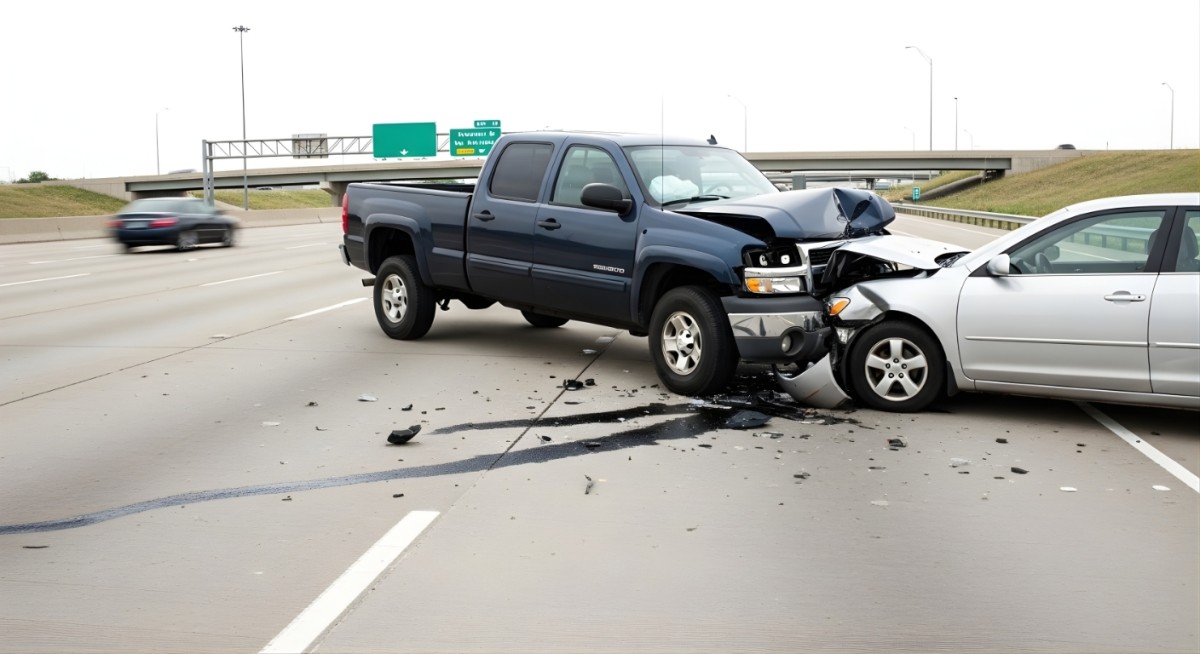
Beyond that, Dallas traffic conditions create real exposure. Dallas traffic on I-35E, I-635, the Dallas North Tollway, and the President George Bush Turnpike means that a contractor making a routine supply run from a job site in Far North Dallas to a supplier in Irving is covering real distance in real traffic. The frequency of accidents on the DFW highway system is not low. And when that accident happens in a personal vehicle on company time, the liability question goes straight to the business owner.
North Texas hail seasons also produce a downstream HNOA exposure that's easy to overlook: when hail damage creates a surge in roofing and exterior contractor work, small operations that rarely use rented equipment suddenly start renting trailers, pickup trucks, and material-hauling vehicles at a frequency they've never managed before. That rented equipment creates hired auto exposure that didn't exist three weeks earlier. If the HNOA endorsement isn't already in place, it's too late to add it after the job starts.
How HNOA Fits Into Your Existing Insurance Program
The good news is that HNOA is almost never a standalone policy purchase. It's added as an endorsement - a coverage rider - to a policy you probably already carry.
If you have a commercial auto policy covering company-owned vehicles, HNOA can typically be added as a non-owned and hired vehicle endorsement to extend that policy to vehicles not on your fleet schedule. If you carry a Business Owner Policy (BOP) or a standalone general liability policy, many carriers allow HNOA to be added there instead - a practical option for contractors who have no company-owned vehicles at all and therefore no commercial auto policy to attach it to.
In either case, the cost is usually low relative to the liability it covers. For most small Dallas businesses and trade contractors, HNOA adds $200–$600 per year to an existing policy premium. The pricing is based on the number of employees who drive for the business and an estimate of annual rental vehicle expenditure - both of which are small inputs for most small operations.
Standard limits match those of the underlying policy - typically $1M combined single limit, which is the same $1M per occurrence that most Dallas commercial leases and general contracts require on your certificate of insurance. If a contract or project owner requires higher limits, a commercial umbrella policy above the HNOA or GL limit is the standard solution.
One detail worth confirming when you add HNOA: make sure the endorsement includes both the hired and non-owned components. Some carriers offer them as separate add-ons. Most small contractors need both - hired coverage for rental vehicles and non-owned coverage for employee personal vehicles. If you only add one, you have the same problem you started with, just in a slightly different shape.
Which Dallas Businesses Actually Need HNOA
The short answer is any business where someone drives a vehicle that isn't on a commercial auto policy for any work-related purpose. The longer answer includes some specific scenarios that come up regularly in Dallas's small business and contractor community.
-
Trade contractors - electricians, plumbers, HVAC technicians, roofers, painters, landscapers - typically operate from personal vehicles. If any employee, helper, or job site driver uses their own truck or SUV on company time, non-owned auto exposure exists from day one.
-
General contractors who coordinate crews across multiple active job sites often use rented pickups or cargo vans for material transport. That hired auto exposure is present any time a vehicle is rented in the company's name or reimbursed by the company.
-
Contractors and handymen operating as sole proprietors who drive their own vehicles to every job are in a particularly exposed position: they have no employees to delegate liability to, which means any accident on the way to or from a job site lands on them personally. A personal auto policy won't cover it. Without HNOA, there's nothing between them and a direct lawsuit.
-
Delivery and service businesses - food service, event caterers, mobile service providers - where employees regularly use personal vehicles for pickups, deliveries, or client calls.
-
Small operations that occasionally rent vehicles - when a project requires more cargo capacity than a personal vehicle provides and the business rents a truck or trailer, the hired auto exposure is real even if it only happens a few times a year.
One test that's worth applying honestly: over the last 12 months, has anyone who works for your business driven any vehicle that isn't listed on a commercial auto policy for any reason related to work? If the answer is yes - even once, even for a 10-minute supply run - your business has had HNOA exposure, whether or not you had coverage in place.

Getting HNOA Added to Your Policy
The process is straightforward. If you already carry commercial auto, general liability, or a BOP with Thumann, adding HNOA is typically a same-day endorsement. Most certificates of insurance reflecting the updated coverage can be issued within hours - including any certificate a general contractor, project owner, or property manager requires naming them as additional insured.
If your current program doesn't include HNOA and you're not sure whether your exposure warrants it, the review process takes about 15 minutes: a quick look at how many employees drive for the business, how often, whether any rentals are involved, and what your existing policy forms say about non-owned vehicles. From that, the answer is usually clear.
As an independent broker with access to 80+ carriers, Thumann Insurance Agency can compare how HNOA is structured and priced across multiple programs - and make sure the endorsement is added to the policy form where it provides the broadest coverage for your specific operation.
Call (972) 991-9100 or request a commercial auto quote online. If you're a Dallas-area contractor or small business and you're not certain whether your current program covers employee or rented vehicle use, that's the right question to ask before the first claim arrives.
Frequently Asked Questions
What is hired and non-owned auto insurance (HNOA)?
HNOA is a liability endorsement that protects your business when vehicles your company doesn't own are used for work - either rented or leased vehicles (the "hired" component) or employees' personal vehicles (the "non-owned" component). It covers your business's liability to third parties if an accident occurs during business use: the other party's medical bills, property damage, legal defense, and settlement costs. It does not cover damage to the vehicle itself or injuries to the driver.
Does my commercial auto policy already cover employees driving their own vehicles?
No. Commercial auto policies cover vehicles listed on the policy schedule - typically vehicles your business owns. An employee's personal truck, even if they use it every day for work, is not covered by your commercial auto policy unless it's specifically scheduled on that policy or you've added a hired and non-owned endorsement. This is the most common HNOA gap in trade contractor operations.
Does general liability cover vehicle accidents during work?
No. Standard general liability policies contain an auto exclusion. The moment an accident involves a vehicle in motion, your GL policy steps aside. General liability covers customer injuries on job sites, property damage from your work, and similar third-party claims - but not auto accidents, even during business operations. HNOA is what fills that specific gap.
Does HNOA cover my 1099 subcontractors?
Usually not automatically. Most HNOA policies define covered drivers as W-2 employees. Independent contractors are typically excluded from the definition of "insured" under a standard HNOA form. If you use 1099 subs who drive their own vehicles on your job sites, the right approach is to require each sub to carry their own commercial auto or HNOA coverage and to provide a certificate of insurance. Confirm the exact definition of covered drivers with your broker before assuming subs are included.
How much does HNOA cost?
For most small Dallas businesses and trade contractors, HNOA is one of the least expensive coverages available relative to the risk it addresses - typically $200–$600 per year when added as an endorsement to an existing commercial auto or general liability policy. Pricing is based primarily on the number of employees who drive for the business and your estimated annual rental vehicle spend. It is rarely a standalone policy purchase.
What should Dallas contractors look for when reviewing HNOA coverage?
Three things: First, confirm the endorsement includes both the hired and non-owned components - some carriers offer them separately, and most contractors need both. Second, verify how the policy defines "insured driver" so you know whether 1099 subs are included or excluded. Third, check the coverage limit and confirm it meets any requirements in your contracts - $1M combined single limit is standard, but some GC agreements or project owners require higher. A commercial umbrella policy is the most cost-effective way to extend those limits if needed.
Can I get a COI showing HNOA coverage for a general contractor or project owner?
Yes. Once HNOA is added to your policy, a certificate of insurance reflecting that coverage - including naming the GC or property owner as additional insured - can typically be issued the same day, within 2–4 hours during business hours. Call (972) 991-9100 and we can process the endorsement and the certificate together.
Talk to a Dallas Commercial Auto Specialist
If anyone in your business uses a personal vehicle or a rented vehicle for work - even occasionally - your program may have a gap that a simple endorsement can close. Thumann Insurance Agency has placed commercial auto and contractor coverage in Dallas since 1996, across 80+ carriers.
We can review your current program, identify whether HNOA exposure exists, and add the endorsement the same day.
Call (972) 991-9100 or request a commercial auto quote online. Same-day COIs available.
Last Updated: 29 April, 2026
Author: Lauren Thumann Director of Marketing.
This post is for informational purposes only. For questions specific to your policy or situation, please contact the Thumann Agency directly. For regulatory questions, contact TDI at www.tdi.texas.gov.