

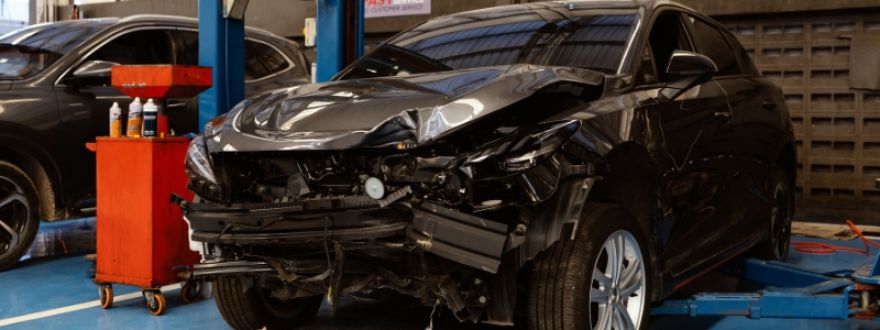
Texas has over 3.2 million small businesses, and a significant share of them depend on vehicles to operate - contractors hauling tools to job sites, restaurants running deliveries, real estate agents visiting properties, healthcare workers making calls, and service businesses getting their teams to client locations across the DFW metroplex. Every one of those businesses has a legal obligation and a financial exposure that makes commercial auto insurance not just a good idea, but a requirement.
What most business owners do not realize until they are dealing with a claim: a personal auto insurance policy does not cover accidents that occur while a vehicle is being used for business purposes. If one of your employees causes a serious accident in a company vehicle and your business is only carrying personal auto coverage - or no commercial coverage at all - your business absorbs all liability above whatever the personal policy pays (which may be nothing for a business-use claim). This guide explains what Texas commercial auto insurance covers, what it costs, and how to get the best rate. For a same-day quote, call Thumann Insurance Agency at (972) 991-9100.
Texas Commercial Auto Insurance Requirements
Texas state law requires all businesses with company-owned vehicles used for work to carry commercial auto insurance. The Texas minimum liability requirements follow a 30/60/25 split:
-
$30,000 in bodily injury liability per person per accident
-
$60,000 in bodily injury liability per accident (total across all injured parties)
-
$25,000 in property damage liability per accident
Important: Texas state minimums are a legal floor, not a sensible coverage strategy. A serious multi-vehicle accident involving injuries in the Dallas metro can generate six-figure medical bills, vehicle repair costs, and legal fees that exhaust the minimum limits in a single claim. Most commercial insurance advisors recommend liability limits of at least $300,000–$500,000 for standard business vehicles, with commercial umbrella insurance providing additional capacity above that.
Businesses with vehicles that cross state lines, operate as for-hire carriers, or carry hazardous materials face additional federal requirements through the Federal Motor Carrier Safety Administration (FMCSA) and may need higher limits - sometimes up to $5 million in liability. The Texas Department of Insurance provides guidance on specific requirements by vehicle type and use.
What Commercial Auto Insurance Covers
A standard Texas commercial auto policy can include several coverage components, each addressing a different risk. Here is what each component covers and when it applies.
Bodily Injury and Property Damage Liability
Liability coverage pays for injuries to other people and damage to other vehicles or property when your business is at fault in an accident. It also covers legal defense costs if the other party sues your business. This is the required coverage component - the 30/60/25 minimum applies to this section. Given the cost of serious accidents in high-traffic Dallas-area corridors (I-35, I-75, I-635, US-75), minimum liability limits are dangerously low for most business vehicles.
Collision Coverage
Pays for repairs to your commercial vehicle after a collision with another vehicle or object, regardless of fault. If one of your delivery trucks hits a guardrail or another vehicle rear-ends your service van, collision coverage handles the repair bill for your vehicle. Collision coverage is subject to a deductible that you select when purchasing the policy.
Comprehensive Coverage
Covers non-collision damage to your commercial vehicle: theft, vandalism, fire, and weather-related damage including hail. In Dallas, where hail events average five to eight per year and can produce baseball-sized hailstones, comprehensive coverage is an important protection for any vehicle regularly parked outdoors. This is separate from collision coverage and also subject to a deductible.
Uninsured/Underinsured Motorist Coverage
Pays for injuries to your employees and damage to your vehicle when the at-fault driver has no insurance or insufficient insurance to cover your losses. More than one in seven drivers in Texas is uninsured or underinsured. In a serious accident where the at-fault driver cannot pay, uninsured motorist coverage ensures your business is not absorbing the full cost of recovery.
Medical Payments (MedPay) / Personal Injury Protection (PIP)
Covers medical expenses for you and your employees injured in a vehicle accident, regardless of who is at fault. PIP (Personal Injury Protection) is required in Texas as part of commercial auto policies unless explicitly waived in writing. Medical payments coverage fills similar gaps for medical and rehabilitation costs following an accident.
Hired and Non-Owned Auto Insurance (HNOA)
This is the coverage most Texas business owners overlook, and the gap it fills is significant. Commercial auto insurance covers vehicles your business owns. It does not cover personal vehicles owned by employees that are driven for business purposes, or rental vehicles used for business travel. If an employee runs a business errand, drives to a client meeting, or travels to a job site in their personal car and causes an accident, your commercial auto policy provides no protection. Your business can still be held liable for that accident.
Hired and non-owned auto (HNOA) insurance covers this gap. It provides liability coverage for accidents involving personal, rented, or leased vehicles used for business purposes. HNOA is typically available as an endorsement on a Business Owner’s Policy or general liability policy at relatively low additional cost. Any business where employees ever drive their own cars for work purposes needs HNOA coverage.
What Personal Auto Insurance Does NOT Cover for Business Use
The distinction between personal and commercial auto coverage is one of the most critical and most misunderstood aspects of business vehicle insurance. Here is what a personal auto policy typically does not cover:
-
Accidents that occur while delivering goods, products, or services for your business
-
Accidents that occur while driving to or from job sites (beyond the normal commute)
-
Accidents in a vehicle that is titled to or primarily used by the business
-
Injuries to passengers who were riding in the vehicle during a business-related trip
-
Any accident where the insurer determines the vehicle was being used for commercial purposes at the time of the incident
The practical implication: An employee who uses their personal car to pick up supplies for the business, deliver food, or visit a client site and then causes an accident may find their personal insurer denying or limiting the claim due to business use. Your business is then exposed to the liability that the personal policy does not cover.
How Commercial Auto Insurance Is Priced in Texas
Commercial auto premiums vary significantly based on multiple factors. Understanding what drives your rate helps you identify where cost management is possible.
-
Type of vehicle and its use: The national average monthly commercial auto insurance cost ranges from approximately $147 for basic business autos (Insureon data) to $272 for contractor vehicles (Progressive Commercial 2024 data). For-hire transport trucks average $954 per month. The primary variable is the risk profile of your vehicle class and how it is used. A landscaper’s pickup truck is priced very differently than a food service delivery van.
-
Driver records: Commercial auto carriers run motor vehicle records (MVRs) for all listed drivers. Drivers with recent at-fault accidents, DUI convictions, or multiple moving violations significantly increase premiums. Maintaining clean driving records across your employee base is the most direct way to control commercial auto costs.
-
Number of vehicles: Fleet policies covering multiple vehicles are typically priced more favorably per vehicle than individual policies, particularly when all vehicles have a consistent use profile.
-
Coverage limits and deductibles: Higher liability limits and lower deductibles increase premiums. The inverse - lower limits or higher deductibles - reduces the premium but increases out-of-pocket exposure in a claim.
-
Location and operating area: Businesses operating in the Dallas metro area, DFW suburbs, or along major Texas highways like I-35 and I-45 pay more than those operating in rural or lower-traffic areas, reflecting the higher frequency and severity of urban traffic accidents.
-
Claims history: Commercial auto carriers price based on prior claims. A business with no at-fault accidents in the past three years qualifies for preferred pricing. A history of frequent or severe claims results in a surcharge that can persist for three to five years.
How to Lower Your Commercial Auto Insurance Costs
There are legitimate strategies for reducing commercial auto premiums without sacrificing critical protection.
-
Shop across multiple carriers: Commercial auto pricing varies significantly across carriers for identical risk profiles. An independent broker compares options across 80+ carriers to find the best available rate for your fleet and use profile. Renewing without shopping at least every two to three years means you are likely paying above the market rate.
-
Maintain clean driver records: Implement a formal driver screening process before assigning business vehicles to employees. Run MVR checks at hire and annually. Remove or restrict drivers with multiple violations. The premium savings from a clean driver roster typically outweigh the cost of a basic MVR screening program.
-
Implement telematics / usage-based monitoring: Several major commercial auto carriers - including Progressive Commercial with its Snapshot ProView program - offer discounts for businesses that allow telematics monitoring of driving behavior. Businesses with good driving data can earn meaningful premium reductions, and the monitoring program itself incentivizes safer driving.
-
Bundle commercial auto with other business policies: Placing your commercial auto policy with the same carrier as your
-
Choose coverage limits strategically: Texas minimums are insufficient for serious accidents. However, rather than purchasing very high primary liability limits on each policy, consider commercial umbrella insurance as a more cost-effective way to achieve total liability coverage above your primary limit. The umbrella approach typically costs less than purchasing equivalent limits on the primary policy alone.
-
Review your vehicle schedule at renewal: Remove vehicles that are no longer in service, sold, or replaced. Insuring vehicles you no longer own or operate is a direct waste of premium dollars that an annual coverage review catches immediately.
Industries in Dallas That Most Commonly Need Commercial Auto Insurance
Any Dallas-area business that operates vehicles for work purposes needs commercial auto insurance. These are the industries Thumann Agency most commonly works with for commercial auto coverage:
-
Contractors and construction: Pickup trucks, cargo vans, flatbeds, and trailers hauling tools, materials, and equipment to job sites across DFW. Commercial auto is typically required by both state law and contract.
-
Restaurants and food service: Delivery vehicles, catering vans, and employee-operated vehicles used for supply runs. Dallas restaurants that added delivery operations during and after 2020 often added commercial auto exposure without updating their insurance.
-
Healthcare and home services: Home health aides, visiting nurses, and personal care workers traveling to patient locations across the Dallas metro need commercial auto or HNOA coverage for all business-related driving.
-
Real estate: Agents and brokers who drive clients to properties, travel between listings, and operate primarily from their vehicles need commercial auto or HNOA coverage. Personal auto policies typically exclude real estate business use.
-
Landscaping and lawn services: Truck and trailer combinations hauling equipment to residential and commercial clients throughout North Texas. High vehicle utilization means high exposure frequency.
-
HVAC, plumbing, electrical, and trades: Service vehicles, tool trucks, and work vans making multiple daily service calls across Dallas, Frisco, Plano, and surrounding suburbs.
Get a Commercial Auto Insurance Quote in Dallas
Thumann Insurance Agency has been helping Dallas-area businesses secure commercial auto insurance since 1998. As an independent broker working with 80+ carriers, we compare options for your specific vehicle type, industry, driver roster, and coverage needs in a single conversation. Whether you have one work vehicle or a growing fleet, we find the policy that protects your business and fits your budget.
Call (972) 991-9100 or request a commercial auto quote online. Same-day coverage available for qualifying businesses.
Frequently Asked Questions
Does my personal auto insurance cover my vehicle when I use it for business in Texas?
No. Personal auto insurance policies in Texas exclude coverage for accidents that occur during business use of a vehicle - including deliveries, client visits, job site travel, and similar business activities. If you regularly use your personal vehicle for business purposes, you need either a commercial auto policy or hired and non-owned auto (HNOA) insurance to cover those trips.
What are the minimum commercial auto insurance requirements in Texas?
Texas requires all business-owned vehicles to carry at least the state minimum liability coverage: $30,000 per person for bodily injury, $60,000 per accident for total bodily injury, and $25,000 for property damage (30/60/25). These minimums are the legal floor. Most commercial insurance advisors recommend significantly higher limits for business vehicles, particularly those operating in high-traffic urban areas like Dallas and DFW.
What is hired and non-owned auto (HNOA) insurance and does my business need it?
Hired and non-owned auto insurance covers accidents involving personal vehicles owned by employees or rental vehicles that are used for business purposes. It fills the coverage gap between commercial auto (which covers business-owned vehicles) and personal auto (which excludes business use). Any business where employees ever drive their personal cars, rental cars, or leased vehicles for work-related purposes needs HNOA coverage.
How much does commercial auto insurance cost in Texas?
Commercial auto insurance costs vary significantly based on vehicle type, industry, driver records, and coverage selections. Nationally, average monthly commercial auto costs range from approximately $147 for standard business autos to $272 for contractor vehicles. In Dallas, businesses in high-traffic areas may pay slightly above the state average. The most accurate way to determine your cost is to get quotes across multiple carriers through an independent broker.
Can I add hired and non-owned auto coverage to my existing business insurance policy?
In most cases, yes. HNOA coverage can typically be added as an endorsement to your Business Owner’s Policy (BOP) or general liability policy at relatively low additional cost. Contact your broker to review whether your current policy structure allows for the HNOA endorsement or whether a separate policy is needed.
Last Updated: 25 February 2026
Author: Lauren Thumann Director of Marketing.
Disclaimer: This page is for educational purposes only. Coverage details vary by provider. Contact us for a personalized quote.