Roofer Insurance Dallas, TX | GL, Workers Comp & Same-Day COI

Roofing Insurance in Dallas Shouldn't Catch You Off Guard
Most Dallas roofing contractors find out what their policy doesn't cover at the worst possible moment - when a claim comes in and the carrier points to an exclusion buried in the fine print. Standard roofing GL policies carry more carve-outs than almost any other trade. The work type, the building class, the application method - all of it affects what your policy actually responds to.
At Thumann Agency, we don't just hand you a policy and move on. As independent brokers, we review your coverage against what you actually bid - across 80+ leading carriers - so you know exactly what you have before a job starts, not after a claim is denied. Dallas roofing contractors have trusted us since 1996.
Need it fast? Same-day quotes and ACORD COIs so you can satisfy GC requirements, pull permits, and respond to bid deadlines without waiting.
Why Dallas Roofers Choose Thumann Agency
-
80+ Carrier Options: We compare roofing-specialist markets, not just standard commercial lines
-
Same-Day COIs: ACORD 25 certificates with additional insured endorsements issued the same business day
-
GL Exclusion Review: We read your actual policy form against the buildings and operations you bid, before you sign
-
Texas Risk Specialists, Based in Dallas: 30 years placing roofing contractor insurance across DFW, with deep knowledge of hail season, permit offices, and GC insurance requirements
-
Trusted Since 1996: For new programs, mid-season payroll updates, annual renewals, and policy reviews when your scope of work changes
Why Dallas Roofing Contractors Trust Us
⭐⭐⭐⭐⭐ Here's what clients are saying in their 5-star Google reviews:
"Desni Cox went above and beyond to constantly update my insurance to help get me the lowest costs! Highly recommend this company, very quick responses and kind people."
"Same-day turn around for all of my commercial needs. Telling all my friends!"
"Nida did an outstanding job finding an underwriter to insure my small LLC. Quick, thorough and professional. Highly recommended!"
Read our Google reviews | 972-991-9100
Who We Help in Dallas and Across Texas
We work with roofing businesses across the DFW area that need reliable, compliant coverage in place quickly - whether that means qualifying for a commercial subcontract, responding to a GC's insurance requirements, or keeping pace with a crew that doubles in size every spring.
We regularly help:
-
Residential re-roofing and storm restoration crews serving Dallas, Garland, Mesquite, and Collin County
-
Commercial roofing contractors - flat, TPO, and modified bitumen systems on office, retail, and industrial projects
-
Roofing subcontractors working under GC oversight who need same-day COIs with exact certificate wording
-
Small owner-operated crews expanding seasonally during North Texas hail season
-
New roofing businesses setting up their first compliant insurance program from day one
-
Multi-trade exterior contractors whose work includes roofing alongside gutters, siding, and restoration
Choose the Right Coverage for Your Roofing Business
Roofing contractor insurance in Dallas is a program, not a single policy. The coverage types below address the distinct risk categories that Dallas roofing companies face - from job-site liability and crew injuries to equipment theft and storm damage on open structures.
General Liability Insurance
Covers third-party bodily injury and property damage arising from your roofing work - a bystander struck by falling debris, a neighbor's fence damaged during a large tear-off, or water intrusion discovered weeks after installation. The completed operations component is what matters most for roofers: it extends coverage to claims that arise after the job is done, not just during active work. Most Dallas GCs and commercial property owners require $1M per occurrence/$2M aggregate before issuing a subcontract.
Best for:
• Commercial subcontractors needing GC-compliant limits and COIs
• Storm restoration crews responding to North Texas hail events
• Roofers bidding on commercial, multi-story, or specialty structures
• Any roofing operation that pulls Dallas or DFW building permits
Workers' Compensation Insurance
Covers medical costs, wage replacement, and rehabilitation for roofing employees injured on the job. Roofing carries one of the highest workers' comp classification rates in Texas construction because falls generate the most serious and costly workplace injuries. Texas does not mandate workers' comp for most private employers, but a roofing company without it loses all common-law defenses in employee injury lawsuits - and most Dallas commercial GCs will not allow uninsured subcontractors on a job site.
Best for:
• Roofing crews with one or more employees
• Seasonal crew expansions during North Texas hail season (March–June)
• Subcontractors whose GC requires a current workers' comp certificate
• Any contractor bidding on public, municipal, or government-funded projects
Commercial Auto Insurance
Covers trucks, trailers, and material-hauling vehicles used for roofing operations. Texas law requires commercial auto coverage on all business-owned vehicles, and personal auto policies will not respond to accidents that happen during business use. A crew truck that causes an accident on the way to a Frisco job site is only covered if it carries a commercial policy - not a personal one with a business-use exclusion.
Best for:
• Pickup trucks and cargo vans transporting crew and materials
• Trailer rigs hauling shingles, ladders, and safety equipment
• Multi-vehicle fleets operating across the DFW metro
• Any vehicle financed or leased for roofing business use
Inland Marine - Tools and Equipment
Protects roofing equipment wherever it travels: on the job site, in your truck, or in storage. A commercial property policy only covers equipment at a fixed address. Inland marine follows your nail guns, compressors, safety harnesses, and lifts to every job. Equipment theft from active construction zones across the DFW growth corridor - particularly in Frisco, McKinney, and North Dallas - makes this coverage practical rather than optional.
Best for:
• Pneumatic nail guns, compressors, and tool sets
• Fall-protection systems, harnesses, and lifts
• Ladders, staging systems, and material hoists stored in vehicles
• Any specialized equipment that moves between multiple job sites
Builders Risk Insurance
Covers the project itself - not your liability to others - during the active construction period. When a roof is torn off and the membrane isn't yet down, the structure is exposed. The property owner's homeowners policy typically excludes damage during active roofing work. Builders risk fills that gap: if an overnight storm damages a client's interior while your tear-off is in progress, this policy responds where your GL and the owner's property policy both cannot.
Best for:
• Re-roofing projects with a tear-off phase that leaves the structure open
• Commercial projects requiring contract-mandated builders risk coverage
• Jobs where no project-level policy exists through the GC
• Projects in storm-active North Texas where weather delays are common
Commercial Umbrella Insurance
Extends your total liability limits above what your GL, workers' comp employer's liability, and commercial auto policies provide. Many Dallas commercial GCs and institutional clients require $2 million or more in total liability before issuing a subcontract. A commercial umbrella achieves those higher limits at a fraction of the cost of increasing every underlying policy individually.
Best for:
• Commercial subcontracts requiring $2M+ in total liability coverage
• Large or multi-phase re-roofing projects in the DFW market
• GC contracts with aggregate limit requirements above primary GL limits
• Roofing companies seeking maximum separation between claims and personal assets
Premiums vary by revenue, payroll, crew size, claims history, and the specific work you perform. All figures reflect a small Dallas residential roofing operation as a baseline.
Additional Coverage Options
Depending on your operation, you may also need:
Contractors insurance - for roofing companies that also perform multi-trade exterior work. This bundled program covers the full scope of a contractor's risk rather than roofing operations alone.
Professional liability - relevant for roofing consultants, inspectors, or design-build operations where specifications and recommendations are part of the service. General liability does not cover claims that your professional advice caused a client financial harm.
Employment practices liability (EPLI) - covers wrongful termination, harassment, and discrimination claims from employees. Particularly applicable for roofing companies with seasonal workforce expansions where rapid hiring and termination decisions increase employment claim exposure.
Surety bonds - required by some DFW municipalities before issuing a roofing permit and by public project owners for performance and payment bonds. Bonds are placed through the same broker relationship as insurance but operate differently.
Every roofing business is different. Talk to a specialist to confirm exactly which coverages your contracts, licenses, and operations require.
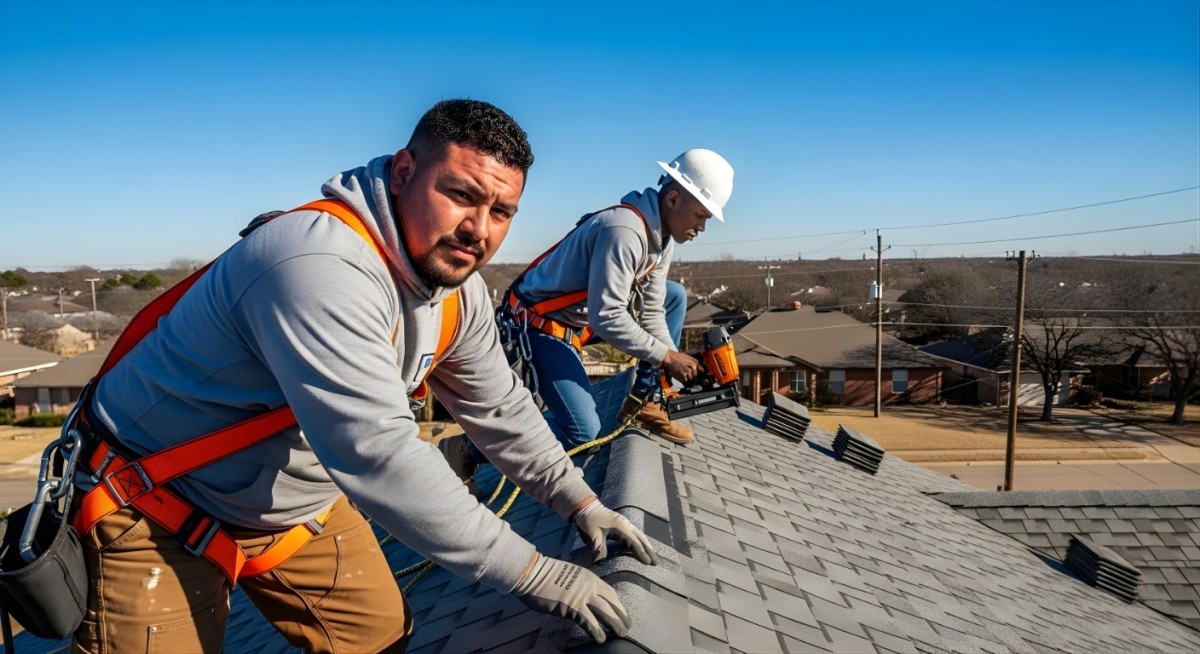
What Does General Liability Actually Cover for Texas Roofers - and Where Does It Stop?
Roofing GL policies have more built-in exclusions than almost any other trade classification. Carriers underwrite roofing as a high-hazard category and carve out specific risk types they will not cover under a standard form. Knowing those limits before you bid a project is the difference between having insurance and having insurance that works.
What a Standard Roofing GL Policy Covers
Third-party bodily injury on or near your job site. Property damage your crew causes to a client's or neighbor's property. Personal and advertising injury claims. And completed operations coverage - the extension that applies when a problem surfaces after the job is finished, such as a roof leak that appears three weeks after installation. Standard Texas commercial GL is written at $1 million per occurrence and $2 million aggregate for most roofing contracts.
Common Exclusions That Affect Dallas Roofers
-
Open roof exclusion: Interior damage that happens while the roof is actively open - rain getting into a home during tear-off, for example - falls outside most standard roofing GL policies. A builder's risk or installation floater is the right tool for that exposure.
-
Hot tar and torch-applied systems: Modified bitumen and hot-mop applications are excluded from most standard GL forms because of the fire hazard involved. A specialty endorsement or a carrier that specifically writes hot-applied roofing work is required.
-
Structures over three stories: Work on mid-rise apartments, office buildings, and multi-story retail is excluded from many standard policies. Commercial roofers bidding that type of work need to confirm the exclusion has been removed by endorsement before the contract is signed.
-
Condominiums, churches, and medical facilities: These property types carry elevated liability profiles and are carved out of many standard contractor forms. Roofing companies that work on HOA properties or church projects in DFW need specific confirmation that their policy covers these building classes.
-
Faulty workmanship: The cost of redoing your own substandard work is not a GL claim. GL responds when your defective work causes damage to someone else's property - not when you need to redo the work itself. Professional liability or a completed operations endorsement addresses that gap.
An independent broker compares your actual policy form against your real bidding scope. See our contractors insurance page for broader contractor coverage options across Dallas.
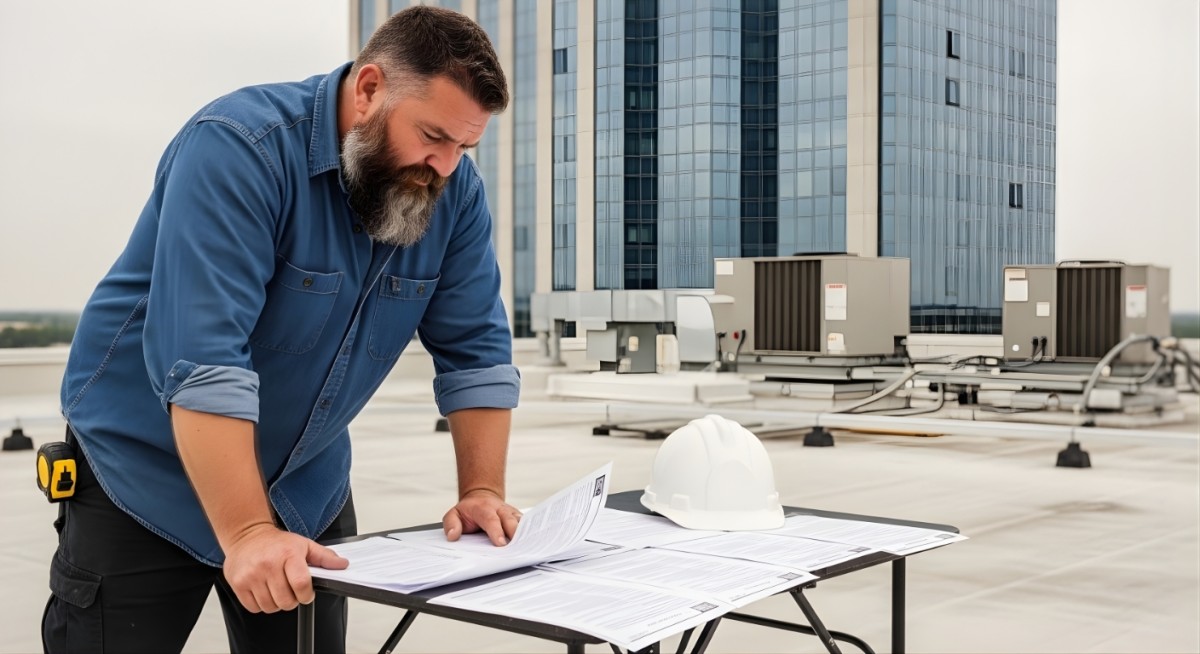
What Workers' Compensation Really Means for a Texas Roofing Company
Texas gives private employers the choice of whether to carry workers' compensation insurance. In roofing, that choice has consequences most owners underestimate until they face an injury claim.
A roofing company that opts out of workers' comp becomes a non-subscriber in Texas. Non-subscribers must file annually with the state. More importantly, they give up every common-law defense available in an employee injury lawsuit - including the argument that the employee knew the risks of roofing work or that a co-worker caused the injury. An injured employee can sue a non-subscriber directly for uncapped damages with no statutory limitation on what a jury can award.
In a trade with falls as the leading cause of serious injury, that exposure is real. Most commercial general contractors in the DFW market also require workers' comp certificates from every subcontractor before work begins. A roofing company without coverage is effectively locked out of most commercial subcontracting work, legal requirements aside.
Workers' comp for roofing in Texas is priced by payroll at rates around $35 to $45 per $100, depending on the specific classification and claims history. A company carrying $300,000 in annual roofing payroll typically spends $10,500 to $13,500 per year on workers' comp coverage. A clean experience record reduces that rate over time through experience modification credits.
How Much Does Roofer Insurance Cost in Dallas, TX?
What a Dallas roofing company pays for insurance depends on how large the operation is, the type of work performed, the payroll size, and the claims history. Dallas-area roofers generally pay somewhat above the Texas state average because of higher commercial project values in the DFW market and a more active liability litigation environment in Dallas County.
-
General liability: $2,800 to $5,500 per year for a small residential roofing company. The national median for roofing contractors runs $267 per month based on 2025 industry data. GL for roofing is typically priced at 1.5 to 2.5 percent of annual gross revenue. A company doing $500,000 in annual work pays roughly $7,500 to $12,500 per year. Commercial roofers and those working on structures with height or specialty exclusions pay toward the upper end.
-
Workers' compensation: Approximately $35 to $45 per $100 of roofing payroll, depending on the trade classification and experience record. A $300,000 payroll operation pays roughly $10,500 to $13,500 per year. Roofing carries one of the highest class rates in Texas construction because of fall-related injury frequency.
-
Commercial auto: $1,500 to $2,500 per year per vehicle. A three-truck roofing fleet typically runs $4,500 to $7,500 per year for commercial auto coverage.
-
Inland marine (tools): $800 to $1,500 per year for $100,000 in covered equipment at a $1,000 deductible. A roofing operation with $150,000 in specialized equipment typically pays $1,200 to $2,000 per year.
-
Builders risk: 1 to 4 percent of project value per year, prorated for the construction duration. A $200,000 commercial re-roofing project typically runs $1,000 to $4,000 for the active work period.
-
Full program totals: A small residential roofing company with $500,000 in revenue, five employees, and two vehicles typically pays $18,000 to $30,000 per year for a complete program. A mid-size commercial roofer at $2 million in revenue and 20 employees typically runs $45,000 to $80,000 per year.
Frequently Asked Questions About Roofer Insurance in Dallas, TX
What does general liability insurance cover for roofers?
Roofing GL covers third-party bodily injury, property damage your operations cause, advertising injury claims, and completed operations - coverage that extends to problems that emerge after the job ends. What it does not cover is equally important: hot tar operations, structures over three stories, condominiums, churches, and medical facilities are all commonly excluded from standard roofing GL forms. An independent broker who reviews your actual policy against the jobs you bid identifies those gaps before a claim exposes them.
Is workers' compensation required for Texas roofing companies?
Texas does not require workers' comp for most private employers - but roofing companies that opt out lose all common-law defenses in employee injury lawsuits. In a trade where falls generate serious injuries regularly, that means unlimited personal exposure on every workplace injury claim. Beyond the legal risk, most Dallas GCs require a current workers' comp certificate from every subcontractor as a contract condition. Without it, a roofing company is effectively locked out of most commercial subcontracting work in the DFW market.
What is a COI and why do Dallas roofers need same-day certificates?
A Certificate of Insurance is the ACORD 25 document that confirms your coverage to a GC, property owner, or permit office. Dallas GCs require a current COI - naming them as additional insured with correct wording - before any crew sets foot on a commercial project. During hail season when multiple subs are competing for the same project slots, the contractor who delivers a correctly formatted certificate the same day a contract is awarded has a clear practical advantage over one waiting two or three days.
What Texas laws apply to roofing contractors?
Texas House Bill 2102 requires written contracts for jobs over $1,000 and makes it a criminal offense to offer to waive a homeowner's insurance deductible. Dallas requires permits for most roofing work within city limits, and DFW municipalities vary in their specific requirements. RCAT voluntary licensing is increasingly required by commercial clients across the metro. See the Texas Department of Insurance for current contractor insurance regulatory guidance in Texas.
What is builders' risk and when do Dallas roofers need it?
Builders risk covers the project itself during the construction period - not your liability to others, but damage to the structure while it is under your care. It is most critical during tear-off, when the building is open and the owner's property policy typically provides no protection. Most Dallas commercial roofing contracts require it. For residential and smaller commercial jobs, the roofing contractor usually needs to arrange their own coverage. Cost runs 1 to 4 percent of insured project value prorated for the duration.
Get a Roofer Insurance Quote in Dallas Today
The right roofing insurance program covers the buildings you actually bid, the crew size you run during hail season, and the GL exclusions that matter for your specific work type. That alignment requires a policy review against your actual operations - not just a policy that checks the basic coverage box.
At Thumann Agency, we compare roofing contractor insurance across 80+ carriers, issue same-day ACORD certificates, and review your policy against the work you bid. We serve Dallas, Fort Worth, Plano, Arlington, Frisco, McKinney, Irving, Garland, Richardson, and Grand Prairie. Call (972) 991-9100 or request a quote at roofer insurance in Dallas, TX.
Last Updated: April 18, 2026
Author: Steve Thumann, Licensed Texas Insurance Broker.
Sources: Texas Department of Insurance, National Association of Insurance Commissioners
Disclaimer: This page is for educational purposes only. Coverage details vary by provider. Contact us for a personalized quote.